




Mahogany Cased Barograph
A mahogany cased barograph is a recording weather instrument housed in timber and glass, prized by collectors for its mechanical precision and period charm.
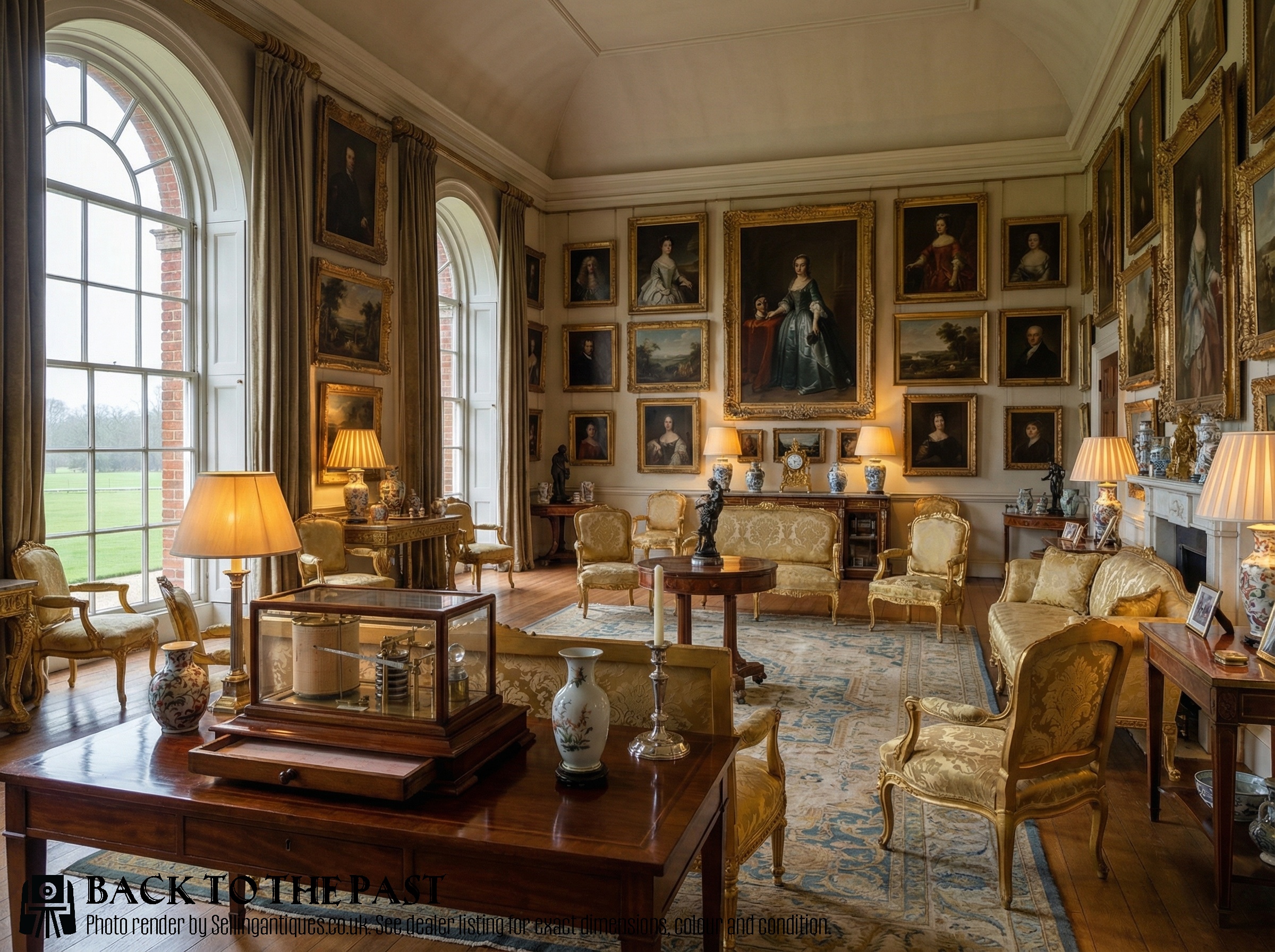
Mahogany Cased Barograph
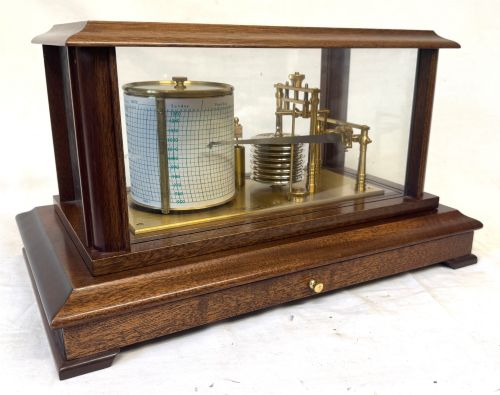
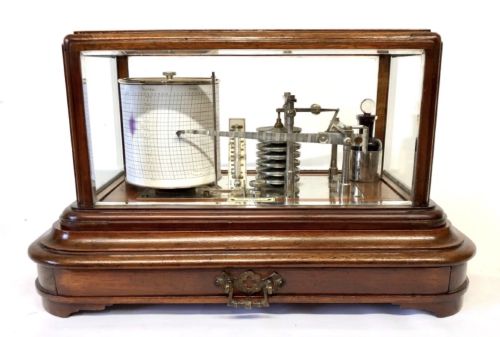
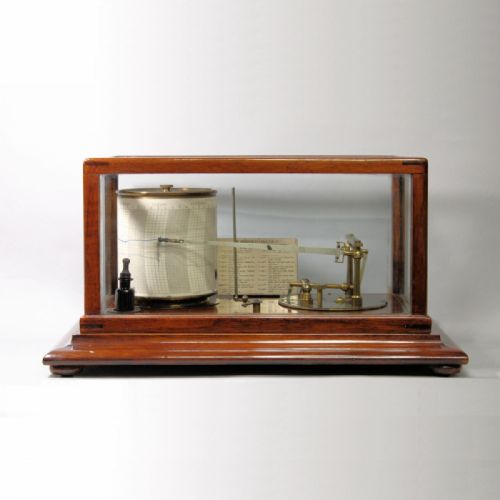
A mahogany cased barograph is a mechanical weather recording instrument that plots atmospheric pressure over time on a rotating paper chart. These scientific pieces bridge domestic decor and functional engineering, making them fascinating objects for study and display.
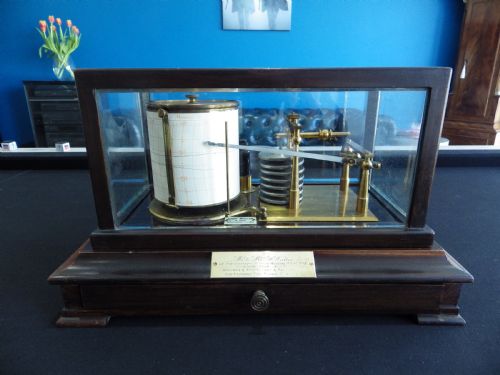
You will most frequently encounter Edwardian and Victorian examples on this page, housed in polished timber with glass panels to reveal the brass mechanisms within. Many include integrated chart drawers in the base and occasional thermometer attachments.
The selection ranges from standard domestic models to specific railway interest pieces and miniature French versions. Makers and retailers span British hubs from London to Newcastle alongside international firms.
Materials and construction
Makers built the structural enclosures from rich mahogany, frequently utilising five-glass cases to allow maximum light onto the movement while protecting the delicate parts from dust. Brass forms the mechanical levers, vacuum chambers, and gear trains, operating alongside steel components.
Paper charts hold the ink trace recorded by the arm, stored within purpose-built drawers set into the wooden bases of the instruments. Inlaid details occasionally appear on Edwardian variants, reflecting contemporary stylistic preferences.
Listings feature mahogany, brass, glass, steel, and paper across Victorian, Edwardian, and mid-twentieth-century periods.
Assessing quality and craftsmanship
The distinction between standard examples and finer items rests upon the precision of the brass movement and the reputation of the maker or retailer. Signed instruments by established houses carry greater distinction than unsigned pieces.
Cabinetwork quality shows in the thickness of the mahogany timber, the clarity of the bevelling on the glass panels, and the smooth operation of the chart drawer. Completeness of original paperwork and working condition elevate the standing of any individual barograph.
Negretti and Zambra·Short and Mason·R Fuess·Harrods of London·Robson of Newcastle·Chadburns Ltd
The Mahogany Cased Barograph Glossary
- Barograph
- A self-recording barometer that continuously plots atmospheric pressure onto a paper chart. It translates barometric fluctuations through an array of metallic bellows.
- Aneroid
- Operating without liquid, utilising flexible metal vacuum chambers that expand or contract with changing air pressure. This movement drives the recording arm.
- Five-glass case
- A glazed timber enclosure featuring a top panel and four vertical sides. This design provides unobstructed viewing of the brass mechanism from every angle.
- Chart drawer
- A shallow compartment built into the wooden base beneath the instrument platform. It stores spare recording papers and spare ink supplies.
- Atmos barometer
- A mechanical clock-like timepiece that winds itself by subtle temperature fluctuations in the surrounding air. It shares display aesthetics with meteorological instruments.
Mahogany Cased Barograph: Frequently Asked Questions
How do I operate a barograph?
You place a fresh paper chart around the rotating drum and ensure the pen is filled with suitable recording ink. The mechanical linkage then traces pressure changes automatically over the designated period.
Wind the clockwork mechanism within the drum carefully to maintain rotation. Regular calibration against a reliable standard barometer keeps the readings accurate.
How do I date these instruments?
Stylistic clues within the mahogany cabinetwork and the style of the maker's signature plate provide initial chronological markers. Edwardian and Victorian iterations display distinct cabinet proportions and brass finishes.
Paperwork surviving in the chart drawer often supplies exact dates or retailer records. Comparing the movement design to known production eras confirms the period.
Where should I place a barograph?
Position the instrument on a stable, level surface away from direct sunlight, drafts, and sudden temperature shifts. A sturdy sideboard or desk in a main room allows easy viewing of the daily trace.
Avoid high-humidity environments that could affect the wooden case or rust the steel components. Gentle placement ensures the delicate internal bellows remain undisturbed.
What maintenance do they need?
Keep the glass panels clean and dust the mahogany case with a dry cloth to preserve the finish. The mechanical movement benefits from professional servicing if the clockwork drum slows down.
Change the paper charts regularly and check that the ink reservoir does not dry out. Handle the pen arm with extreme care whenever replacing charts.