


Glazed Mahogany Barograph Case
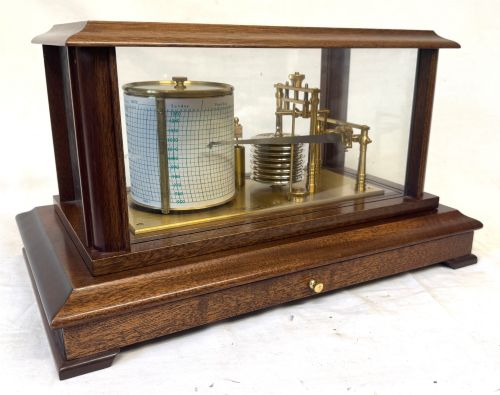
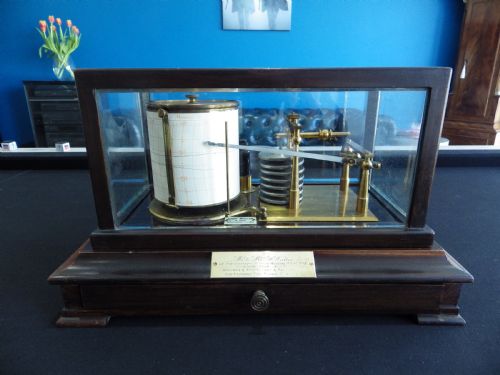
These glazed mahogany barograph case examples combine brass, glass, and steel instrumentation within polished timber frames to record atmospheric pressure over time.
Glazed Mahogany Barograph Case
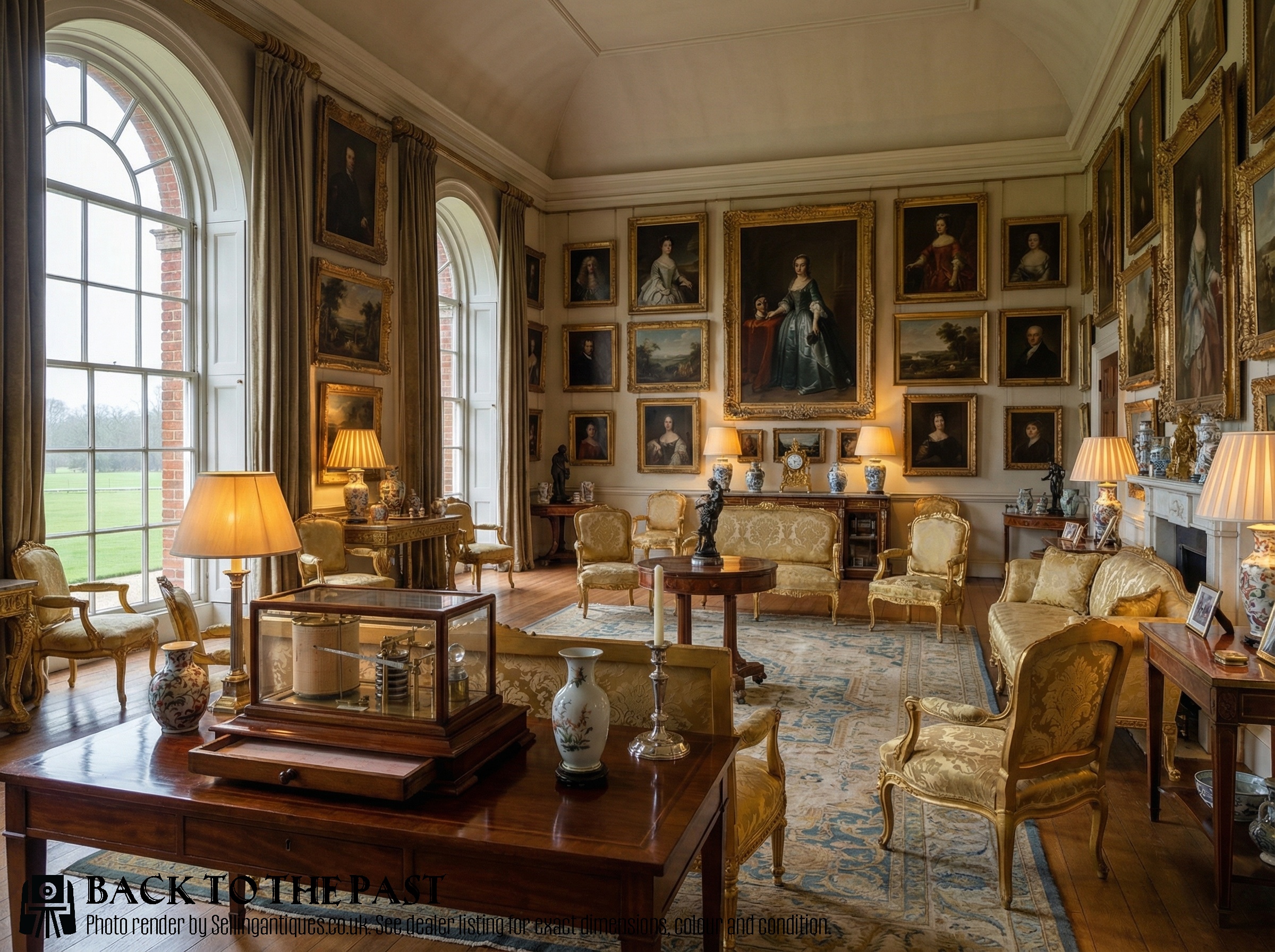
A glazed mahogany barograph case protects the delicate mechanical movement and paper chart drum inside while offering a clear view of the recording needle and rotating cylinder. These instruments register atmospheric pressure fluctuations continuously, translating weather changes onto inked paper charts held in a lower drawer or internal compartment.
You will most frequently encounter Edwardian and Victorian iterations on this page, alongside interwar and mid-century examples from makers such as Negretti & Zambra and Short & Mason. The timber housings range from plain functional boxes to inlaid Art Nouveau designs featuring supplementary barometer dials.
Materials and construction
Constructed primarily from solid or veneered mahogany, these enclosures incorporate bevelled or flat glass panels fitted into wooden frames to seal the recording mechanism from dust while maintaining visibility. Brass is utilised for hinges, carrying handles, ink arms, and movement plates, contrasting with the dark timber grain.
The internal barometer assemblies rely on stacked vacuum chambers made of steel or alloy bellows that expand and contract with barometric pressure, transmitting mechanical motion through levers to a pen arm. Paper charts, printed for weekly recordings, are secured to rotating clockwork drums driven by internal spring or movement mechanisms.
Some Edwardian models carry local railway interest, proving that even Victorian commuters liked knowing if it would rain on their train home.
Distinctions in quality
Quality rests heavily on the precision of the maker's movement and the crispness of the mahogany joinery, with signed instruments by established retailers commanding greater attention than unsigned pieces. The clarity and thickness of the glass panels, alongside the presence of original chart drawers with intact paperwork, further distinguish finer examples.
Finer models display careful timber selection with harmonious grain patterns and subtle inlay work, whereas simpler iterations prioritise utilitarian housing over decorative cabinet-making. The condition of the brass fittings and the smooth operation of the clockwork drum indicate how carefully the instrument has been maintained over decades.
Negretti & Zambra·Short & Mason·Casella London·Richard Freres·R Fuess·Robson of Newcastle·Russell Norwich
The Glazed Mahogany Barograph Case Glossary
- Barograph
- An recording barometer that plots atmospheric pressure automatically onto a paper chart over a set period, usually a week. It uses vacuum chambers linked to an inked nib.
- Chart drawer
- A shallow compartment built into the base of the wooden housing specifically designed to store spare weekly recording papers and spare ink bottles.
- Bellows
- The series of sealed metal chambers that expand or contract as air pressure shifts, driving the mechanical arm across the rotating drum.
- Clockwork drum
- The cylindrical brass or metal drum containing a spring-driven clock movement that rotates the paper chart at a steady, controlled rate.
Glazed Mahogany Barograph Case: Frequently Asked Questions
How do I change the chart paper?
Lift the glass cover and gently release the pen arm from the rotating drum to prevent damage to the delicate nib. Carefully slide the used paper off the cylinder and wrap a fresh weekly chart around the drum, securing it neatly along the overlapping edge.
Ensure the paper sits flat against the metal cylinder before applying a tiny drop of ink to the pen nib. Lower the arm back onto the chart and wind the clockwork mechanism gently if the drum requires tension.
What periods do these pieces date from?
The selections span from the Victorian era and the Edwardian period through to interwar designs and mid-century examples dated up to nineteen sixty. Victorian and Edwardian pieces frequently showcase traditional cabinet-making, while later variants reflect simpler twentieth-century forms.
Makers active during these decades produced both standard domestic models and specialised units with railway or regional connections. Dating relies on style markers, retailer signatures, and accompanying paperwork found within the storage drawers.
Where should I place a barograph at home?
Position the instrument on a stable, level surface away from direct sunlight, radiators, and heavy vibrations that might interfere with the delicate vacuum chambers. A sturdy sideboard or desk in a main room allows you to observe the shifting line on the paper chart easily.
Keep the case out of damp environments to protect the mahogany timber finish and prevent corrosion on the internal brass and steel components. Ensuring a steady room temperature helps the metal bellows record true atmospheric pressure without artificial thermal interference.
How do I tell an Edwardian model from a Victorian one?
Edwardian examples often incorporate lighter mahogany tones and occasional Art Nouveau stringing or inlay work on the timber case. Victorian versions tend to feature heavier, darker timber mouldings with robust brass carrying handles built for utility.
Examining the signature style and retailer plaques can also offer clues, as specific London firms evolved their casing designs across the turn of the century. Internal movement signatures and paper records frequently confirm the exact period of manufacture.