


Antique Barograph Recorder
An antique barograph recorder maps atmospheric pressure onto paper charts, offering a mechanical record of the weather that sits handsomely in any room.
Antique Barograph Recorder
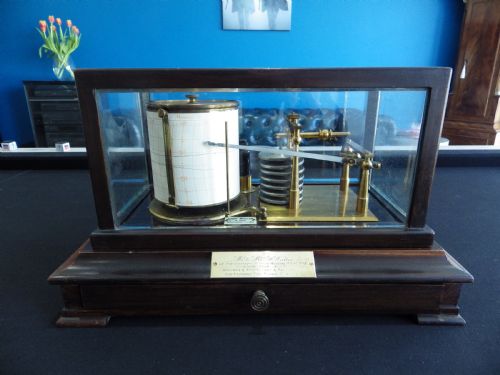
When searching for an antique barograph recorder, collectors encounter scientific instruments housed in wooden cases designed to track barometric pressure continuously over a week. These devices span the Victorian, Edwardian, and interwar periods, reaching into the nineteen-forties.
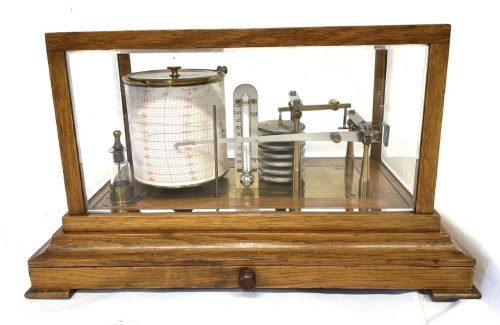
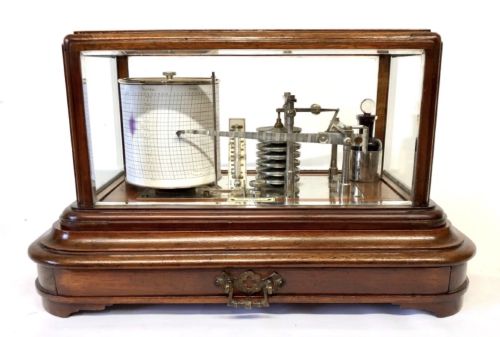
The most common examples on this page are mahogany or oak five-glass cases fitted with brass mechanisms, paper chart drums, and occasionally an integrated thermometer or chart drawer. Makers such as Short & Mason dominate the offerings, alongside notable pieces by Negretti & Zambra and Casella London.
Forms vary from simple desktop boxes to combined barograph and barometer setups, reflecting scientific utility paired with domestic display. Pieces range across styles from late Victorian and Edwardian scientific down to Art Nouveau and nineteen-thirties British design.
How they were made
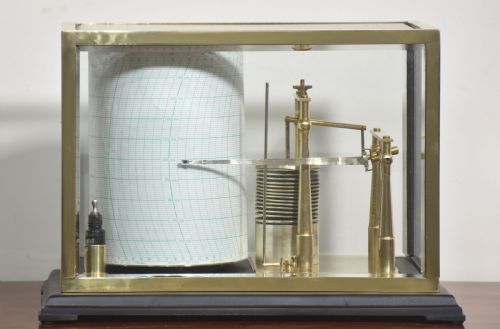
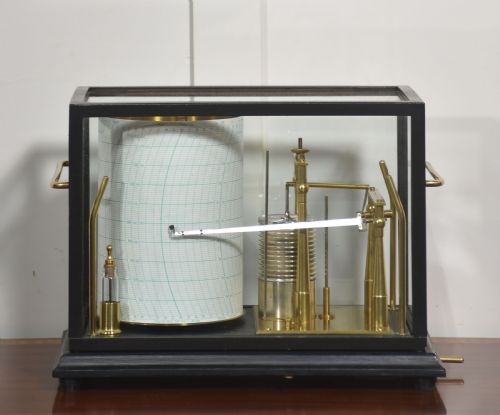
Cases combine seasoned hardwoods like mahogany, oak, and walnut with bevelled glass panels that protect the internal movement while allowing a clear view of the recording arm. Brass and steel form the delicate lever systems, aneroid metal diaphragms, and clockwork drums.
Paper charts are mounted onto rotating cylinders driven by internal clockwork movements, while ink records the continuous rise and fall of atmospheric pressure. Cabinetmakers constructed the fitted boxes with dovetailed joints and integrated storage drawers for spare weekly charts.
Recorded periods stretch from the late Victorian era through the Edwardian years and the interwar period up to nineteen-forties scientific production.
What varies in quality
Quality rests in the precision of the maker's signature and the finish of the timber case, with retailers like Harrods or makers like Short & Mason denoting higher prestige. The presence of bevelled glass, auxiliary thermometers, and matched barometer dials elevates certain instruments above standard utilitarian models.
The sophistication of the brass mechanism and the integration of specialised movements, such as those by Gluck, distinguish finer workshop output. Cabinet work also differs, moving from plain oak housings to inlaid Art Nouveau mahogany or richly grained walnut.
GAUPP & CO HONGKONG & SINGAPORE·Short & Mason·Negretti & Zambra·CASELLA LONDON·R Fuess·HARRODS OF LONDON·Depree and Young Ltd Exeter·Dobbie son and Hutton London
The Antique Barograph Recorder Glossary
- Aneroid barograph
- An instrument that measures atmospheric pressure using expanding and contracting metal vacuum chambers without the use of liquid mercury. This mechanism drives an inked arm across a rotating paper chart.
- Chart drawer
- A shallow compartment built into the base of the wooden case to store spare weekly recording papers and ink bottles. It keeps necessary accessories close at hand beneath the main instrument.
- Five-glass case
- A glazed wooden enclosure featuring a top panel and four vertical sides that provide an unobstructed view of the internal brass mechanics. This design protects the delicate recording arm from drafts and dust.
- Bevelled glass
- Pane edges ground and polished to an angled slope, catching the light and adding a decorative finish to the instrument case. It appears frequently on finer Victorian and Edwardian examples.
Antique Barograph Recorder: Frequently Asked Questions
How does a barograph record the weather?
A stack of metal aneroid vacuum chambers expands and contracts with shifting atmospheric pressure, moving a pivoted arm fitted with an ink nib. This arm traces a continuous line onto a paper chart secured around a clockwork-driven drum.
The drum rotates once every seven days, providing a complete weekly visual history of barometric trends. Changing the paper and winding the clockwork were routine weekly tasks for the Victorian or Edwardian owner.
How do I tell an Edwardian barograph from a Victorian one?
Victorian examples often feature heavier mahogany or walnut cabinetry paired with robust brass fittings and traditional retailer signatures. Edwardian and later pieces frequently employ lighter oak, inlaid Art Nouveau woodwork, or specialised movements by makers such as Short & Mason.
Examining the style of the wood grain, inlay work, and the specific typography on the chart drum or paper scale helps narrow down the period of manufacture.
Where should I place a barograph in my home?
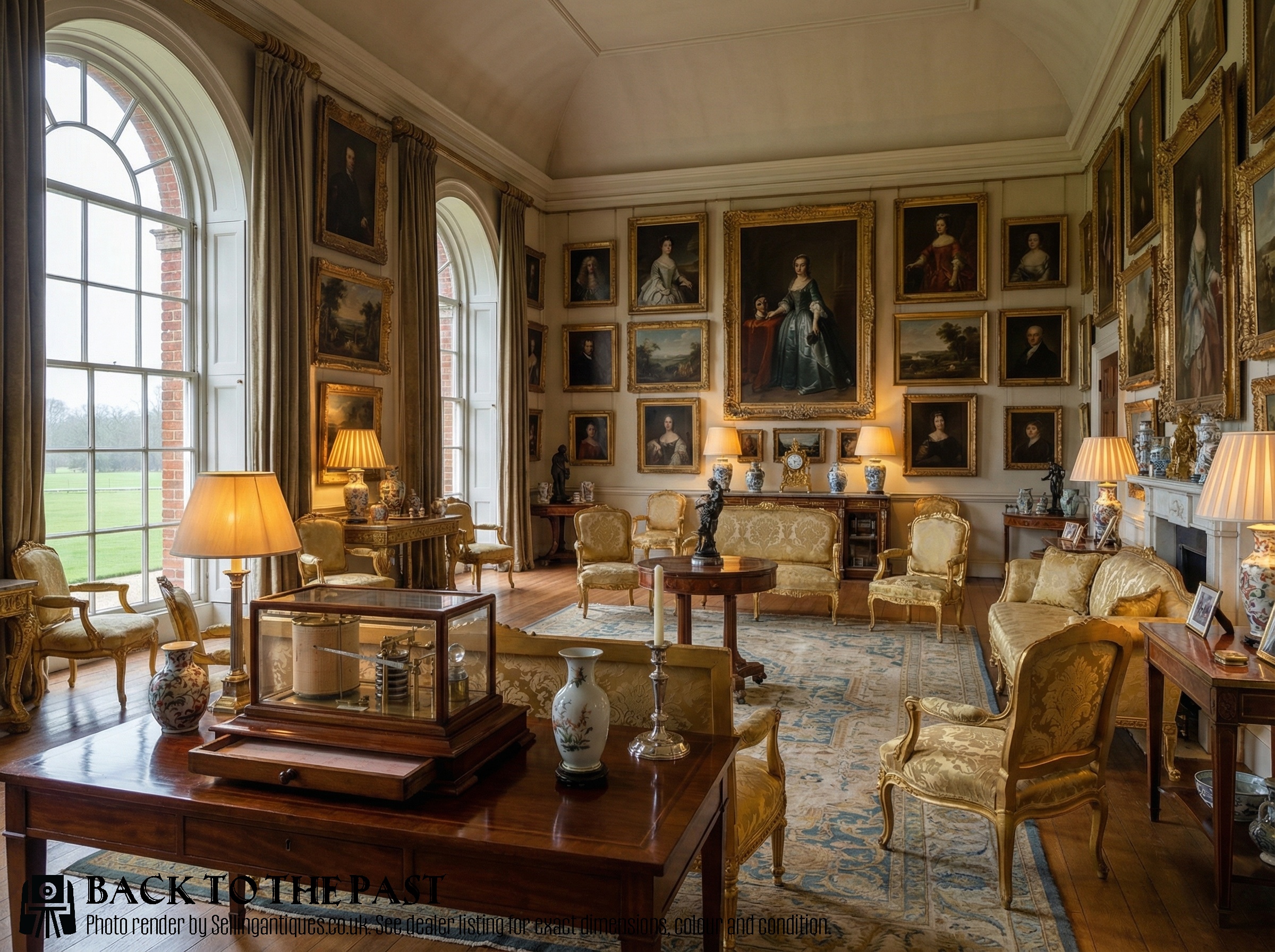
Place the instrument on a stable surface away from direct sunlight, localized heat sources, and heavy vibrations that might disturb the delicate internal brass levers. A study, library, or hallway table provides an ideal environment where the movement can be observed safely.
Because the five-glass case allows a view from multiple angles, positioning it at eye level or slightly lower on a sturdy desk or cabinet works best.
What is the purpose of the extra thermometer?
Many barographs include a secondary dial thermometer mounted on the bedplate alongside the main pressure drum. This allowed observers to record ambient room or outdoor temperature simultaneously with atmospheric pressure.
Combined instruments offered a more complete snapshot of local meteorological conditions for households interested in keeping detailed weather diaries.