


Scientific Barograph
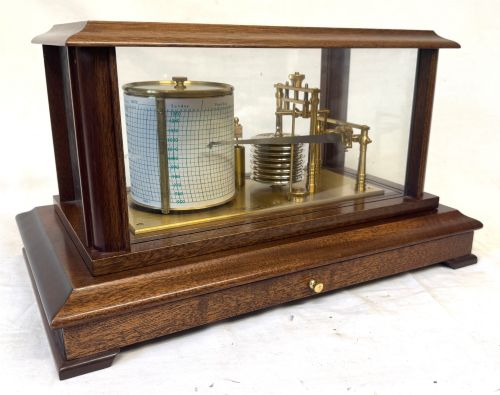
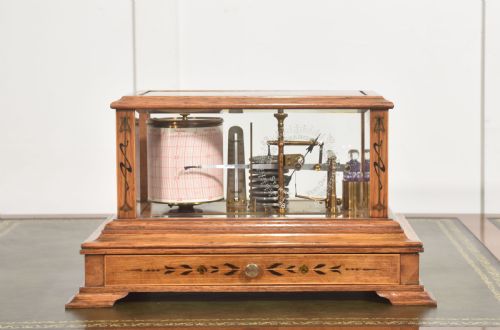
A scientific antique barograph records continuous atmospheric pressure changes in a fitted wooden case with glass panels.

Scientific Barograph
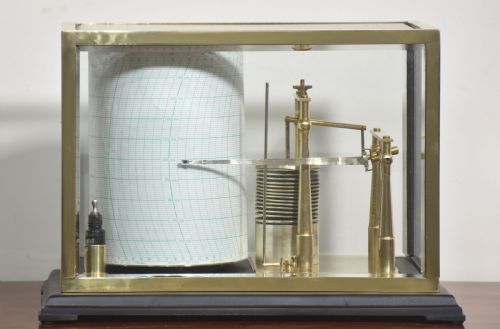
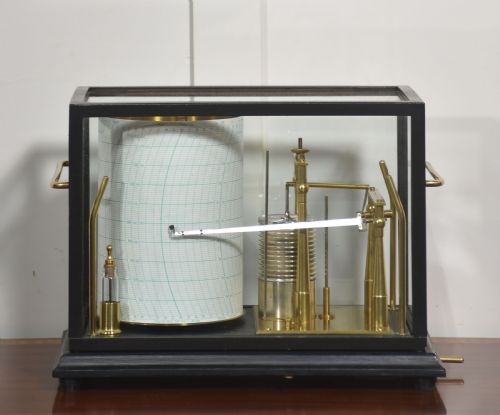
A scientific antique barograph is a recording weather instrument designed to track barometric pressure on a rotating drum over the course of a week. When you search for this phrase, you encounter mechanical instruments housed in glazed wooden enclosures intended to sit on a desk or hang on a wall.
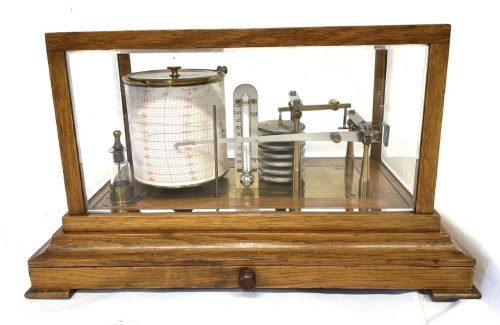
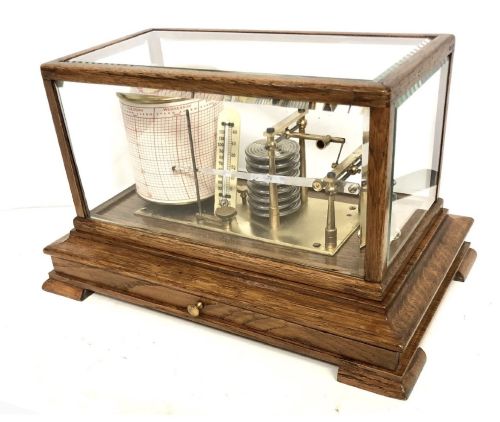
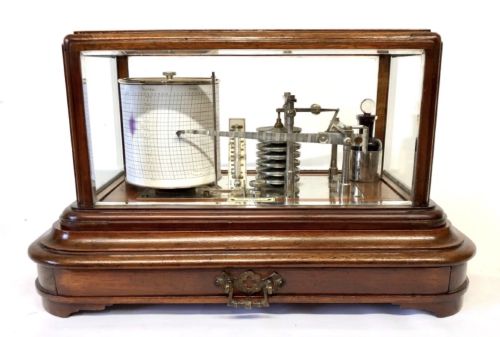
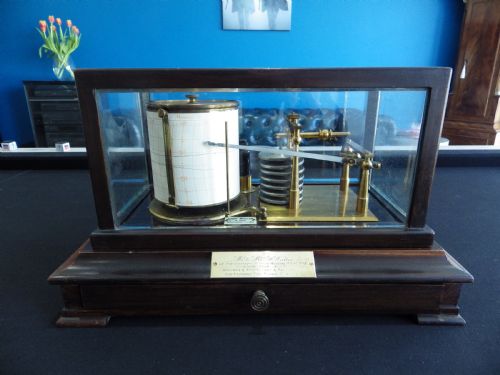
The versions most commonly met on this page date from the Victorian, Edwardian, and interwar periods. These examples frequently pair brass mechanisms with mahogany or oak cases, often incorporating a thermometer or a chart drawer beneath the main movement.
Construction and Materials
Makers constructed the housing primarily from solid mahogany, oak, or walnut, fitted with bevelled glass panels to protect the delicate internal mechanism while allowing a clear view of the recording drum.
The internal movement relies upon stacked metallic vacuum capsules, known as aneroid diaphragms, which expand or contract with atmospheric pressure and transfer that movement through a system of brass levers to an inked nib.
Assessing Quality and Execution
The distinction between standard production and the highest grade lies in the precision of the brass mechanism and the choice of case timber. Finer pieces display crisp maker signatures on the cast bedplate and substantial cabinetry with detailed moulding or inlay.
Quality also depends on the clarity of the glass panels and the retention of original components such as the recording drum, the ink arm, and the lower chart storage drawer.
Short and Mason·Negretti and Zambra·Richard Freres·Casella London·Jules Richard
The Scientific Barograph Glossary
- Barograph
- A recording barometer that plots atmospheric pressure onto a graduated paper chart over a set period, usually seven days.
- Aneroid capsule
- A sealed, corrugated metal box that contracts or expands as barometric pressure changes without the use of liquid mercury.
- Recording drum
- A clockwork-driven cylinder that rotates once per week underneath the inked nib of the pressure arm.
- Bevelled glass
- Pane glass with edges cut at an angle, fitted into the wooden housing to provide both protection and a polished appearance.
- Chart drawer
- A small storage compartment built into the base of the wooden case to hold spare weekly recording papers.
Scientific Barograph: Frequently Asked Questions
How does a barograph work?
A stack of metal vacuum chambers expands and contracts with changes in the air pressure surrounding the instrument.
This physical movement transfers through a series of pivoting brass levers to an arm holding an inked nib, which traces a continuous line onto a rotating paper chart.
Where should I place a barograph?
These instruments belong in a stable indoor environment away from direct sunlight, radiators, and heavy draughts that might affect the internal mechanism.
Because the wooden cases and mechanical movements are sensitive to extreme humidity and temperature shifts, a sturdy mantelpiece, desk, or sideboard makes an ideal home.
How do I read the paper chart?
The vertical axis on the paper measures atmospheric pressure in millibars or inches of mercury, while the horizontal axis tracks the days of the week.
A rising line indicates improving weather, whereas a falling line points towards approaching wind or rain.
How do I change the chart paper?
You lift the hinged brass arm gently away from the drum to prevent damaging the delicate ink nib, then lift the brass cylinder out of its mounting.
The old paper slides off the drum and a fresh weekly chart wraps around the cylinder, secured by a small clip before you replace the drum and reset the nib.