


Glazed Mahogany Barometer
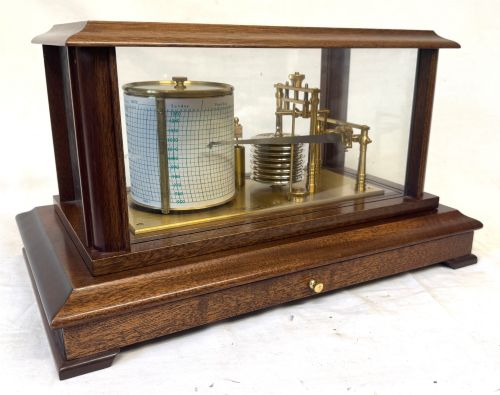
A glazed mahogany barometer measures atmospheric pressure through housed instruments preserved behind clear panes within polished timber cabinetry.
Glazed Mahogany Barometer
A glazed mahogany barometer combines functional meteorological instrumentation with timber cabinet work, typically taking the form of desktop recording barographs or wall-mounted stick barometers. You will frequently encounter Edwardian and Victorian examples alongside twentieth-century instruments housed in rich tropical hardwood cases.
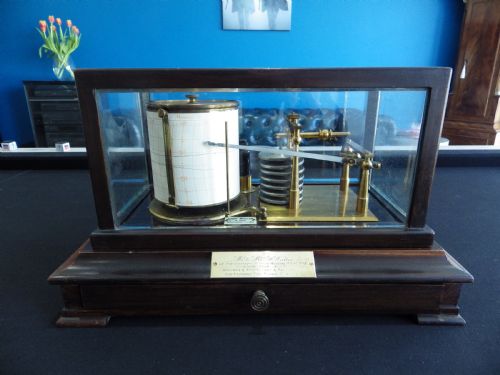
Makers housed these precision movements behind five glass panes or hinged glazed lids to protect the delicate recording drums, paper charts, and brass mechanisms while allowing continuous observation. The inclusion of storage drawers for spare recording charts and integrated thermometers remains common across the selection.
The term glazed mahogany barometer encompasses both daily recording barographs that track pressure changes onto paper sheets and traditional mercury stick barometers framed in timber. These scientific instruments reflect the domestic and professional interest in weather observation spanning the nineteenth and twentieth centuries.
How they were made
Workshops constructed these meteorological instruments using solid and veneered mahogany cabinets fitted with precision brass movements, steel components, and paper recording charts. Cabinetmakers shaped the timber housings to accommodate glazed viewing panels, hinged access lids, and lower chart drawers.
Scientific instrument makers integrated delicate barographic drums, vacuum chambers, and mercury tubes within the timber frames. Glass panes were fitted securely into the mahogany structures to shield the paper charts and clockwork mechanisms from dust while maintaining visibility.
Railway and Southend travel interest often accompanied early twentieth-century weather recording, keeping holidaymakers informed of impending coastal showers.
What varies in quality
The distinction between standard production and top-tier instruments rests in the refinement of the brass clockwork movements and the joinery of the mahogany cases. Maker signatures inscribed on the metal beds or paper scales often indicate workshop pedigree.
Cabinet proportion, the clarity and thickness of the five glass panels, and the presence of original paper paperwork or integrated mercury thermometers differentiate standard examples from masterworks.
Russell Norwich·Negretti and Zambra·Alexander Wright·Short and Mason·Casella London·R Fuess·Robson of Newcastle·Antoine Redier·Richard Freres
The Glazed Mahogany Barometer Glossary
- Barograph
- A self-recording barometer that plots atmospheric pressure onto a rotating paper chart over a weekly period. These instruments use stacked aneroid metal vacuum capsules connected to an inked arm.
- Stick barometer
- A vertical mercury barometer housed in a long timber case that displays atmospheric pressure via a column of mercury alongside a graduated scale.
- Aneroid
- Operating without liquid, utilising a flexible sealed metal box that expands or contracts with changes in atmospheric pressure.
- Chart drawer
- A shallow compartment built into the base of a mahogany instrument case to store spare weekly recording papers and ink supplies.
Glazed Mahogany Barometer: Frequently Asked Questions
How do I change the paper chart?
Lift the glazed mahogany lid to access the rotating brass drum holding the weekly paper sheet. Gently release the inked arm before sliding off the used chart and securing a fresh one.
Ensure the clock movement is wound carefully and the pen rests lightly on the paper grid before closing the glass cover.
Are these instruments still accurate?
Most historic barographs and barometers retain functioning aneroid or mercury mechanisms that respond reliably to local atmospheric pressure changes. Regular calibration against known regional weather data helps maintain precision.
Differences in historic scale markings and atmospheric measurement units may require minor conversion depending on the manufacturing period.
Why do some models feature five glass panes?
Five glass panels allow maximum light penetration onto the recording drum and barometer dial from multiple angles while protecting the internal mechanics. This construction style became standard for Edwardian and Victorian barographs.
Cabinetmakers joined the glass panes using mitred timber frames or brass corners to ensure the instrument remained dust-free.
How should I clean the mahogany case?
Dust the polished mahogany surfaces regularly with a soft, dry cloth to preserve the timber grain and prevent buildup. Avoid using modern chemical sprays or silicone polishes on antique wood.
Clean the glass panes using a mild glass cleaner applied to a cloth rather than directly on the panel to protect adjacent wood and brass fittings.