

Mahogany Bowfront Server Table
A mahogany bowfront server table brings curved elegance to a room, offering practical surface space and concealed storage shaped by Georgian and Regency cabinetmakers.
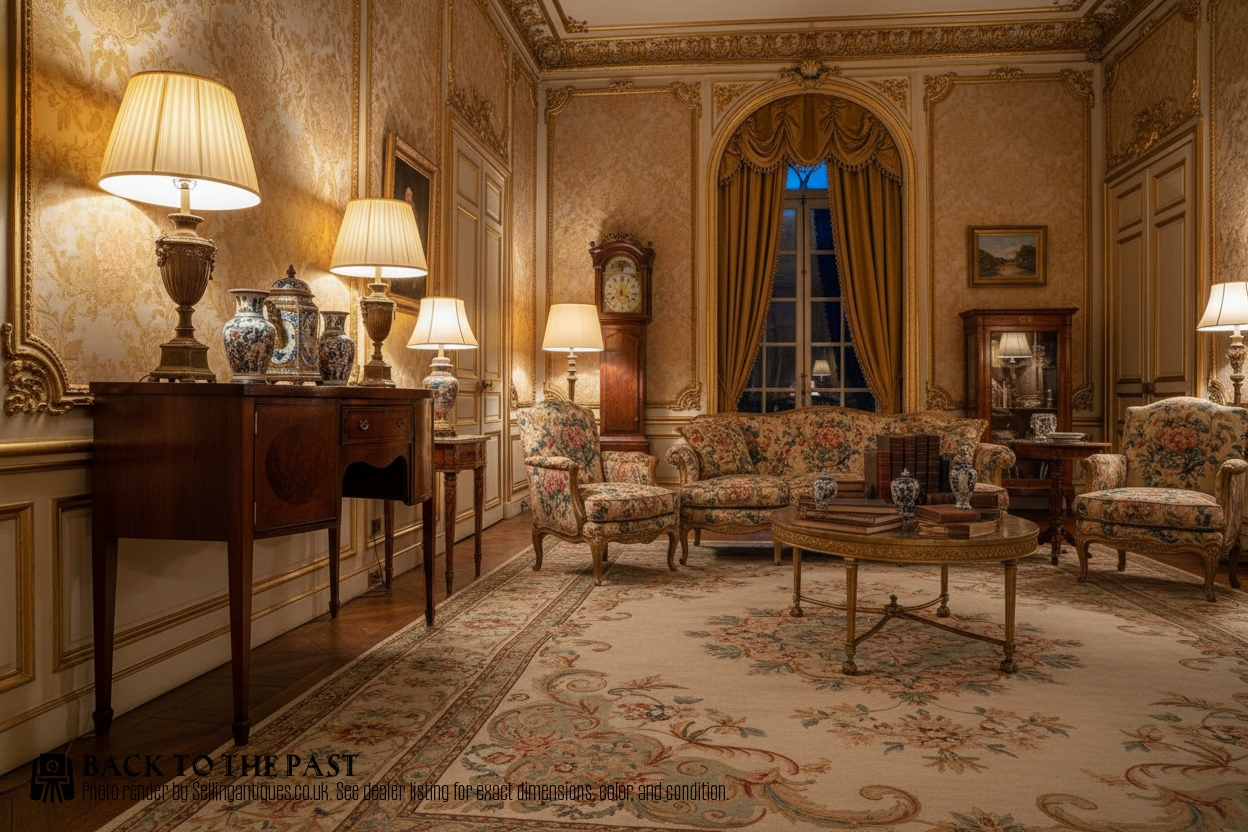
Mahogany Bowfront Server Table
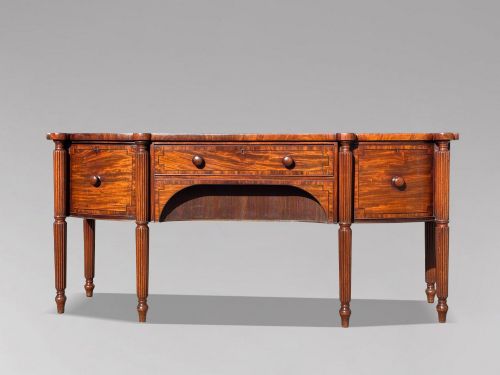
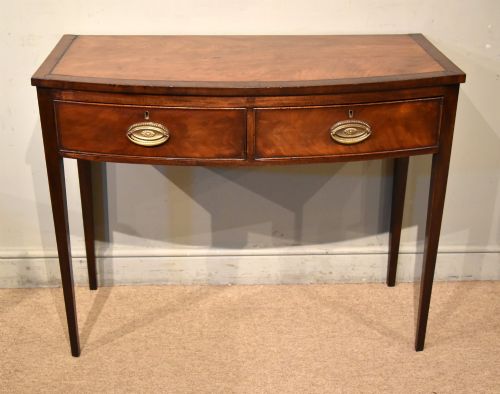
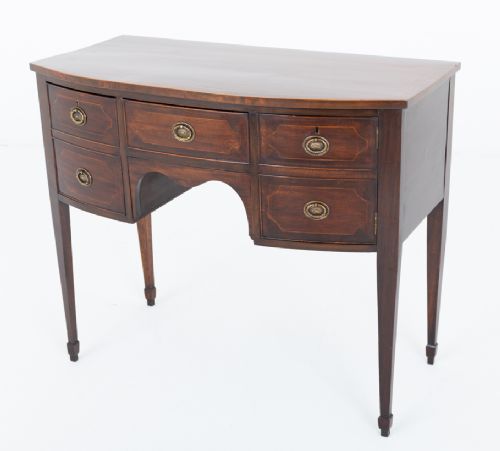
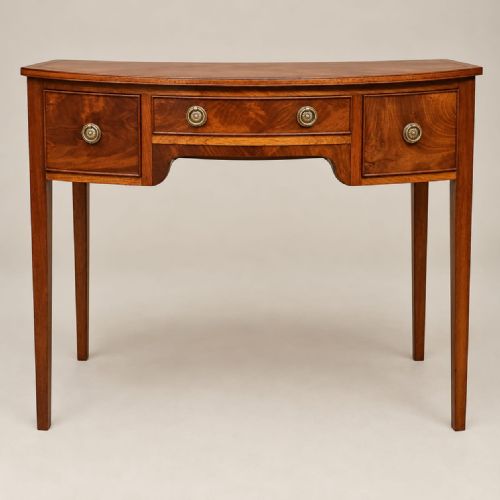
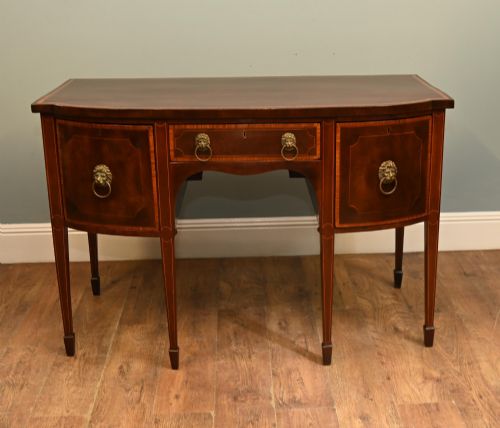
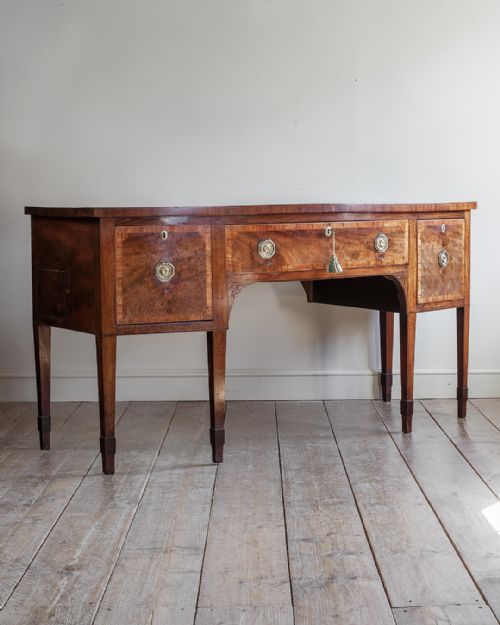
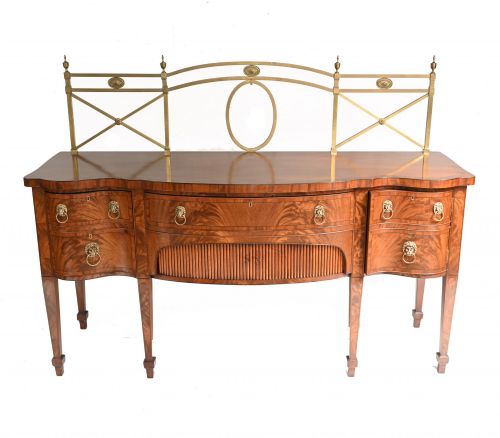
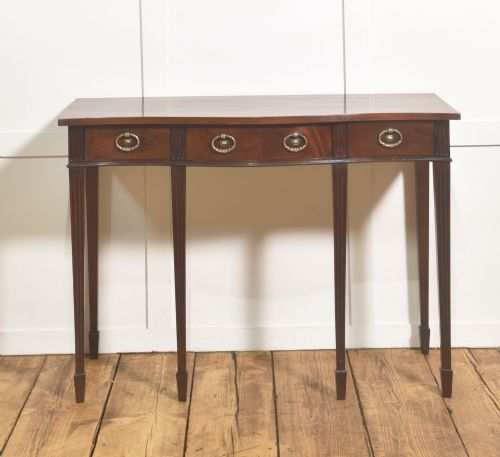
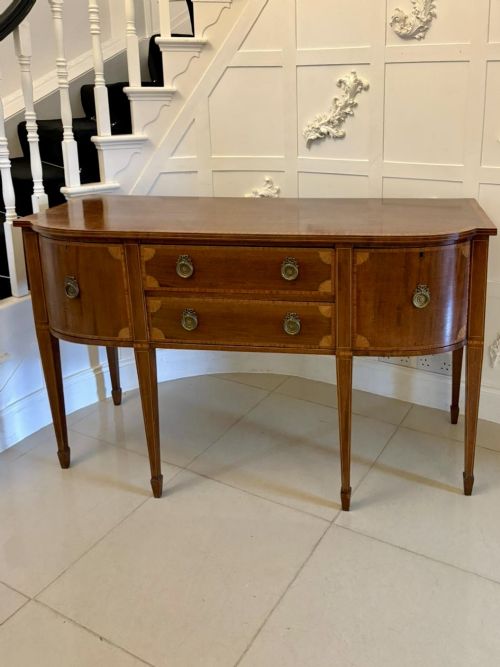
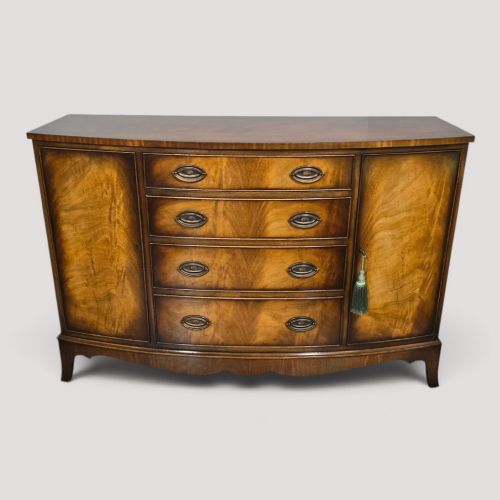
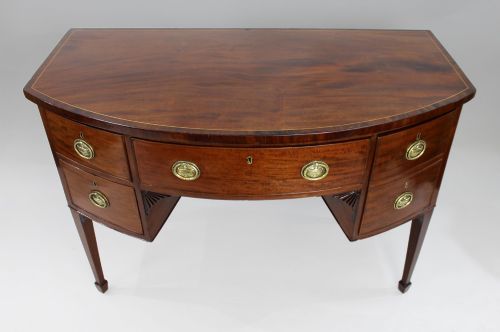
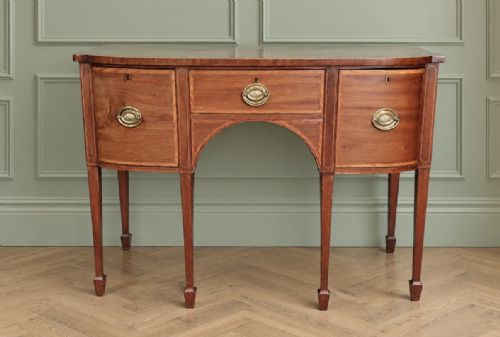
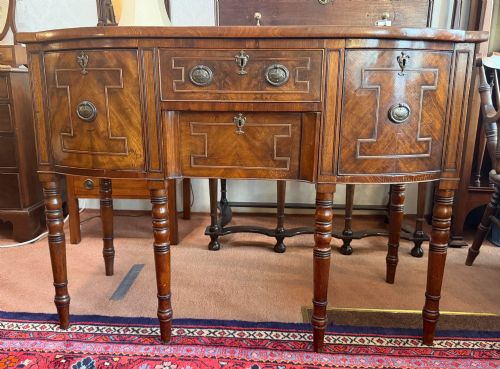
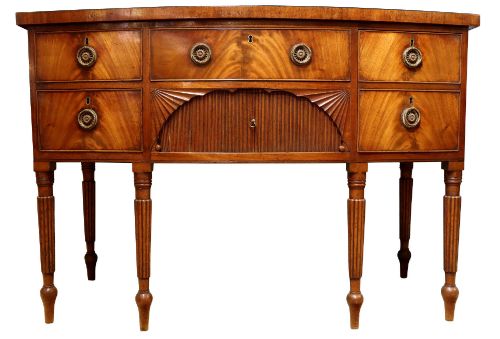
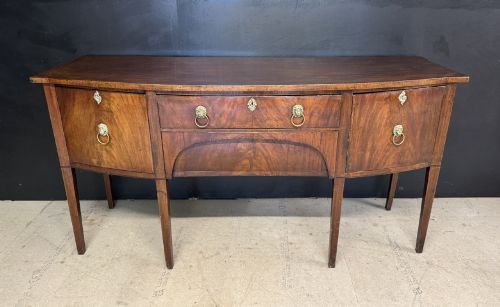
A mahogany bowfront server table is primarily represented here by sideboards, side tables, and servers dating from the Georgian, Regency, and Edwardian periods. These pieces combine a curved outward front with deep proportions designed for dining rooms and hallways.
The most common form on this page is the Georgian or George III sideboard, often featuring boxwood inlay, satinwood crossbanding, or flame mahogany veneer. Makers constructed these items to serve dining spaces, providing cupboards and drawers behind a sweeping curved facade.
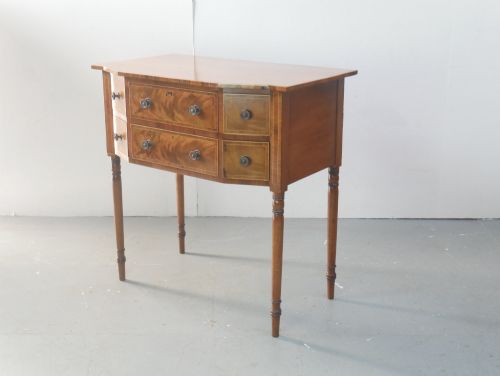
Other variations include 19th-century and Edwardian pieces influenced by Sheraton designs, alongside smaller side cabinets and console tables. Buyers encounter six-legged formats as well as compact proportions intended for smaller rooms.
How they were made
Cabinetmakers built these servers using solid mahogany and flame mahogany veneers applied to secondary woods like oak, framing the curved contours with careful carpentry. The characteristic bow front required precise shaping of rails and drawer fronts to follow the convex curve without warping.
Surface decoration relied on contrasting timbers such as satinwood, boxwood inlay, and boxwood stringing to edge drawer fronts and tabletops. Brass hardware, including handles and sometimes lion mask rings or backplates, completed the construction.
Joinery techniques included hand-cut dovetails for drawers and tenon joints for frames, ensuring structural integrity alongside decorative refinement.
Mahogany Bowfront Server Table Retail Price Guide 2026
Typical asking prices for mahogany bowfront server table among the pieces listed under this phrase on Sellingantiques today, from the lower quarter to the upper quarter. They describe what is for sale here now, not the wider market.
Listings span the 18th, 19th, and early 20th centuries, uniting Georgian and Regency designs with Edwardian interpretations.
What varies in quality
Quality in a mahogany bowfront server table rests on the choice of timber and the execution of its veneers. Flame mahogany with deep, active grain figures commands greater regard than plain timber, while crisp crossbanding in satinwood or boxwood demonstrates superior craftsmanship.
Proportion and scale dictate the desirability of a piece, particularly in smaller dimensions where maintaining the curved line requires high skill. The subtlety of the bow front, the sharpness of the inlay work, and the originality of the brass hardware distinguish better examples from standard production.
The Mahogany Bowfront Server Table Glossary
- Bowfront
- A furniture front that curves outward in a convex shape. This profile softens the rectangular lines of a room and was widely used on dining servers.
- Crossbanding
- A narrow strip of veneer applied perpendicularly to the grain of the main surface. It frames the perimeter of drawer fronts or tabletops for decorative contrast.
- Stringing
- A thin, linear inlay of contrasting wood, such as boxwood, set into channels in the mahogany. It outlines panels and structural borders.
- Flame mahogany
- A veneer cut from the branch junction or fork of the mahogany tree, displaying a characteristic flickering, flame-like pattern. It was selected for prominent drawer fronts.
- Sideboard
- A dining room piece designed for serving food and storing linen or cutlery, encompassing the servers, credenzas, and side tables listed here.
Mahogany Bowfront Server Table: Frequently Asked Questions
Where did people use these tables?
These pieces sat principally in dining rooms against interior walls, where staff placed dishes during meals or stored tableware within the deep drawers and cupboards.
Over time, smaller variations migrated into hallways and drawing rooms as server tables or side cabinets for decorative display.
How do I spot a Georgian piece?
Georgian examples display hand-cut joinery, native timber linings such as oak, and restrained boxwood or satinwood stringing that follows the structural lines.
Proportions tend to be balanced, and the timber exhibits a deep, aged patina developed over centuries of use.
What is the difference between a server and a sideboard?
In period terminology, servers often tended towards lighter side tables or smaller console formats meant strictly for passing food.
Sideboards generally incorporated built-in cellarette drawers for bottles and deeper cupboards, though the terms overlap frequently in modern listings.
How do I care for mahogany surfaces?
Maintain the finish by avoiding direct sunlight and excessive heat, which dries out antique veneers and causes splitting.
Apply traditional beeswax occasionally and buff gently with a soft cloth to nourish the wood without building up synthetic residues.