

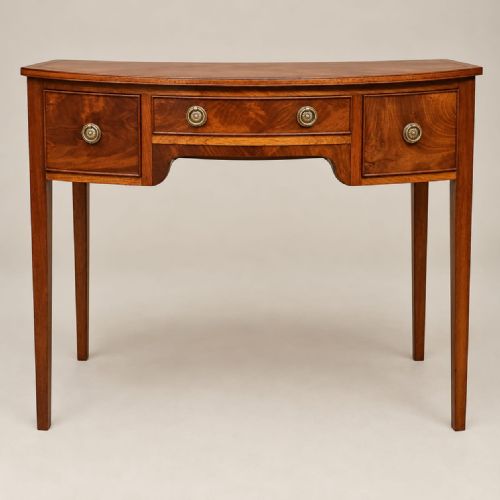
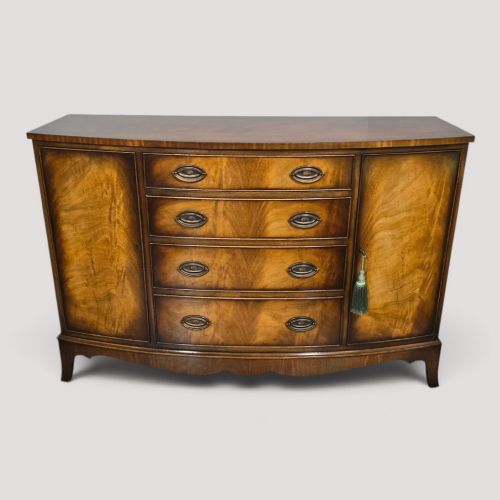
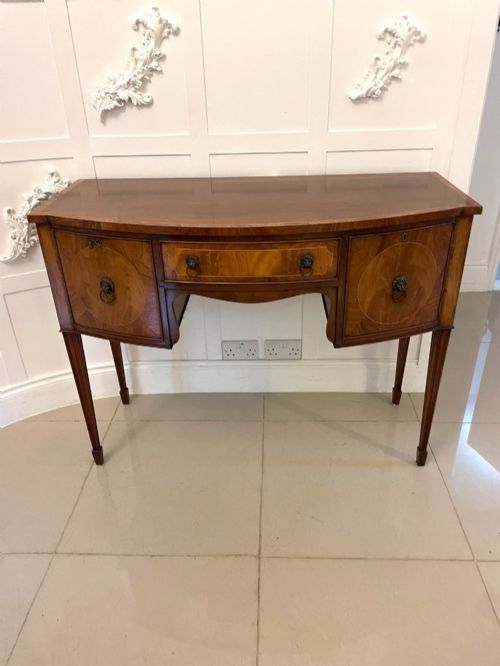
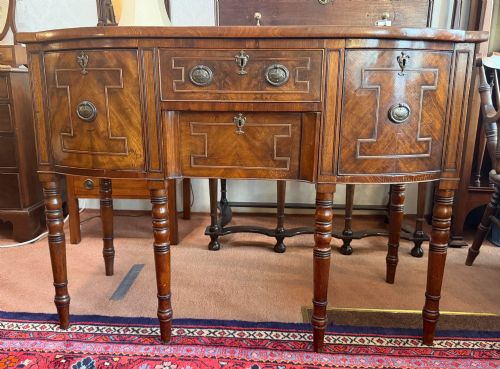
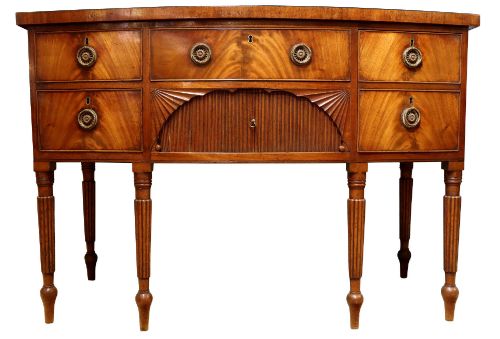
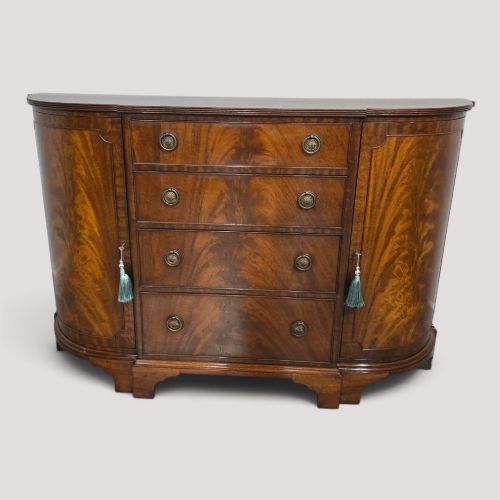
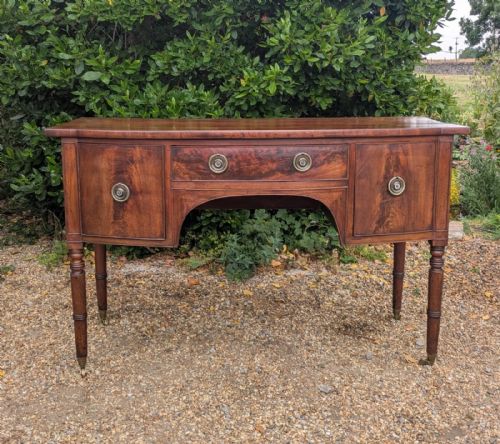
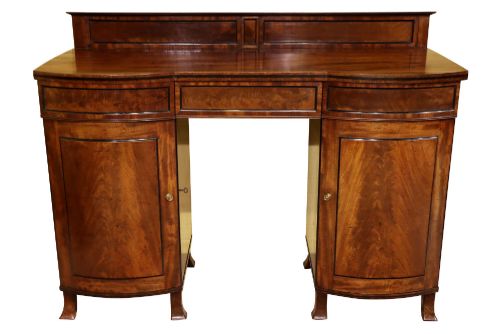


Regency Bow Front Server
A regency bow front server brings graceful curved lines and rich mahogany timber to a dining room or hallway.
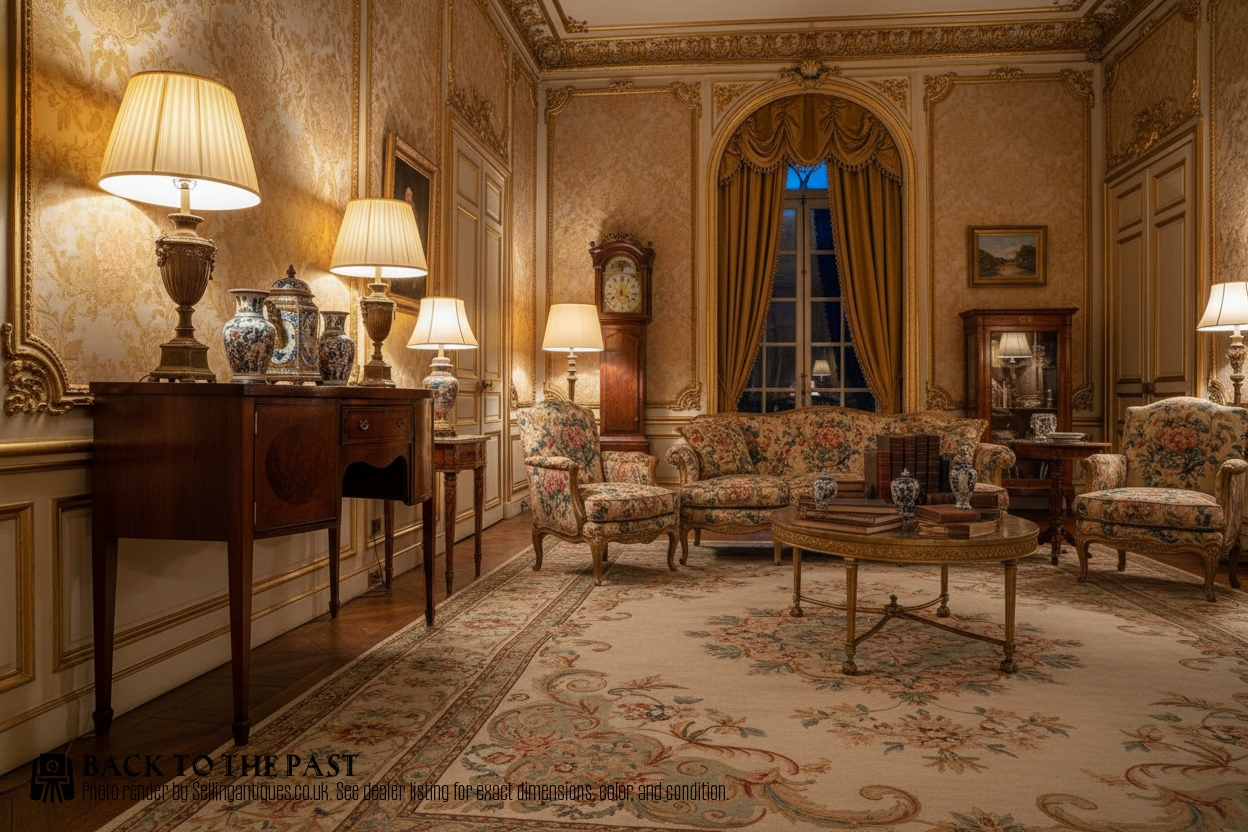
Regency Bow Front Server
A regency bow front server is fundamentally a dining room or hallway storage piece, encompassing sideboards, side tables, console tables, and dressers shaped with a distinct outward curve at the front. The versions most commonly encountered on this page date from the nineteenth century, including the Regency period itself alongside Georgian, Victorian, and later twentieth-century interpretations.
The form ranges from compact three-drawer side tables and small bowed sideboards to larger pedestal sideboards and console tables. These pieces served primarily for serving food or displaying household items, combining practical storage with the refined proportions characteristic of the era.
Makers and craftsmen worked within specific stylistic vocabularies, producing pieces associated with George III, George IV, and William IV reigns. The overriding design unites utility with the sweeping curves that define the bow front aesthetic.
How they were made
Cabinet makers relied heavily on solid mahogany and flame mahogany veneer applied over secondary timbers like oak, building a sturdy carcase capable of supporting curved fronts. This choice of primary wood provided a rich, dark ground that was frequently enhanced by contrasting stringing and banding.
Decorative detailing often incorporated boxwood inlay and ebonised highlights to accentuate the curved drawer fronts and borders. Brass fixtures, including ring handles and key escutcheons, completed the construction and added functional contrast to the polished timber surfaces.
Regency Bow Front Server Retail Price Guide 2026
Typical asking prices for regency bow front server among the pieces listed under this phrase on Sellingantiques today, from the lower quarter to the upper quarter. They describe what is for sale here now, not the wider market.
Object forms vary across this selection from compact three-drawer side tables and console tables to larger pedestal sideboards and dressers.
What varies in quality
The distinction between standard examples and the finest pieces often rests upon the selection of timber figures, particularly the choice of flame mahogany veneer on the curved drawer fronts. Finer specimens display carefully matched wood grains that mirror each other symmetrically across the piece.
Craftsmanship is further revealed in the precision of the joinery around the curved bow front and the subtlety of any boxwood inlay or stringing. Secondary woods used for drawer linings, such as oak, and the retention of original brass hardware contribute significantly to the standing of an individual server.
The Regency Bow Front Server Glossary
- Bow front
- A convex, outwardly curved front profile typical of these sideboards and servers. This shaping requires specialised woodworking skill to bend or shape timber accurately.
- Flame mahogany
- A veneer cut from the fork of a mahogany tree where the branches join the trunk. It exhibits a distinctive, fiery pattern with intense chatoyancy.
- Inlay
- A technique where pieces of contrasting material, such as boxwood, are set into recesses flush with the wood surface. It creates delicate decorative borders and geometric lines.
- Pedestal sideboard
- A large dining room server featuring distinct end pedestals flanking a central section. These larger pieces offer substantial storage capacity.
- Stringing
- Thin, linear inlay used to outline drawer edges and panels. It provides a crisp, refined contrast against the darker mahogany background.
Regency Bow Front Server: Frequently Asked Questions
What is a bow front server?
A bow front server is a low cabinet or table with a convex curved front used for storage and serving in dining spaces.
These pieces typically feature drawers and cupboards designed to fit flush along the curved facade.
How were these servers used?
They functioned primarily in dining rooms for holding serving dishes, cutlery, and glassware during meals.
Over time, their decorative presence led to their use in hallways and living rooms as console tables.
How do I identify Regency style?
Regency style is characterised by classical restraint, clean architectural lines, and rich mahogany veneers.
Details like boxwood inlay, ebonised accents, and brass hardware help distinguish pieces from this period.
What woods are commonly found?
Mahogany serves as the primary timber across the vast majority of these server listings.
Cabinet makers also utilised boxwood for inlay, flame mahogany veneer for decorative fronts, and oak for internal drawer linings.
How do I care for mahogany?
Protect the polished timber surface from direct sunlight and excessive moisture to prevent fading and warping.
Regular dusting with a soft cloth maintains the natural lustre of the antique wood.