
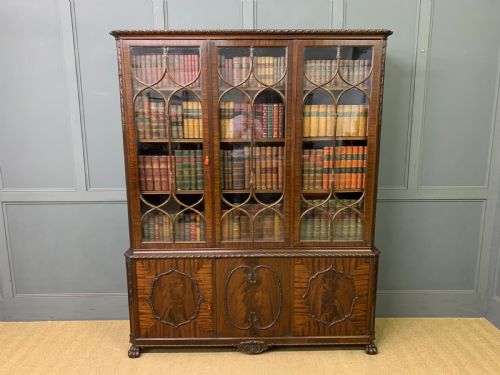
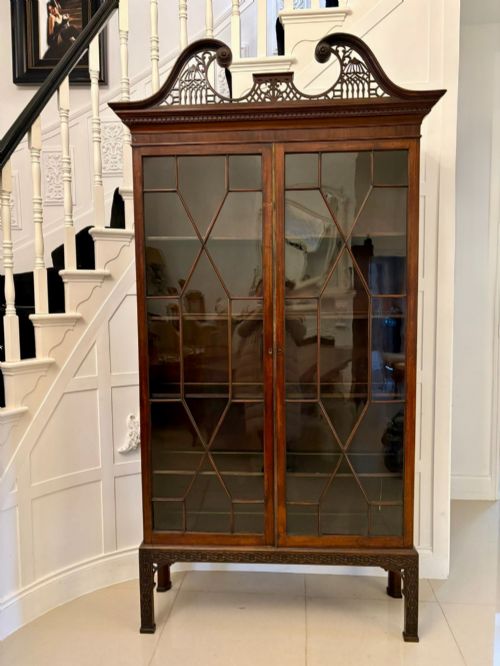
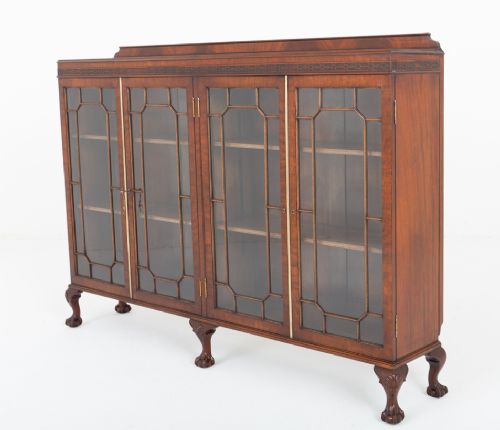
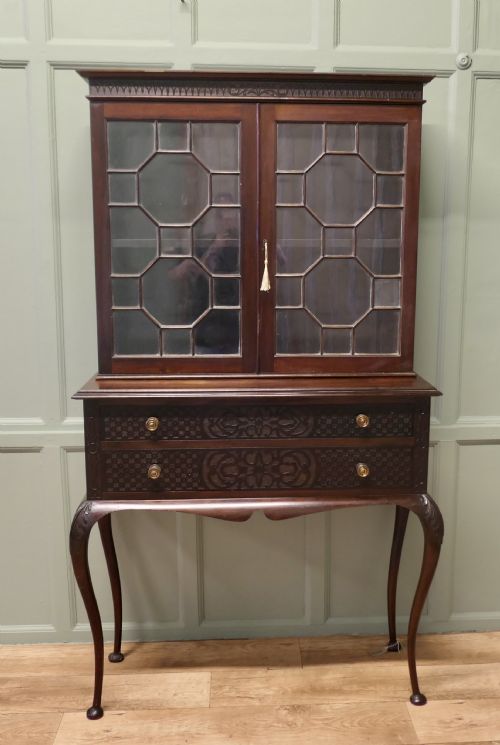
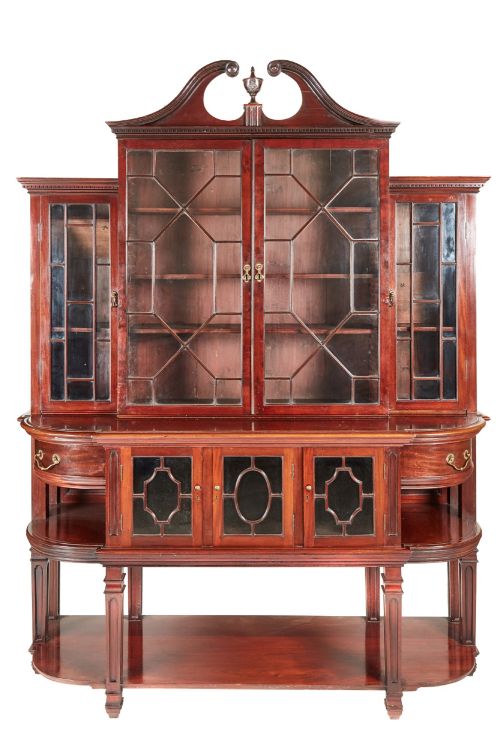
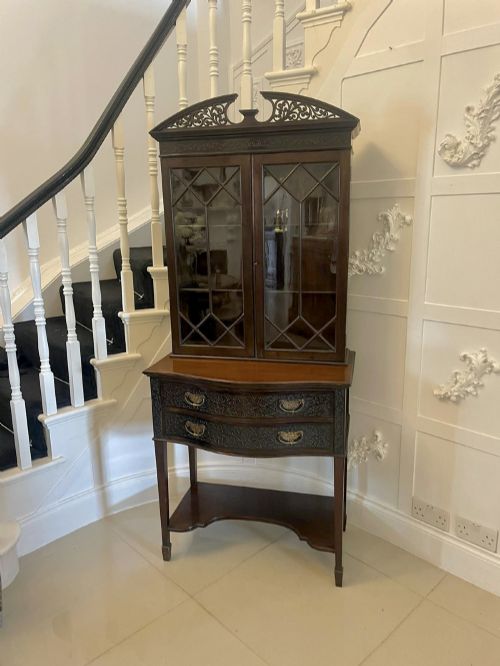
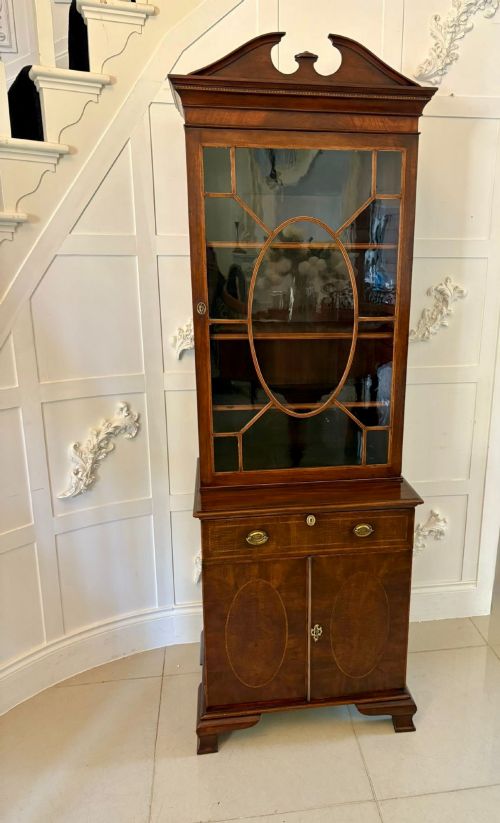
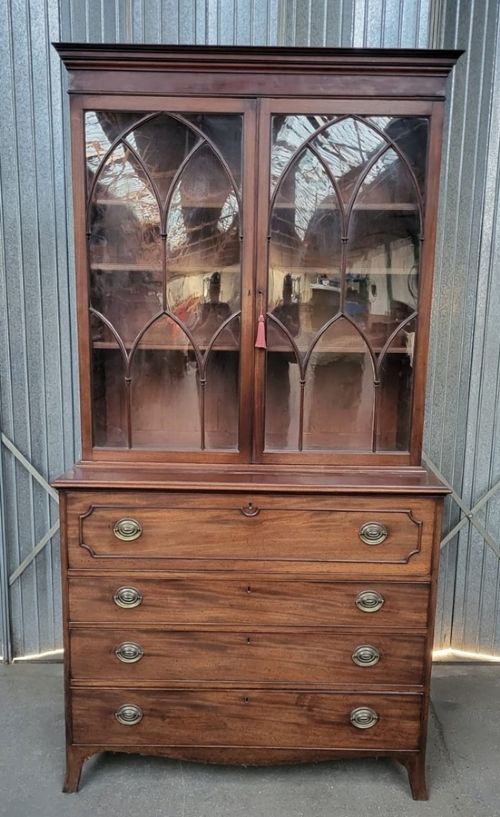
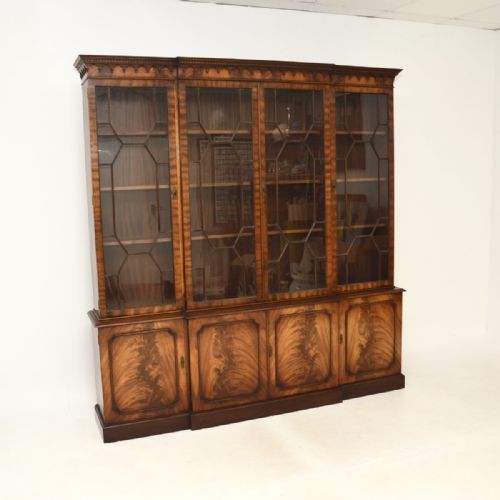
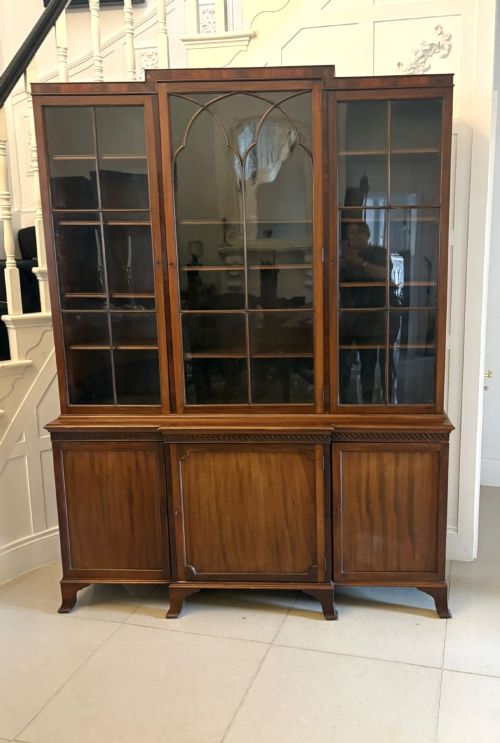
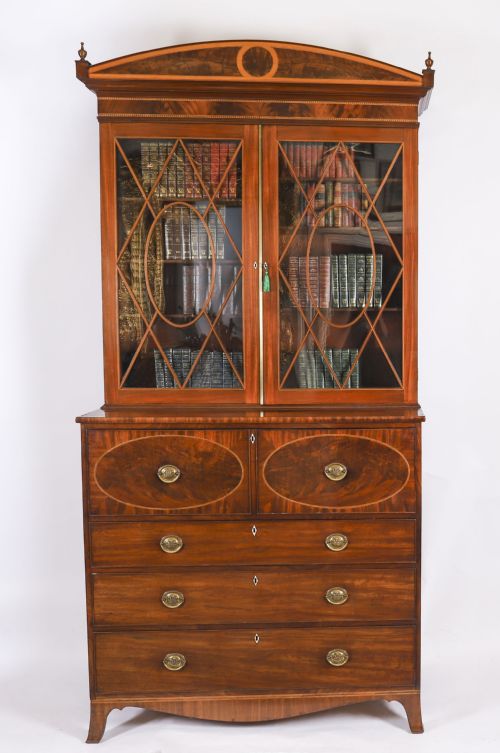

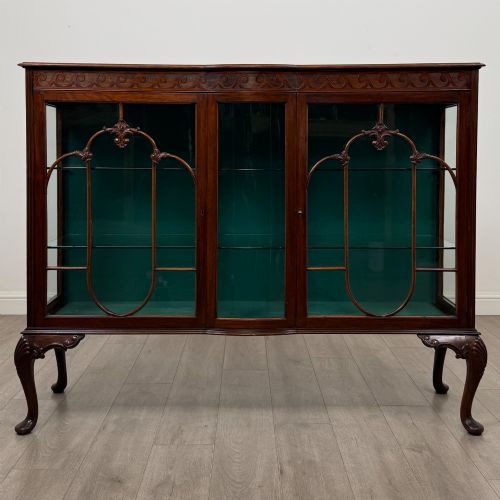
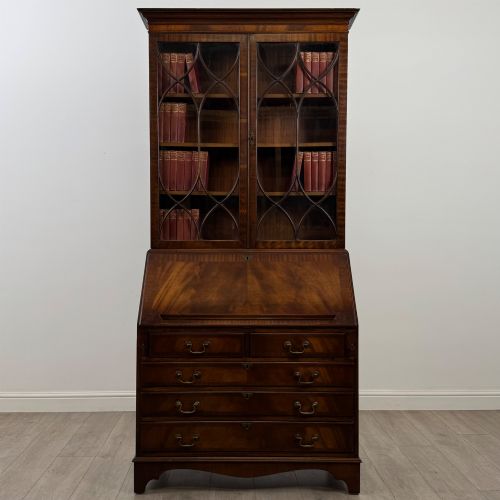
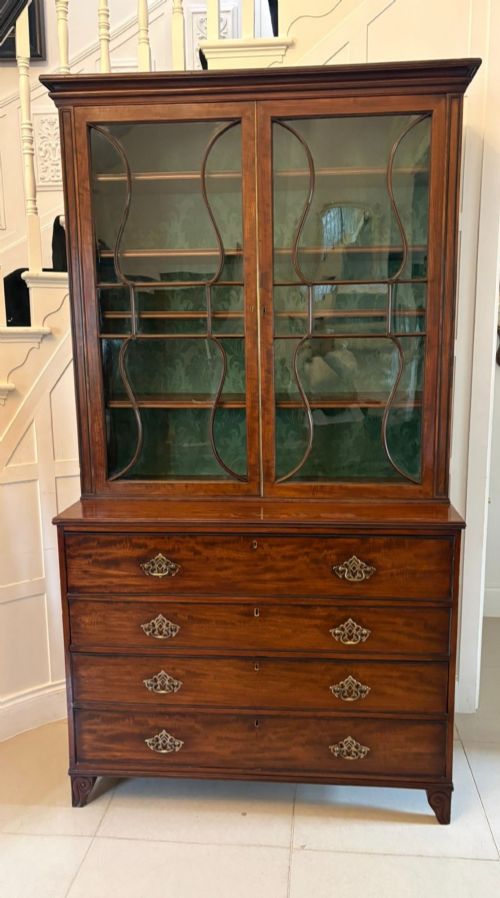
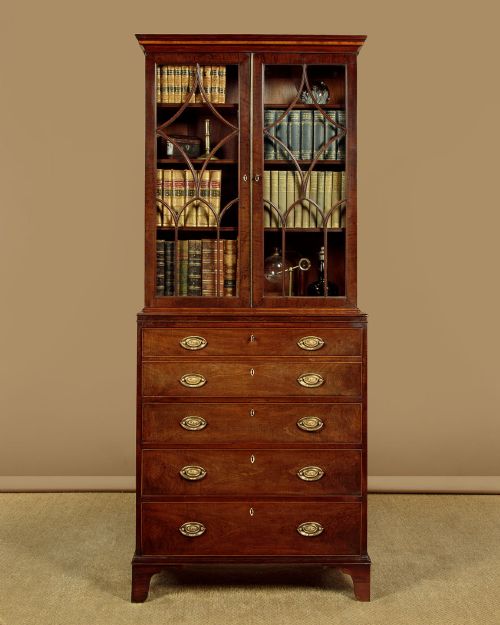
Mahogany Astragal Glazed Cabinet
A mahogany astragal glazed cabinet brings together fine timber and geometric glazing bars to display books and porcelain.
Mahogany Astragal Glazed Cabinet
A mahogany astragal glazed cabinet serves primarily to house books, writing equipment, or decorative collections behind glass doors divided by wooden glazing bars. These items range from tall breakfront bookcases and bureau bookcases to corner cupboards and wall-mounted display cabinets.
The pieces appearing here span multiple eras, with Georgian originals sitting alongside Regency iterations and later Edwardian or revival pieces. Corner cabinets and tall display versions form a large portion of the available inventory, reflecting domestic storage needs across the eighteenth, nineteenth, and early twentieth centuries.
How they were made
Cabinet makers utilised solid mahogany and flame mahogany veneers, frequently incorporating satinwood inlay and brass hardware for decorative contrast. The timber was selected for its grain pattern and stability before being polished to a deep lustre.
Glazing bars, known as astragals, were meticulously shaped and joined to hold individual panes of glass within the door frames. Joinery techniques such as dovetailing secured the internal drawers and structural carcases of the larger bookcases and secretaires.
Several corner cabinets were built tall enough to scrape Victorian ceilings, proving our ancestors collected more china than floor space.
What varies in quality
The refinement of the timber selection dictates much of the visual merit, with figured mahogany and symmetrical flame veneers marking out the superior examples from plain stock. Subtle additions such as finely executed satinwood stringing or carved mouldings elevate individual pieces.
Construction details reveal the standard of workshop output, from the delicacy of the astragal joints on the glazed doors to the organisation of fitted interiors within bureau bookcases. Original brass fittings and intact historical glass further distinguish the better items.
Jas Shoolbred·Gillows·George Oakley
The Mahogany Astragal Glazed Cabinet Glossary
- Astragal
- The moulding profile used to divide individual panes of glass within a cabinet door. These wooden bars form geometric patterns such as gothic arches or intersecting circles.
- Breakfront
- A large cabinet design where the central section projects forward from the flanking wings. This architectural arrangement creates depth and visual balance.
- Secretaire
- A cabinet incorporating a drop-front desk drawer that conceals a fitted interior of small drawers and pigeonholes. It combines writing facilities with storage.
- Vitrine
- A glass-sided display cabinet designed primarily for the exhibition of porcelain and ornaments. The term often denotes lighter, more decorative furniture.
- Stringing
- Thin bands of contrasting timber inlaid flush into the surface of the mahogany. This technique frames panels and highlights the structural outlines of the furniture.
Mahogany Astragal Glazed Cabinet: Frequently Asked Questions
What is an astragal glazed cabinet?
An astragal glazed cabinet is a piece of furniture featuring glass doors divided by thin wooden strips into smaller panes. These bars create decorative geometric patterns while securing the glass in place.
Such cabinets were designed for displaying valuable books and collections while protecting them from dust.
How do I identify a Georgian cabinet?
Georgian pieces typically display proportions rooted in classical architecture, utilising dense mahogany and hand-cut joinery. The glazing bars on eighteenth-century examples tend to be finer and more intricate.
Inspect the internal construction and drawer linings for period-appropriate hand-tool marks and secondary timbers.
Where were corner cabinets used?
Corner cabinets were built to utilise awkward angles and empty corners in eighteenth and nineteenth-century rooms. Hanging versions were fixed to walls, while floor-standing models occupied full room height.
They provided valuable display and storage space without dominating the central floor area of smaller parlours.
How should I clean mahogany furniture?
Maintain mahogany surfaces by dusting gently with a dry, soft cloth to prevent particulate build-up. Avoid silicone-based polishes, opting instead for traditional beeswax applied sparingly.
Keep wooden cabinets away from direct sunlight and radiators to prevent the timber from drying out and the veneer from lifting.