


Lyre Music Stand
A lyre music stand brings the classic form of the musical instrument into functional home furniture through skilled period craftsmanship.
Lyre Music Stand
When you search for a lyre music stand, you are looking at adjustable reading supports and display pieces shaped around the symmetrical curves of the ancient instrument. These objects range from single-score holders to larger duet stands and reading tables designed to hold heavy folios.
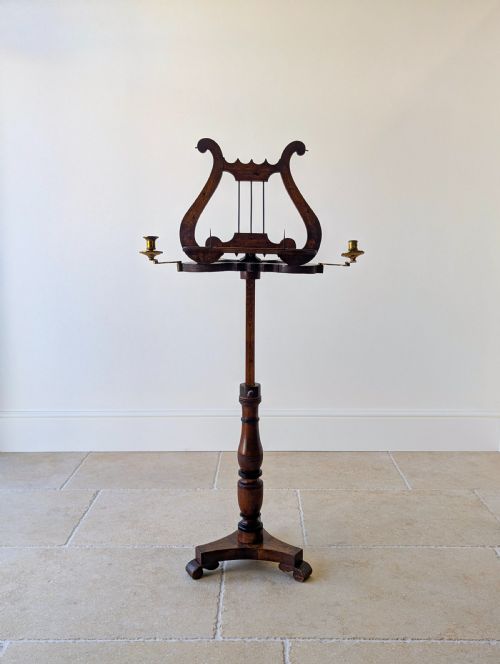
The versions you are most likely to meet on this page date from the Georgian, Regency, and Victorian periods, executed in rich timbers like mahogany, rosewood, and walnut. Many examples incorporate adjustable mechanisms, allowing the musician to alter both height and angle during a recital or practice session.
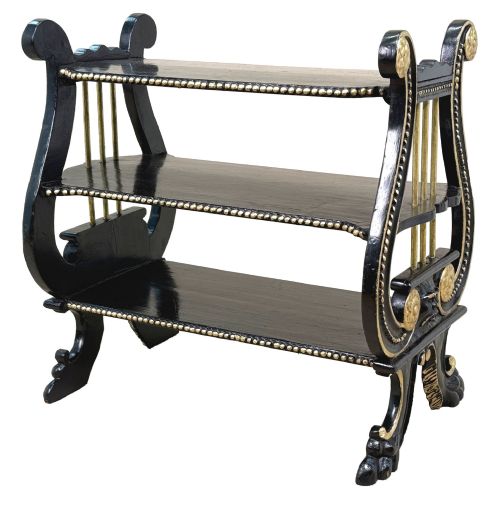
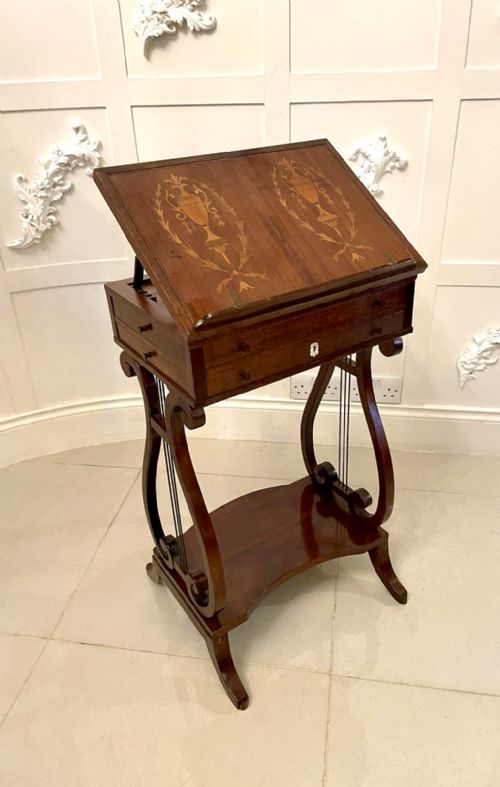
Beyond standalone music stands, the evidence shows the lyre motif applied to related forms such as canterburys, etageres, and lecterns. These pieces combine the characteristic open-work frame with practical storage compartments for sheet music and books.
Materials and construction
Cabinet makers utilised dense, durable hardwoods such as mahogany and rosewood to form the delicate yet stable curves of the lyre shape. Walnut and ebonised wood also appear frequently, often enhanced with satinwood inlay or parcel gilding to highlight the grain and decorative outlines.
Brass fittings play a vital structural role, particularly in the adjustable stems, joints, and leaf holders that allow the stands to be altered. Joinery techniques had to be precise to support the upward pressure of the reading desk without compromising the slender profile of the central column and tripod base.
Recorded forms include adjustable music stands, duet stands, canterburys, etageres, and reading tables incorporating the distinctive lyre motif.
Distinctions in quality
The top of the range is distinguished by the crispness of the carving within the lyre frame and the integration of functional brass mechanisms that operate smoothly after generations of use. Superior examples display carefully chosen timber veneers and harmonious proportions across the column and base.
Simpler or later pieces rely on straightforward turned shafts and heavier timber sections with less intricate detailing. Quality here rests on the structural integrity of the joints and the original condition of the adjustable parts rather than elaborate decoration.
The Lyre Music Stand Glossary
- Lyre
- A symmetrical, U-shaped musical instrument frame used here as the primary decorative and structural motif for the reading desk. It defines the characteristic openwork silhouette seen across Regency and Victorian stands.
- Duet stand
- A wider music stand designed to accommodate two musicians reading from the same shared score simultaneously. These often feature dual adjustable desks mounted on a single sturdy pillar.
- Canterbury
- A low piece of furniture featuring vertical partitions used for storing sheet music, folios, or books, sometimes topped with a lyre-form rack. It bridges the gap between music storage and display.
- Parcel gilded
- Partially covered in gold leaf to highlight specific carved details, mouldings, or ornamental sections against a dark ebonised or polished timber background. This technique adds visual contrast to the stand.
- Etagere
- A set of open display shelves supported by slender columns, occasionally incorporating music-related forms. It provides surfaces for books and decorative objects in a drawing room.
Lyre Music Stand: Frequently Asked Questions
What is a lyre music stand used for?
These stands were originally designed to hold sheet music, scores, or books at a readable angle for musicians during recitals and practice sessions in period drawing rooms.
Today, they function equally well as decorative stands for displaying open art books, family Bibles, or manuscripts in a study or living space.
How do I adjust the height?
Most period stands utilise a sliding brass stem secured by a thumbscrew or a sliding wooden column held with a wooden peg. This allows the user to raise or lower the desk to suit standing or seated performance.
Care should be taken when operating older brass mechanisms to avoid straining the original threaded components or the internal timber channels.
Are duet stands different from standard stands?
Duet stands are built with a wider reading platform or two separate angled desks positioned side by side to accommodate two performers reading simultaneously. They generally require a heavier tripod or pillar base to maintain balance under the additional weight.
Standard single stands feature a narrower lyre frame focused on a single score and take up considerably less floor space.
How do I date a Victorian piece?
Victorian examples often display heavier walnut or mahogany construction, sometimes with more robust carving and darker finishes compared to earlier Regency designs. Patent mechanisms and maker stamps, such as leaf turners from the late nineteenth century, also help pinpoint the era of manufacture.
Earlier Regency and Georgian pieces tend to show cleaner classical lines, refined brass mounts, and lighter rosewood or figured mahogany grains.