





Adjustable Mahogany Music Stand
An adjustable mahogany music stand brings the mechanical ingenuity and timber richness of the Georgian, Regency, and Victorian eras directly into a modern room.
Adjustable Mahogany Music Stand
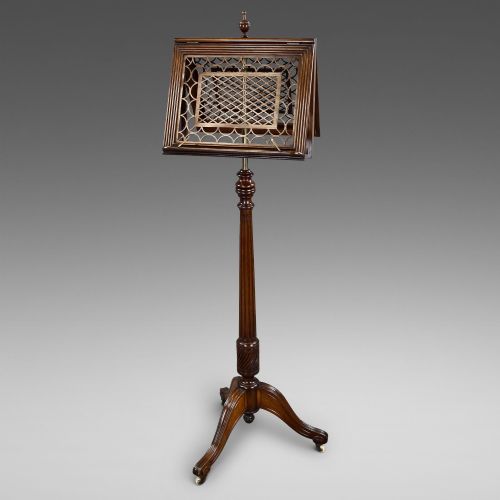
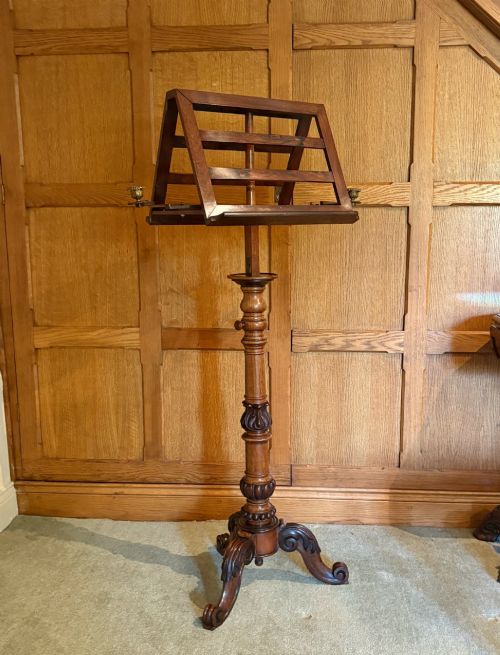
An adjustable mahogany music stand serves musicians, readers, and collectors by combining a tilting book rest with a height-adjustable column and a stable support base. These pieces appear in single-desk formats and wider duet configurations designed for two people sharing a score.
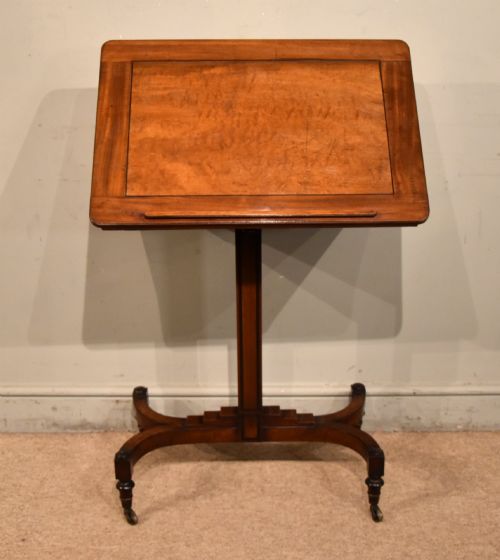
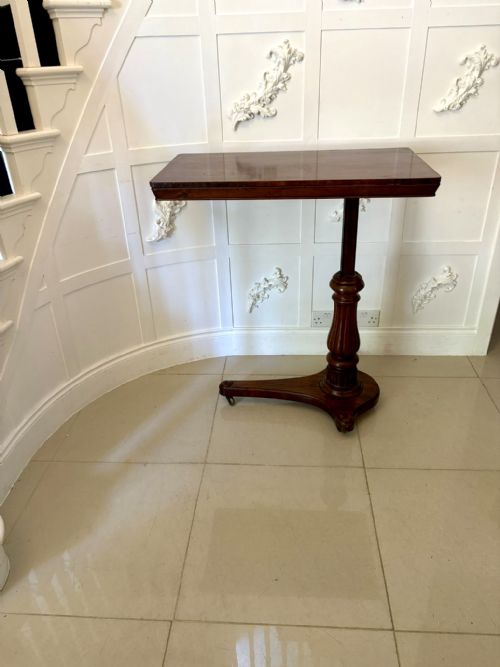
The selection ranges from dedicated reading tables and lecterns to multifaceted occasional tables that double as book supports. Most examples rely on tripod bases or heavy pedestal feet to maintain balance when the reading slope is extended.
Originating primarily from the late eighteenth through to the early twentieth century, these items reflect the domestic musical and literary habits of Georgian and Victorian households. The phrase adjustable mahogany music stand encompasses everything from simple domestic stands to elaborate metamorphic library furniture.
Materials and Construction
Cabinetmakers constructed these stands predominantly using solid or veneered mahogany, frequently accented with satinwood inlay, rosewood, and contrasting stringing. The timber is often selected for its deep grain figure and polished finish.
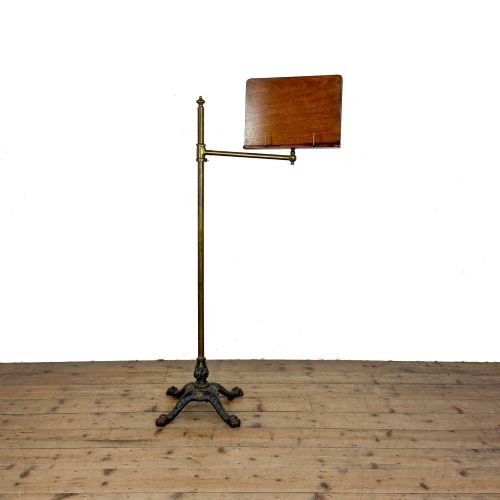
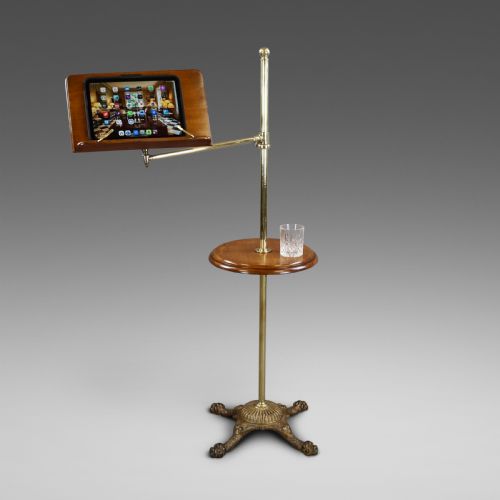
Mechanical adjustment relies on turned brass stems, brass thumbscrews, and iron ratchets concealed within or running parallel to the central column. These metal components allow the desk to rise, lower, and tilt securely at various angles.
Bases incorporate heavy cast iron weights or sturdy carved tripod legs to counteract the leverage exerted by heavy folios placed on the upper ledge.
Victorian makers occasionally added candle arms to these stands so musicians could play long after daylight faded from the parlour.
Assessing Craftsmanship
Quality reveals itself in the smoothness of the brass and iron adjustment mechanism and the stability of the central ratchets. Superior examples hold heavy volumes at steep angles without slipping or wobbling at the joints.
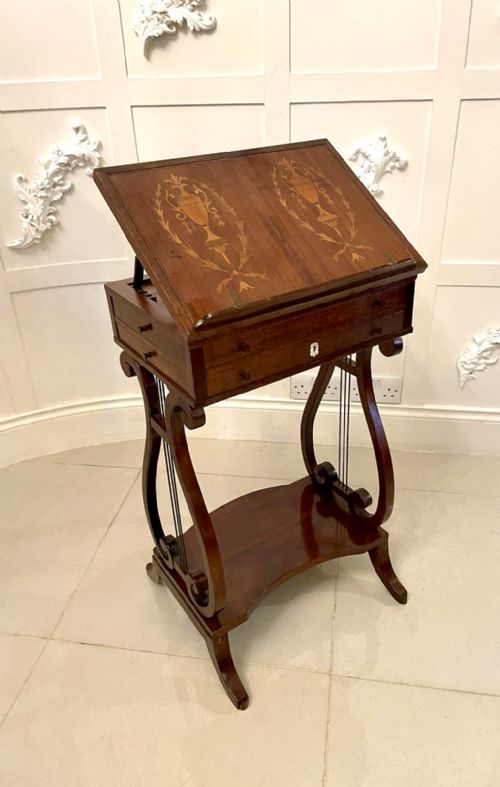
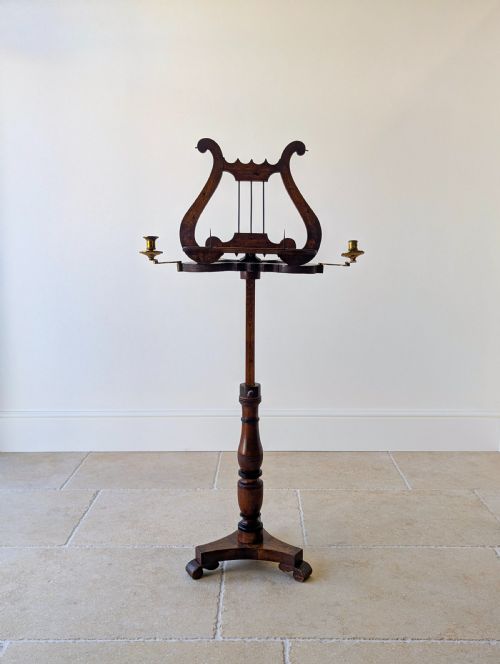
The refinement of the timber work distinguishes finer pieces, particularly where cabinetmakers utilised figured mahogany veneers, fine satinwood inlay, or intricate lyre-shaped fretwork on the music desk. Robust secondary framing and well-joined tripod legs separate workshop pieces from mass-produced late items.
GILLOWS DUET MUSIC STAND·Swann and Millican·Harrods
The Adjustable Mahogany Music Stand Glossary
- Duet stand
- A wider music desk designed to accommodate two readers sharing a single score. These often feature double folding ledges.
- Lyre-form
- A desk or central support shaped in the classical silhouette of a lyre, frequently carved from solid mahogany. This motif proved especially popular during the Regency and William IV periods.
- Metamorphic
- Furniture designed to transform its function, such as an occasional table that raises into a reading lectern. These pieces use hidden hinges and folding leaves.
- Reading table
- A domestic table incorporating an adjustable slope for books or folios, often fitted with drawers or drop leaves. They bridge the gap between library furniture and drawing-room tables.
Adjustable Mahogany Music Stand: Frequently Asked Questions
How do I adjust the height?
Most stands use a brass thumbscrew or collar on the central column that loosens to let the inner shaft slide up or down before tightening again.
Older Georgian and Regency pieces may rely on internal wooden catches or iron ratchet mechanisms operated from behind the desk.
Can they hold heavy modern books?
Solid mahogany construction and sturdy brass hardware make these stands robust enough to support large art books, atlases, and heavy music folios.
The stability depends largely on the weight of the tripod base and the tightness of the angle adjustment bracket.
How do I tell Regency from Victorian pieces?
Regency stands often feature cleaner classical lines, brass inlay, and lyre-shaped supports reflecting the influence of antique Greek design. Victorian examples tend to be heavier, sometimes incorporating cast iron elements, elaborate fretwork, and darker finishes.
Cabinetmakers of the later nineteenth century also produced more eclectic revival styles, drawing on Rococo and Georgian motifs.
Where were these used in the home?
These stands occupied drawing rooms, music rooms, and private libraries where residents gathered to play instruments or read large folios. Duet stands specifically catered to parlour piano practice and chamber music sessions.
Table-top versions sat upon desks or larger cabinets for close-up reading.