


Antique Music Easel
These antique music easel pieces offer adjustable support for books and sheets, bringing period craftsmanship into modern rooms.
Antique Music Easel
An antique music easel or music stand provides a dedicated, adjustable platform for scores, books and folios. Buyers seeking these pieces encounter various forms, primarily upright stands and combination tables dating from the Regency and Victorian eras.
The selection ranges from lyre-form mahogany stands to carved Black Forest portfolio holders and oak duet stands. These items originate from the nineteenth and early twentieth centuries, spanning periods such as William IV, Regency and Art Nouveau.
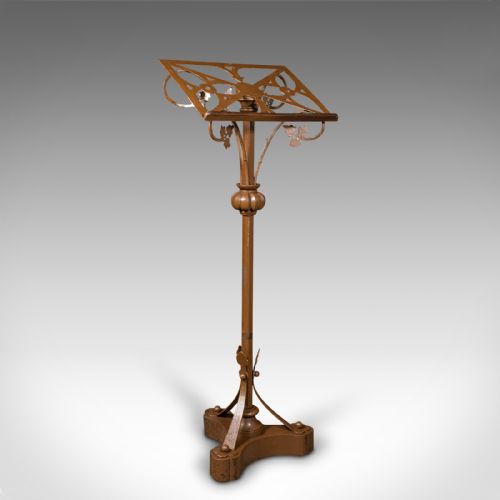
Many examples double as reading stands or occasional tables, showing the adaptable nature of nineteenth-century domestic furniture. Simpler adjustable designs sit alongside elaborate carved woodwork and cast iron elements.
Materials and construction methods
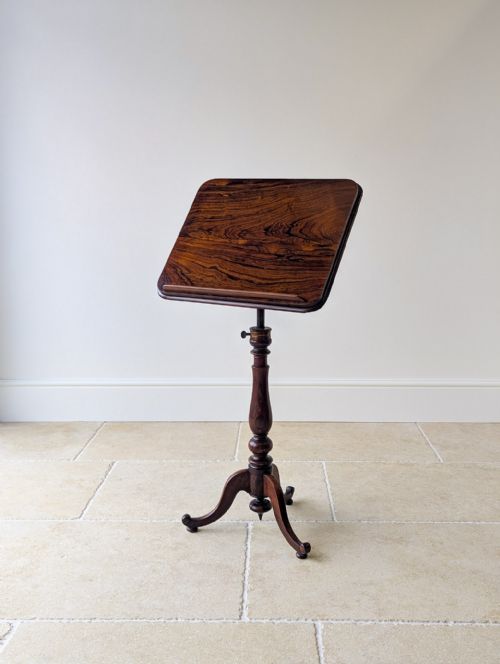
Cabinet makers utilised dense hardwoods such as mahogany, rosewood, walnut and oak to build these stands, frequently incorporating decorative inlay. Grain patterns and natural timber tones remain central to the visual character of each piece.
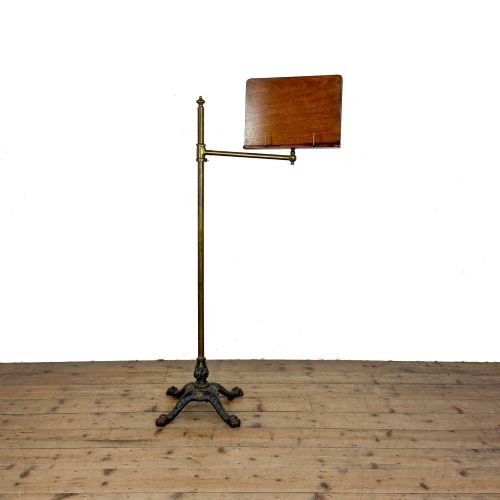
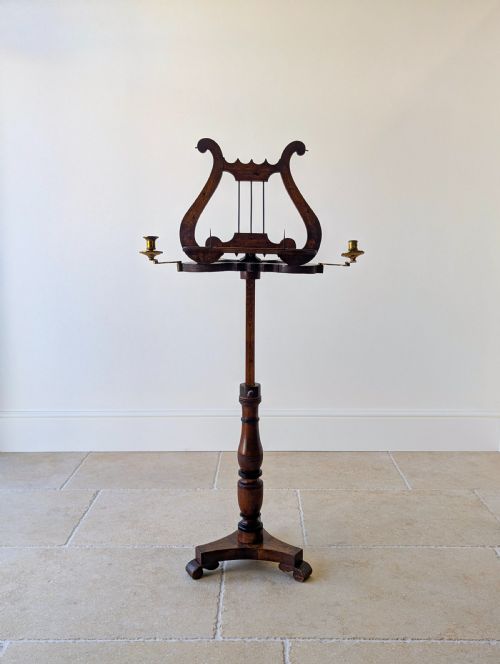
Metal components, including brass and cast iron, provide the functional mechanism for height and angle adjustments. Carved wood details appear on specific regional styles, while lyre-form motifs shape the wooden fretwork on music stands.
Forms range from simple oak lecterns to carved Black Forest portfolio holders and combined reading tables.
Distinguishing quality in stands
Superior examples demonstrate refined proportion and joinery, particularly in the carving of lyre motifs or Black Forest ornamentation. The smoothness of the adjustment mechanism distinguishes better workshop production from basic utility items.
The choice of timber grade and the crispness of inlaid details elevate certain pieces above standard production. Timber selection, whether rich rosewood or figured mahogany, directly influences the presence of the stand.
The Antique Music Easel Glossary
- Lyre-form
- A decorative shape resembling a classical lyre, frequently used in the openwork frame of music stand book rests. This motif reflects classical revival influences in nineteenth-century design.
- Duet music stand
- A wide stand designed to accommodate two musicians reading from the same sheet simultaneously. These pieces often feature double-sided or extended reading ledges.
- Black Forest
- A style of wood carving originating from the mountainous region of Central Europe, characterised by realistic animal and foliage motifs. Carved portfolio stands frequently display this distinct aesthetic.
- Occasional table
- A small, versatile table intended for light use in various rooms, sometimes combined with a reading stand top. These dual-purpose items served multiple functions in period interiors.
- Lectern
- A tall desk with a slanted top designed to hold a book or speech for a standing reader. They appear in both domestic and institutional contexts across the nineteenth century.
Antique Music Easel: Frequently Asked Questions
What is an antique music easel used for?
These pieces hold sheet music, books and folios at an adjustable angle for reading or performance.
They also function as display stands for decorative portfolios and large volumes in home libraries or living spaces.
How do I adjust the height?
Most period stands utilise a sliding brass or wooden stem secured by a thumbscrew or ratchet mechanism.
Careful handling ensures the preservation of these nineteenth-century mechanical components during daily adjustment.
Are these stands stable enough for heavy books?
Solid hardwood construction and weighted cast iron bases provide substantial support for standard volumes and music folios.
Heavier items sit securely on wide ledges, though exceptional care is required with delicate adjustment mechanisms.
How do I date a music stand?
Stylistic clues such as Regency lyre motifs, Victorian carving styles and Edwardian oak forms indicate specific production eras.
Timber choices and mechanical fittings also offer reliable markers for dating nineteenth-century examples.