

Low Seat Nursing Chair
A low seat nursing chair offers deep comfort and low proportions, designed originally for feeding infants but prized today for bedroom and drawing room placement.
Low Seat Nursing Chair
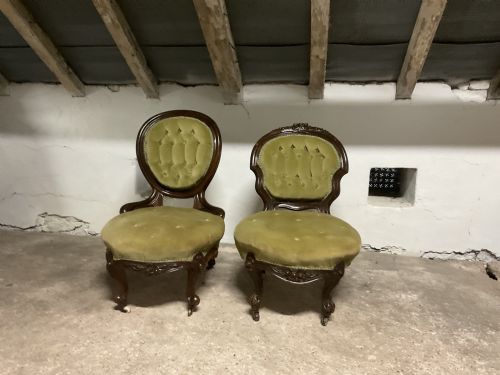
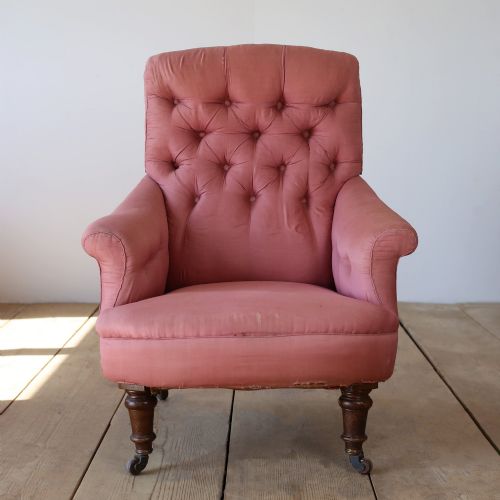
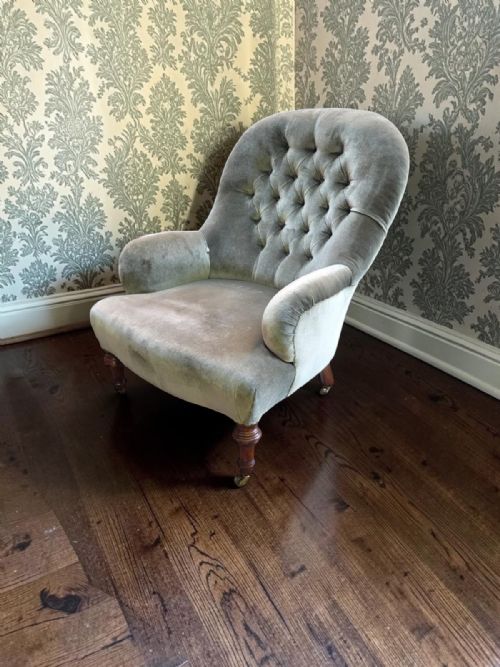
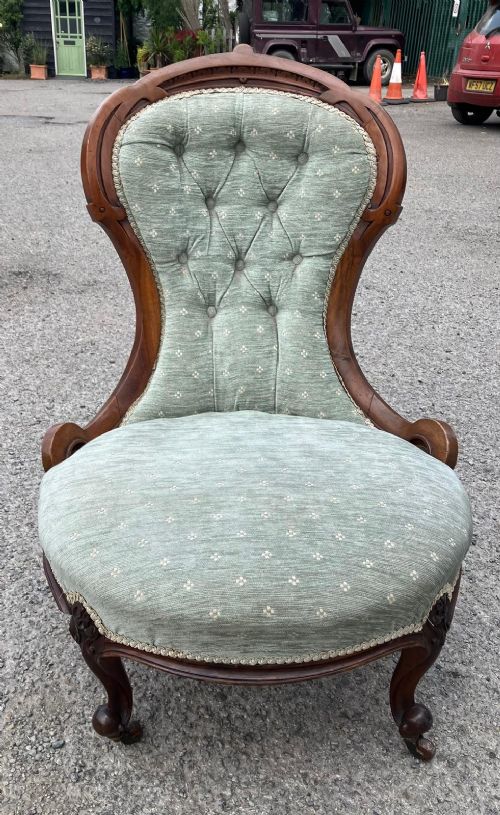
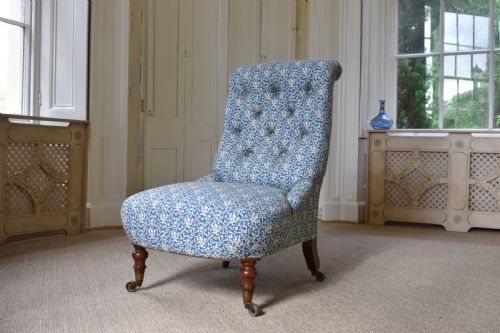
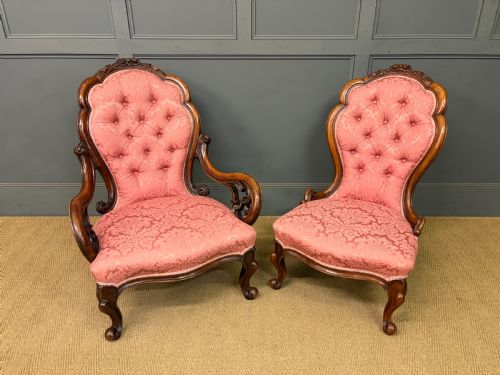
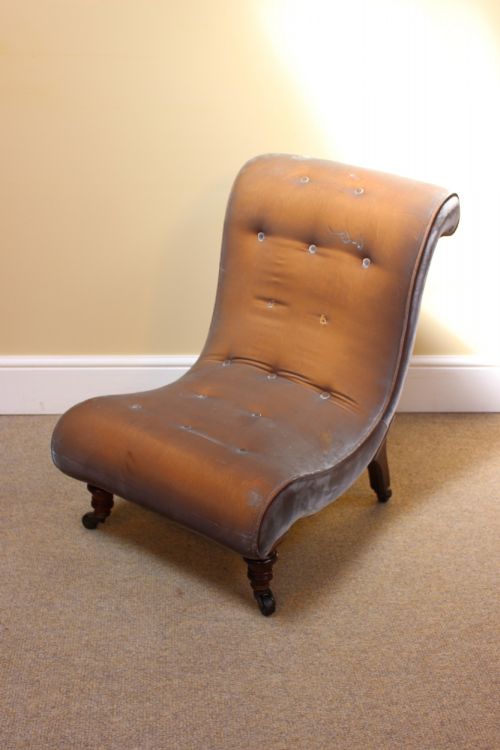
A low seat nursing chair is a compact, low-slung form designed for comfortable seating near the floor. You will most frequently encounter Victorian and Edwardian examples on this page, spanning the nineteenth century alongside William IV, Aesthetic Movement, and Gothic Revival styles.
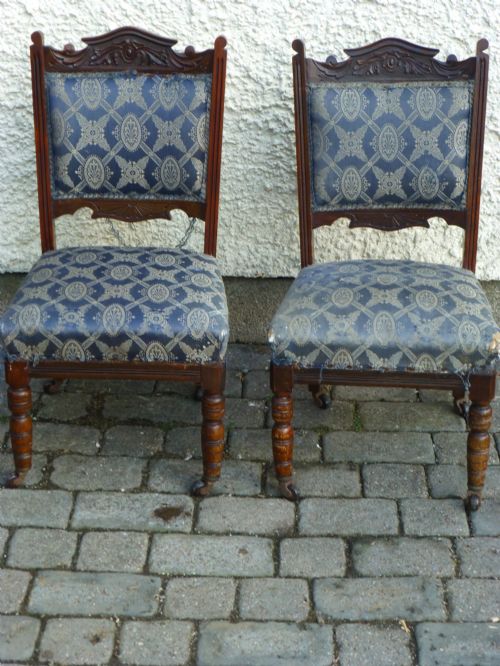
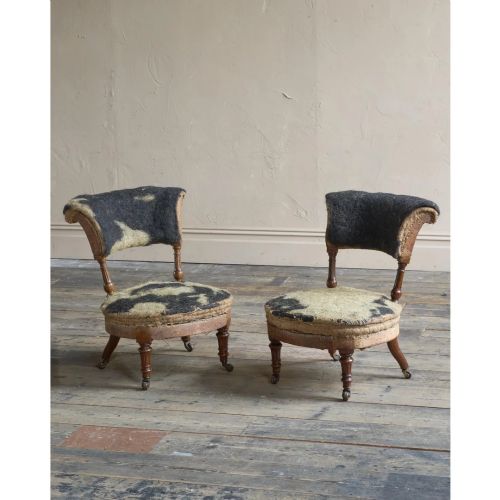
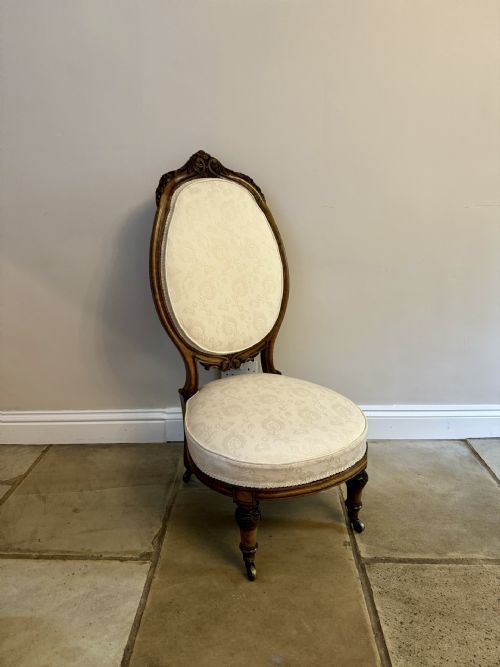
The inventory presents these pieces under various interchangeable names, including slipper chairs, bedroom chairs, occasional chairs, and salon chairs. They appear in walnut, mahogany, rosewood, and ebonised wood, often ready for re-upholstery in modern fabrics or traditional velvets.
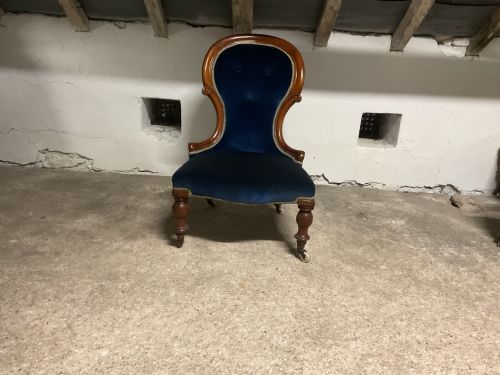
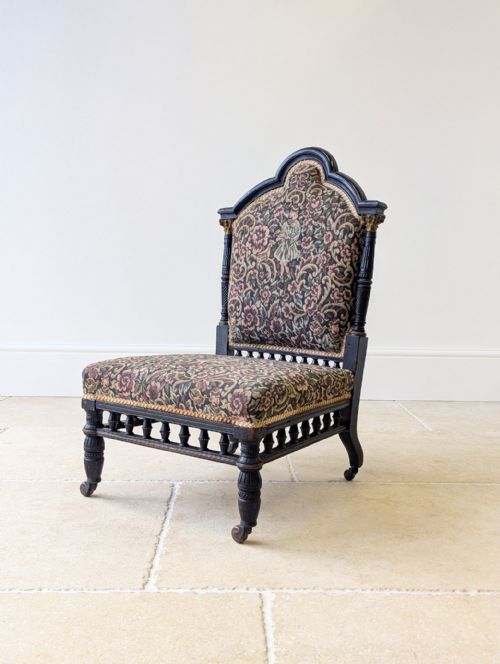
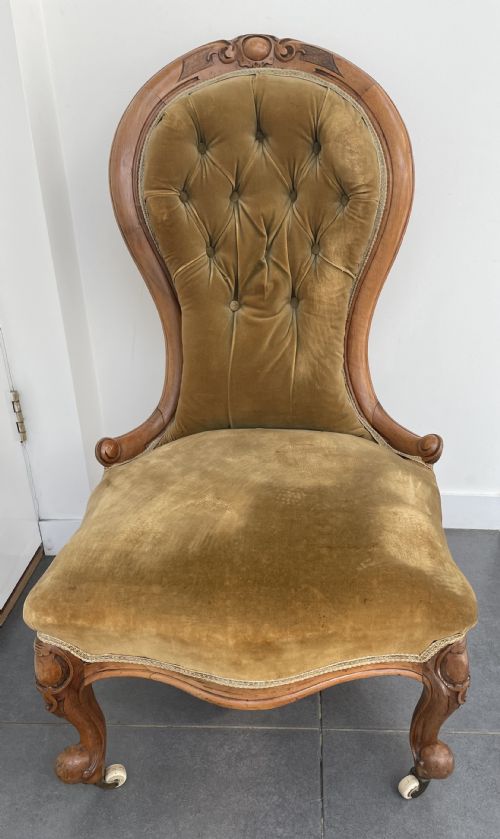
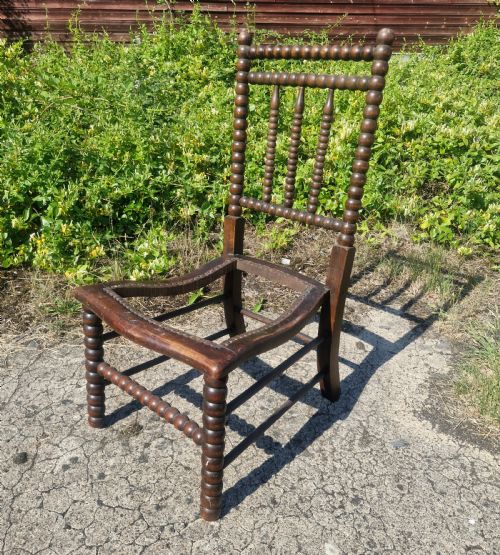
Makers such as Howard and Sons, Gillows, and Hindley and Sons occasionally surface, marking higher-tier production among standard nineteenth-century workshop outputs. The physical profiles range from button-backed spoon-backs and round seats to bobbin-turned frames and carved giltwood structures.
Woods and upholstery construction
Frames rely primarily on dense hardwoods like walnut and mahogany, carved or turned to form the distinctive low chassis. Cabinetmakers utilised robust joinery to support heavy button-backed upholstery and deep springing without sacrificing the delicate silhouettes demanded by nineteenth-century boudoirs.
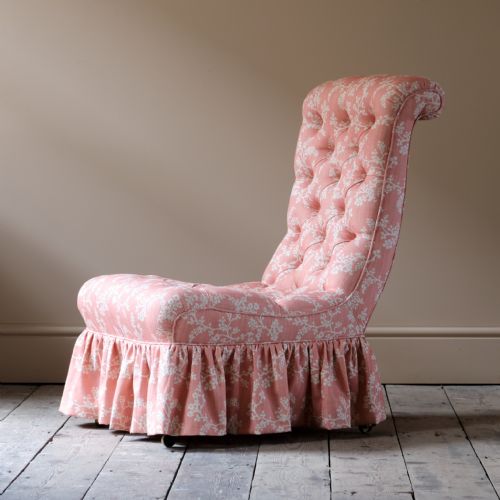
Upholstery techniques involved traditional stuffing and spring insertion, finished with velvet, leather, or printed fabrics secured by brass tacks or decorative fringe. Ebonisation, gilding, and fine carvings of floral motifs or structural bobbin turnings completed the decorative surface treatment of the wooden frames.
Some nineteenth-century nursing chairs feature concealed casters, allowing mothers to glide silently across nurseries without waking sleeping infants.
Frame integrity and maker marks
Quality rests upon the crispness of the timber carving and the structural integrity of the low wooden frame. Superior pieces exhibit refined proportions, substantial walnut or mahogany thickness, and sophisticated turnings rather than plain, utilitarian construction.
Maker stamps on the wood or webbing elevate a piece significantly, as seen in authenticated items from established cabinet-making firms. The sophistication of the original springing and the retention of delicate decorative elements like gilt highlights or ebonised finishes separate ordinary chamber seating from exceptional examples.
Howard and Sons·Gillows·Hindley and Sons
The Low Seat Nursing Chair Glossary
- Button back
- A style of upholstery where depressions are formed across the padded surface by deep-set buttons, creating padded diamonds that hold the stuffing firmly in place.
- Slipper chair
- An armless upholstered chair with a low seat, originally used in bedrooms for changing shoes and closely related to the nursing chair.
- Ebonised
- Wood finished with a dark stain or paint to imitate expensive ebony, popular during the Victorian and Aesthetic Movement periods.
- Bobbin framing
- Furniture construction featuring turned wood shaped like a series of rounded wooden beads or bobbins, often seen on nineteenth-century chair legs and arms.
- Spoon back
- A padded chair back shaped like the bowl of a spoon to fit the contours of the human spine, characteristic of mid-Victorian seating.
Low Seat Nursing Chair: Frequently Asked Questions
What is a low seat nursing chair?
A low seat nursing chair is a compact, armless or low-armed chair built with a shortened distance between the seat and the floor. This low stature allowed mothers to nurse infants comfortably while maintaining a supportive posture.
Today, these chairs function exceptionally well as bedroom accent pieces, dressing table seats, or low drawing room chairs. Their modest scale suits smaller architectural spaces where standard armchairs would overwhelm the room.
How do I date a Victorian nursing chair?
Dating relies on examining the timber, frame silhouette, and upholstery style. Early examples often feature rosewood or mahogany with scrollwork, while mid-Victorian pieces frequently display walnut spoon-backs and elaborate button tufting.
Later nineteenth-century versions embrace ebonised finishes, gilt details, or Aesthetic Movement designs. Maker stamps on the wooden frame or webbing offer the most precise chronological indicator.
Why are many nursing chairs sold for re-upholstery?
Historic fabric degrades over decades of use, losing its structural support and aesthetic appeal. Many dealers offer these frames bare or in worn covers so buyers can select modern textiles that match contemporary interiors.
Retaining the original springs and stuffing depends on condition, but stripping the chair back to the hardwood frame allows craftsmen to ensure internal stability before applying fresh velvet or patterned cloth.
Are slipper chairs and nursing chairs the same?
While the terms frequently overlap in historic and modern listings, subtle distinctions in origin exist. Slipper chairs traditionally served dressing rooms for putting on footwear, while nursing chairs accommodated infant feeding.
Both share the key characteristic of a low seat and absence of bulky arms, making them structurally interchangeable for modern home decor applications.