


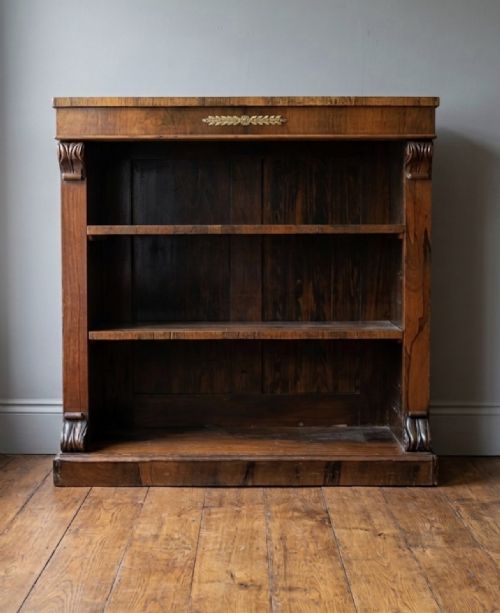
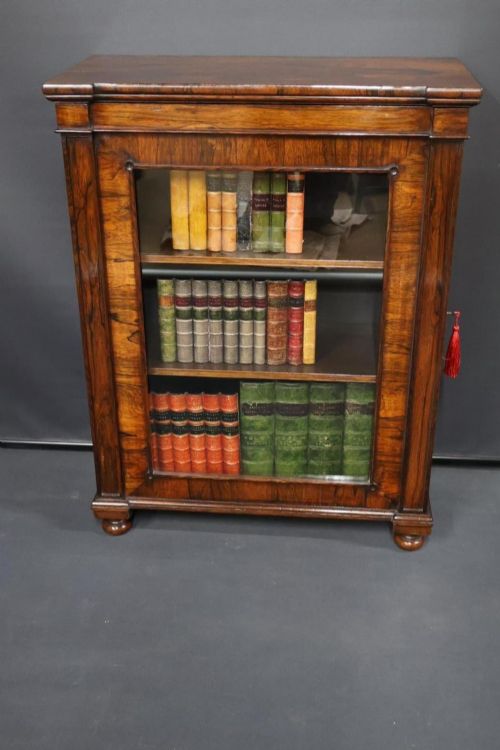


Low Rosewood Display Cabinet
A low rosewood display cabinet brings warmth and figured grain to a room, offering compact storage and a surface for cherished objects.
Low Rosewood Display Cabinet
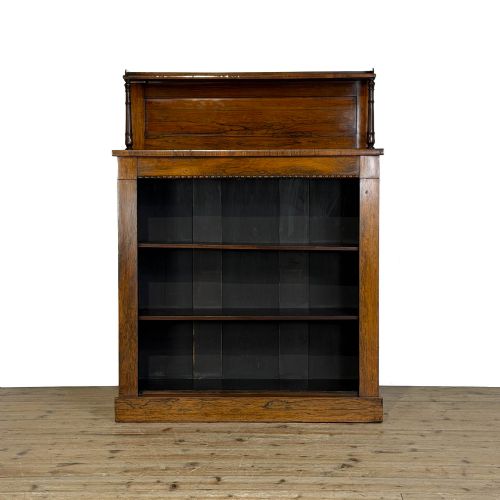
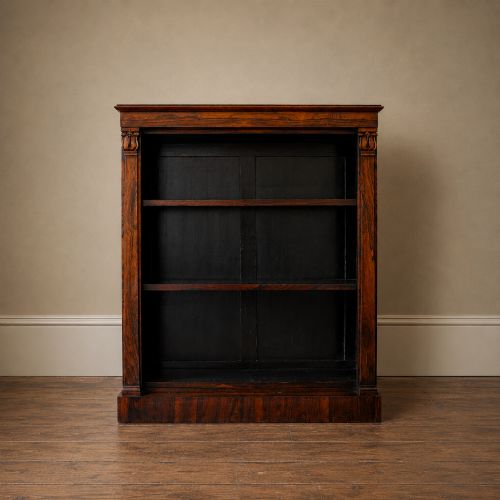
A low rosewood display cabinet combines open shelving or glazed storage with a compact height, fitting easily beneath windows or along smaller wall spaces. These pieces emerge from periods such as the Regency, Georgian, and Victorian eras, taking forms like open bookcases, pier cabinets, and side cabinets.
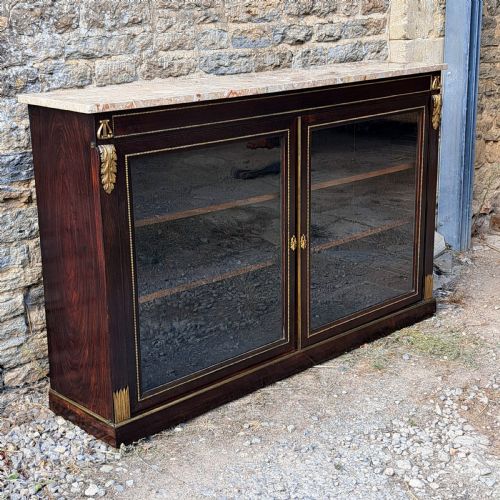
The version most likely to meet you on this page is the nineteenth-century low bookcase or side cabinet, often featuring adjustable shelves or glazed doors. Makers built these forms to display books and ceramics while keeping the overall room proportions feeling open and balanced.
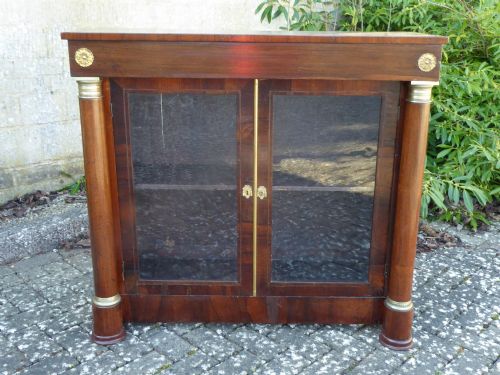
Makers utilised rosewood for its rich colour and distinctive grain patterns, occasionally incorporating brass inlay or marble tops. These items serve equally well in sitting rooms and studies, providing practical storage without dominating the floor plan.
Quality differences
The depth and movement of the rosewood grain set superior examples apart, especially when matched symmetrically across breakfront doors or open shelves. Timbers selected with rich natural contrast and handled with precise veneer work signal higher workshop standards.
Refinement in secondary details, such as crisp brass inlay, finely turned barley twist columns, and original glazed panels, distinguishes the work of skilled cabinet makers. Structural integrity, including smooth sliding or adjustable shelving and stable carcase construction, underpins these aesthetic qualities.
One cheerful Victorian cabinet arrives complete with barley twist columns, proving that nineteenth-century makers loved a good spin on tradition.
Gillow
The Low Rosewood Display Cabinet Glossary
- Breakfront
- A cabinet design where the central section projects forward from the flanking outer sections. This architectural arrangement creates depth and shadow on the facade.
- Pier cabinet
- A narrow cabinet designed specifically to fit the wall space between windows. These pieces often feature glass doors for displaying small objects.
- Chiffonier
- A low sideboard or cabinet with enclosed storage below and sometimes a shelf above. Nineteenth-century examples frequently combine display space with a compact footprint.
- Palisander
- A term frequently applied to heavy, richly figured rosewood timbers. It describes wood showing deep dark brown and reddish tones.
- Goncalo Alves
- A dense exotic hardwood resembling rosewood, sometimes called zebrawood. It offers strong natural figuring and colour contrast.
Low Rosewood Display Cabinet: Frequently Asked Questions
What is a low rosewood display cabinet?
A low rosewood display cabinet is a compact nineteenth-century storage piece made from figured rosewood timber, often featuring glass doors or open shelves for books and objects.
These pieces sit lower than traditional tall bookcases, making them suitable for placing beneath windows or along smaller walls.
How do I date a rosewood cabinet?
Dating relies on observing construction methods, timber thickness, and stylistic details like brass inlay or barley twist columns characteristic of Regency or Victorian periods.
Cabinet proportions and the presence of original glass or marble tops also help narrow down the decade of production.
Where should I place it?
These cabinets suit sitting rooms, studies, or hallways where floor space is limited but surface display area is desired.
Keep them away from direct heat sources and strong sunlight to protect the rosewood veneer and polished finish.
What is Rio rosewood?
Rio rosewood refers to timber sourced from Brazil, known for its particularly dark, contrasting grain patterns and heavy weight.
Cabinets featuring this material display deep coloration that develops a rich patina over time.