

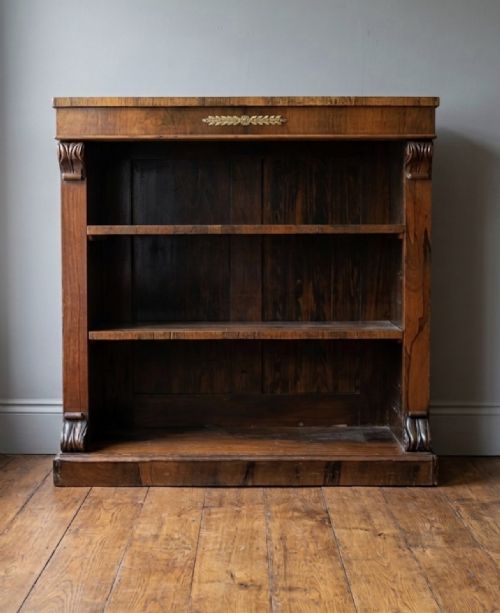


Victorian Carved Rosewood Bookcase
A victorian carved rosewood bookcase brings warmth and distinct grain to a room, offering display space for volumes and ornaments alike.
Victorian Carved Rosewood Bookcase
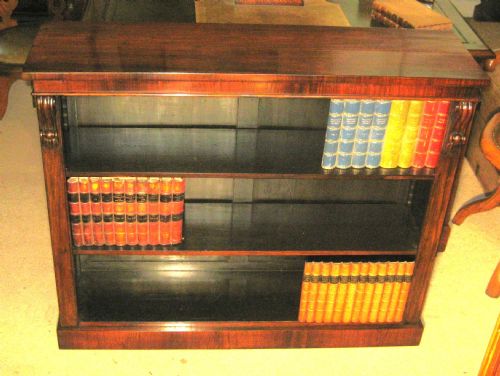
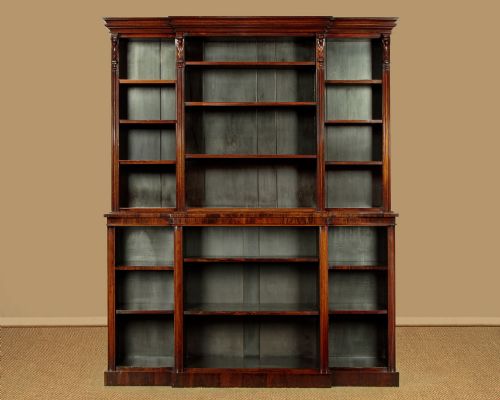
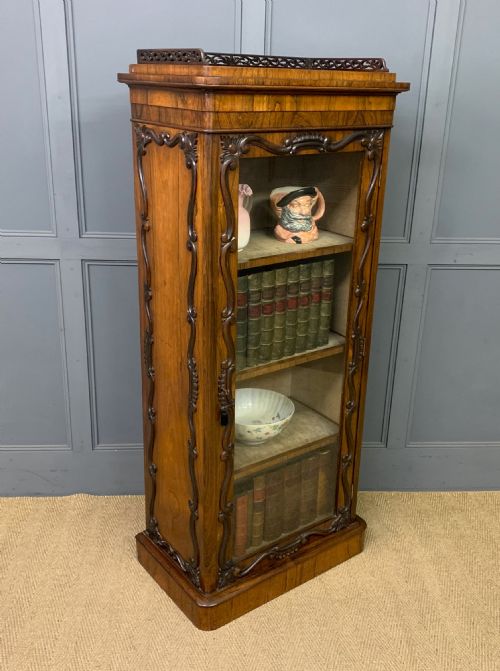
A victorian carved rosewood bookcase combines utility and display, appearing primarily as open shelving units, breakfront low bookcases, and glazed cabinets. Most examples originate from the nineteenth century, including specific dates across the eighteen-fifties, sixties, and eighties.
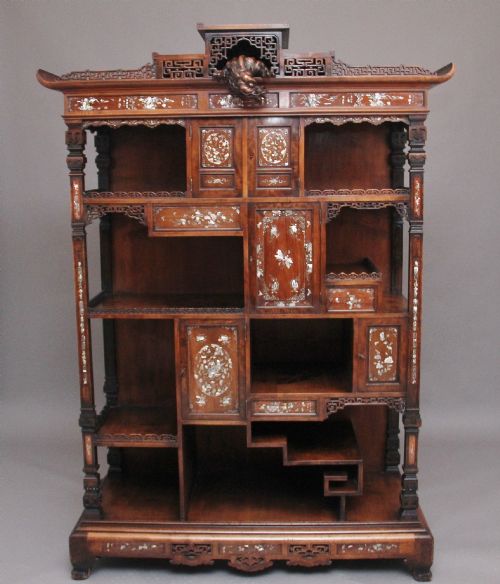
The selection ranges from simpler open bookshelves to elaborate side cabinets, whatnot units, and Anglo-Indian variants. Makers and workshops of the period utilised rich timbers and glass, creating freestanding furniture designed to anchor a Victorian interior.
How they were made
Cabinet makers utilised solid rosewood and rosewood veneer over secondary timbers, often incorporating brass hardware, mirrored glass panels, mother of pearl inlay, and patinated marble tops. Carved corbels and intricate woodwork define the structural ornamentation across these nineteenth-century items.
Construction techniques include breakfront layouts and adjustable shelving systems, paired with glazed doors or open display tiers. Workshops balanced sturdy hardwood frames with decorative veneering to achieve both durability and refined visual depth.
What varies in quality
The refinement of the carved ornamentation and the depth of the rosewood grain set superior examples apart from standard utility pieces. Finer cabinets display harmonious proportions, crisp joinery, and thoughtful integration of materials such as brass and marble.
Distinction also lies in the execution of specific regional styles, such as Anglo-Indian carving or French influences, where intricate detail elevates the overall presence of the cabinet or bookcase.
James Winter
The Victorian Carved Rosewood Bookcase Glossary
- Breakfront
- A cabinet design where the central section projects forward from the flanking sides. This layout adds architectural depth to large bookcases.
- Corbel
- A structural bracket projecting from the face of a piece to support weight or frame an opening. Carved examples appear frequently beneath upper shelves.
- Whatnot
- A multi-tiered freestanding piece of furniture used for displaying ornaments and books. These units typically feature open shelves supported by slender columns.
- Veneer
- A thin layer of superior timber applied over a secondary wood base. Rosewood veneer allows makers to display striking grain patterns economically.
- Secretaire
- A cabinet incorporating a pull-down writing drawer or flap that conceals small compartments. This form combines a traditional bookcase with a functional writing desk.
Victorian Carved Rosewood Bookcase: Frequently Asked Questions
How are these bookcases cleaned?
Dust surfaces regularly with a soft, dry cloth to protect the rosewood finish and delicate carvings. Avoid silicone-based sprays that can build up on nineteenth-century polishes over time.
Apply a microcrystalline wax sparingly if the timber appears dry, buffing gently to maintain the natural sheen of the wood and veneer.
Can shelves be adjusted?
Many nineteenth-century examples feature adjustable shelving systems to accommodate varying book heights and display objects. Check the interior uprights for traditional peg or rack mechanisms.
Care should be taken when repositioning older timber shelves to avoid damaging the interior veneer or painted surfaces.
Where should a cabinet be placed?
Position these pieces away from direct sunlight and heat sources to prevent the rosewood veneer from warping or fading. Stable indoor humidity helps preserve both the timber and any integrated marble tops.
Ensure the floor is level so that doors on glazed or enclosed cabinets hang properly and latch securely without straining the hinges.
What is an Anglo-Indian bookcase?
Anglo-Indian pieces reflect British design requirements executed by craftsmen in the Indian subcontinent during the nineteenth century. They often feature dense, intricate regional carving distinct from standard European workshop production.
These items bring unique decorative elements, such as revolving shelves or specialised display stands, into a traditional Victorian setting.