
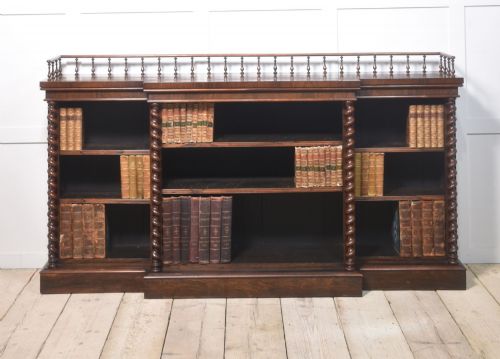


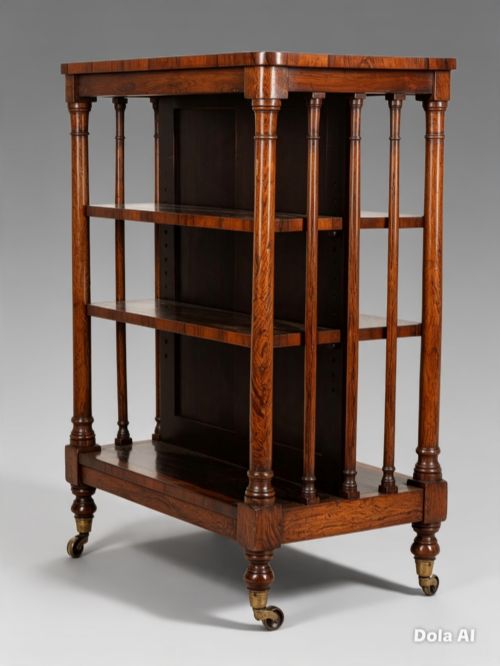
Rosewood Library Shelving
Rosewood library shelving brings rich timber grain and classic proportions to a room, offering sturdy open storage for serious book collections.
Rosewood Library Shelving
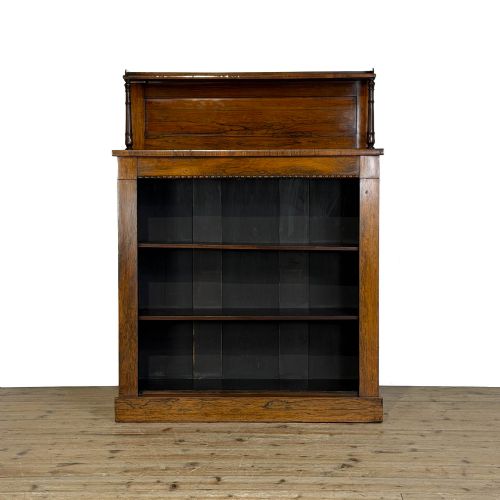
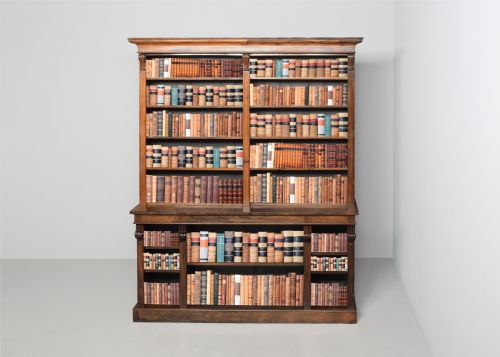
When you search for rosewood library shelving, you encounter substantial bookcases and open bookshelves designed to house substantial collections. These pieces emerge primarily from the Regency, William IV, and Victorian periods, spanning the nineteenth century.
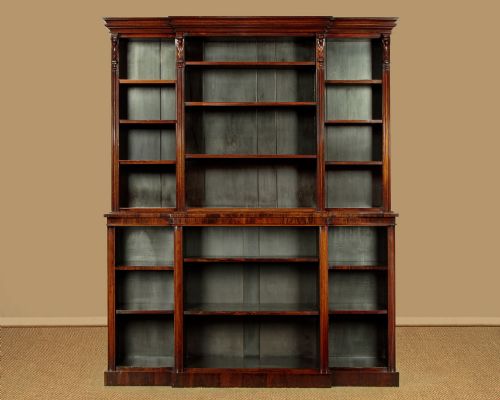
The format most commonly met on this page is the open bookcase, often configured with adjustable shelves and sometimes featuring a breakfront or inverted breakfront outline. Makers of these pieces utilised the dark, heavily grained timber to create imposing furniture for formal libraries.
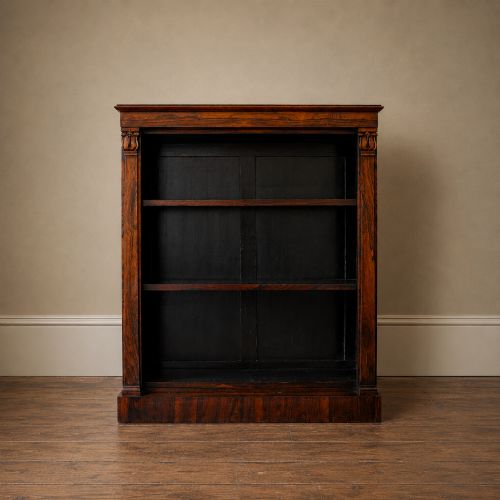
Beyond standard single bookcases, the selection includes low bookcases, double-sided variants, and pairs of matching shelving units. These functional forms reflect the changing domestic arrangements of nineteenth-century households that required accessible book storage.
Materials and construction
Makers built these pieces using solid rosewood and rosewood veneers laid over secondary timbers such as pine and oak. The dense, dark grain of the primary wood provided a decorative surface that required minimal additional ornamentation.
Metal and stone details frequently accompany the timber work, with brass fittings, ormolu accents, and occasionally marble or leather elements integrated into the design. Carved corbels and architectural mouldings define the structural profile of the better examples.
Listings feature pieces spanning the Regency, William IV, and Victorian periods, alongside later twentieth-century revivals.
Distinctions in quality
The distinction between standard examples and the finest pieces rests upon the selection of timber and the sophistication of the architectural detailing. Breakfront configurations and carved corbels demonstrate greater ambition from the cabinetmaker.
Proportion and execution dictate the standing of a piece within this category. Well-balanced proportions, crisp carving, and integrated functional elements like adjustable shelving separate utilitarian storage from superior library furniture.
The Rosewood Library Shelving Glossary
- Breakfront
- A piece of furniture where the central section projects forward from the flanking wings. This architectural arrangement creates depth and shadow on a wall.
- Open bookcase
- A bookcase lacking glazed or solid doors, designed for immediate access to books. These units rely on finished timber interiors and exterior framing.
- Corbel
- A structural bracket projecting from a vertical surface to support a shelf or superstructure. They often feature carved scrolls or acanthus leaf motifs.
- Simulated rosewood
- A painted or grained finish applied to a lighter timber to imitate the appearance of true rosewood. This technique was common in the nineteenth century.
Rosewood Library Shelving: Frequently Asked Questions
How do I care for rosewood shelving?
Keep these pieces away from direct sunlight and steady heat sources to prevent the rosewood veneer from drying and splitting. Dust regularly with a soft cloth and apply specialist wax sparingly.
Avoid using silicone-based polishes or damp cloths that can penetrate older finishes and lift the veneer from the pine or oak carcase.
Are the shelves usually adjustable?
Many nineteenth-century open bookcases feature adjustable wooden shelves supported by brass studs or wooden rack-and-pinion systems. This adaptability accommodates volumes of varying heights.
Check the mechanism inside the bookcase columns to confirm whether the original height adjustments remain functional.
How do I identify a Regency piece?
Regency library furniture typically dates from the early nineteenth century and displays clean classical lines influenced by Greek and Roman architecture. Look for restrained brass inlay and rosewood veneers.
Later Victorian interpretations often incorporate heavier carvings, such as corbels and more pronounced mouldings, distinguishing them from earlier work.