


Regency Style Breakfront Cabinet
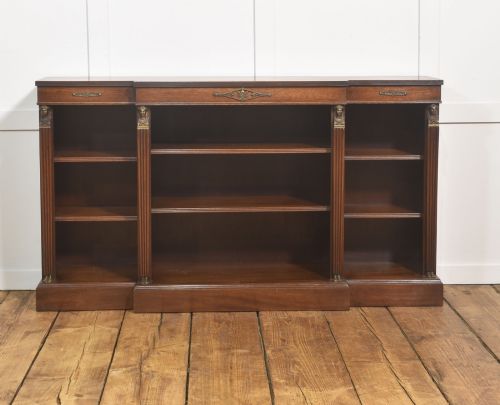
These regency style breakfront cabinet pieces bring architectural balance and storage to a room through their distinctive projecting central sections.
Regency Style Breakfront Cabinet
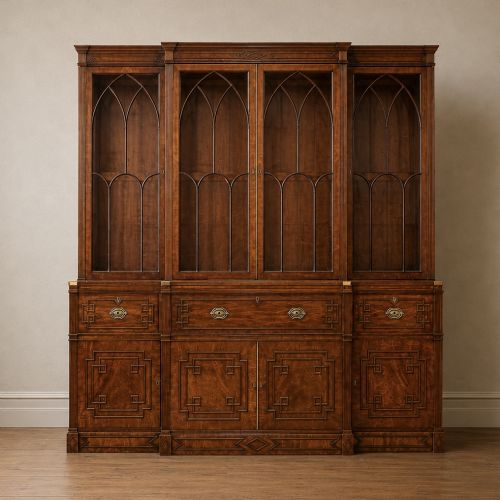
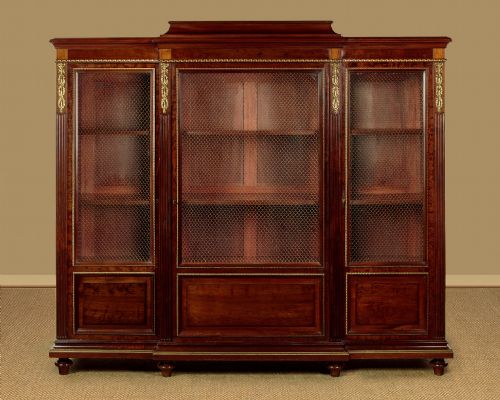
A regency style breakfront cabinet typically takes the form of a large library bookcase, side cabinet, or sideboard featuring a recessed centre flanked by projecting outer sections. The examples seen here range from genuine period pieces spanning the Regency, George IV, and William IV eras to later revivals from the Edwardian period and the early twentieth century.
Bookcases and display cabinets dominate the selection, often fitted with glass doors, wire mesh, or configured as open shelves, while low side cabinets and sideboards offer alternative low-level storage. Woods vary considerably across the eras, with mahogany, rosewood, and flame mahogany veneer appearing frequently alongside walnut, satinwood crossbanding, and painted finishes.
Buyers seeking a regency style breakfront cabinet will encounter both tall library furniture designed to house extensive book collections and lower side cabinets intended for display and general storage. The combination of architectural symmetry and rich timber figuring defines the visual character of these items across all recorded periods.
Materials and construction
Cabinet makers utilised dense native and imported timbers, notably solid mahogany and rosewood, often applying flame mahogany veneers to large surfaces to create dramatic grain patterns. Crossbanding in satinwood and the incorporation of parcel gilt details added textural contrast to the primary wood.
Metal and glass components integrated structural support with display functionality, using brass mounts, wire mesh panels, and glazed doors. Leather inserts appeared on items such as dummy books, while marble tops and fabric linings supplemented the timber construction in specific side cabinets and bookcases.
Listings feature woods including mahogany, rosewood, walnut, and satinwood across the nineteenth century and twentieth-century revival periods.
Markers of distinction
Quality in a regency style breakfront cabinet rests upon the selection of timber veneers, such as the use of highly figured flame mahogany or matched rosewood, which elevates the visual impact of large flat surfaces. The precision of inlaid details and the integration of brass mounts further separate standard production from exceptional work.
Structural ambition defines the upper tier of these pieces, seen in large-scale library bookcases with well-proportioned breakfront sections and sophisticated internal fittings like leather-trimmed dummy books. Period authenticity, whether an original nineteenth-century workshop piece or a faithful later revival, dictates the depth of traditional joinery and finishing.
Gillows
The Regency Style Breakfront Cabinet Glossary
- Breakfront
- A cabinet design where the central section projects forward from the flanking wings, creating a stepped architectural facade. This layout adds depth and visual rhythm to large bookcases and sideboards.
- Flame mahogany veneer
- A thin slice of mahogany timber cut from the fork of the tree where branches meet the trunk, producing a distinctive fire-like flame pattern. It is applied to primary display surfaces for decorative effect.
- Crossbanding
- A narrow strip of veneer laid perpendicular to the surrounding grain along the borders of a shelf, top, or door panel. This technique frames the wood panel and provides a neat visual boundary.
- Chiffonier
- A low sideboard or cabinet developed during the nineteenth century, typically featuring shelves or enclosed storage beneath a flat top. It serves as a compact alternative to a full dining room sideboard.
Regency Style Breakfront Cabinet: Frequently Asked Questions
How do I date a mahogany cabinet?
Dating mahogany furniture involves examining the timber selection, construction methods, and hardware style. Earlier pieces from the Regency and George IV periods often utilise solid native timbers and hand-cut dovetails.
Later revivals from the Edwardian era and the early twentieth century may employ machine-sawn elements and different veneering techniques while imitating the earlier classical proportions.
Where were these cabinets used?
These large cabinets traditionally stood in formal libraries, drawing rooms, and dining rooms of substantial homes. They served to store extensive book collections, display porcelain, or house dining silver.
Today, they function effectively in large living spaces, home offices, and hallways where their combination of display and enclosed storage remains practical.
What is the difference between rosewood and mahogany?
Mahogany is a reddish-brown timber known for its stable grain and versatility in carving, frequently seen in both solid form and decorative veneers. Rosewood possesses a denser, darker grain with distinctive purple and black striations.
Both woods were favoured by nineteenth-century cabinet makers for high-status furniture, with rosewood often reserved for pieces requiring a more dramatic, contrasting surface pattern.