

Low Mahogany Display Cabinet
A low mahogany display cabinet brings together timber and glass to hold books or small treasures without dominating a room.
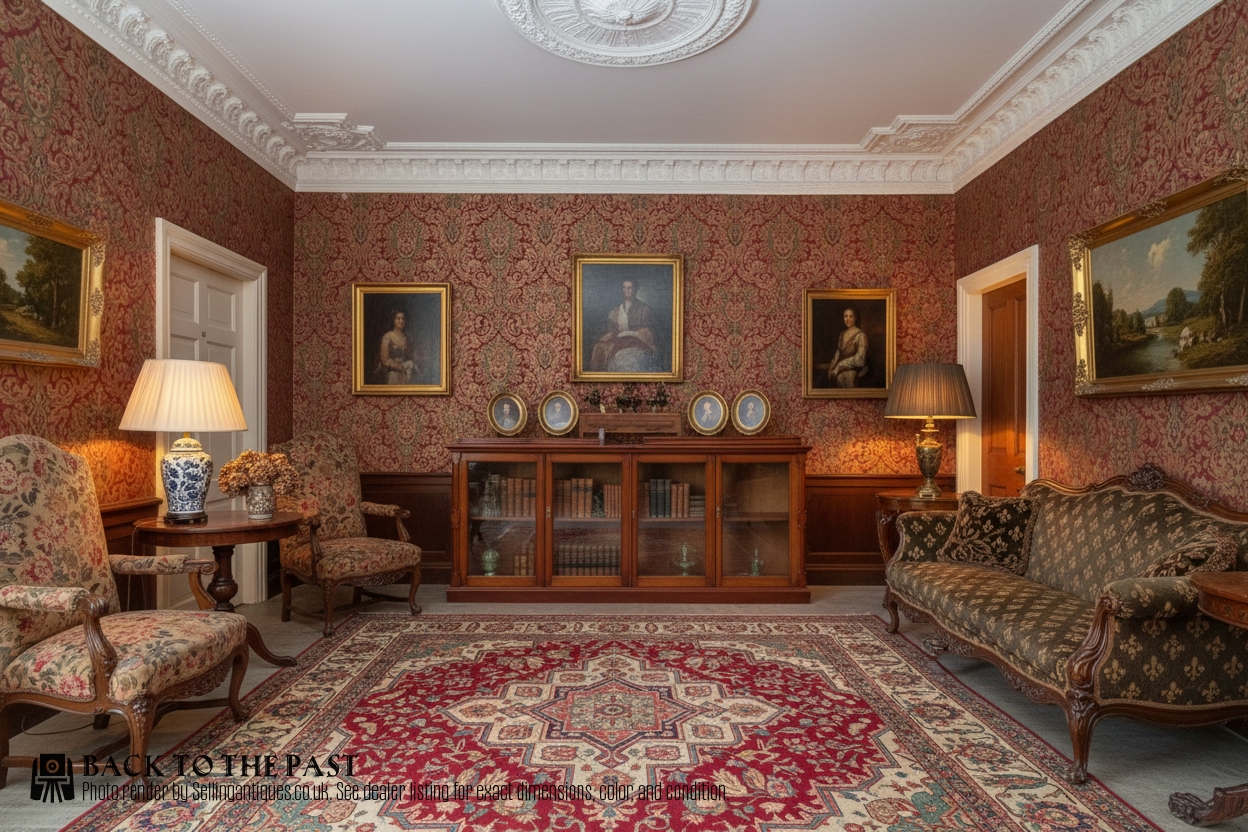
Low Mahogany Display Cabinet
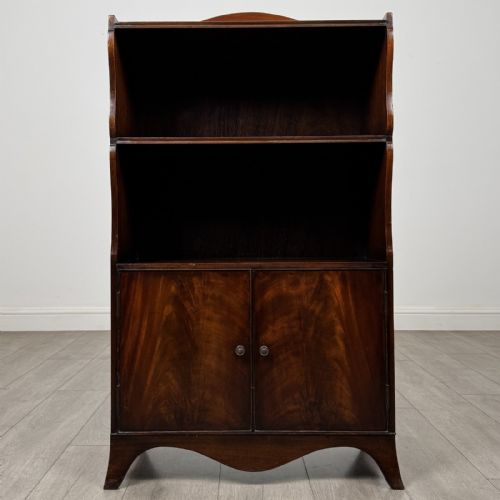
A low mahogany display cabinet sits beneath standard eye level, spanning forms from open bookcases and side cabinets to glazed vitrines and waterfall shelves. These pieces date across the nineteenth and early twentieth centuries, drawing on Regency, Victorian, Edwardian, and French Empire styles.
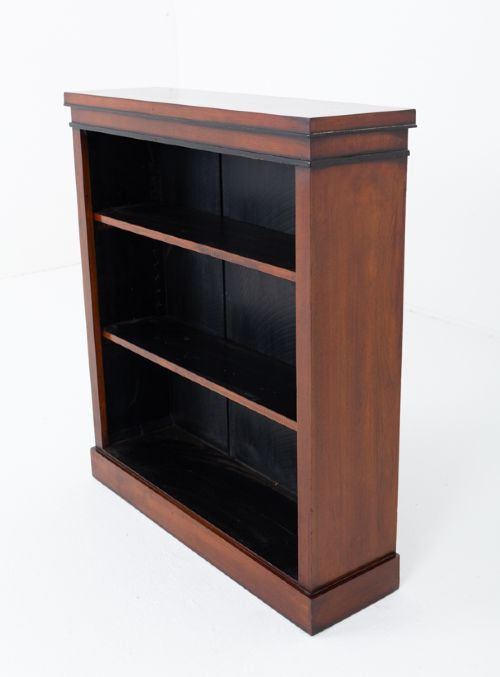
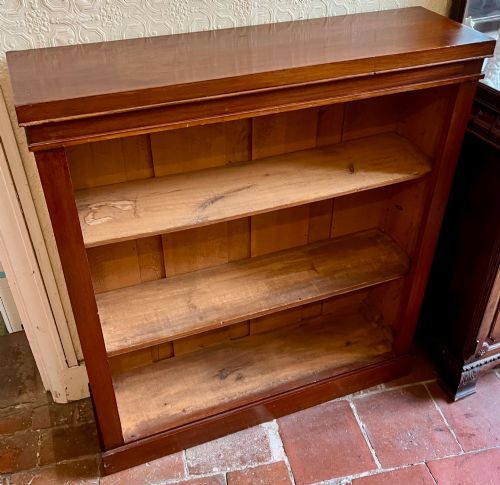
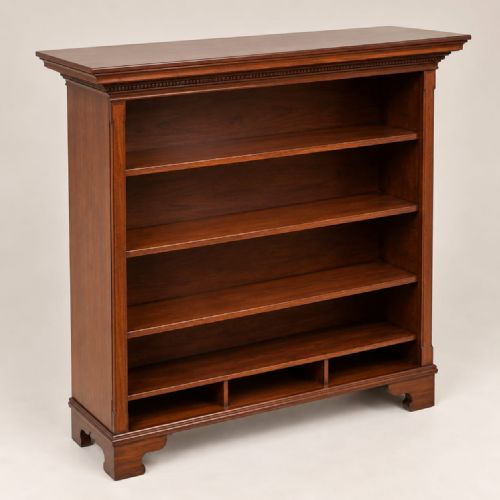
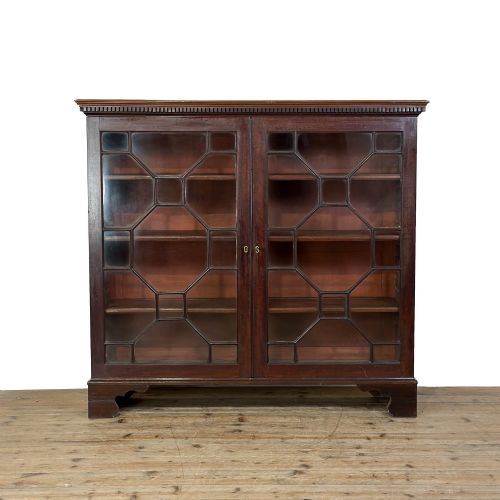
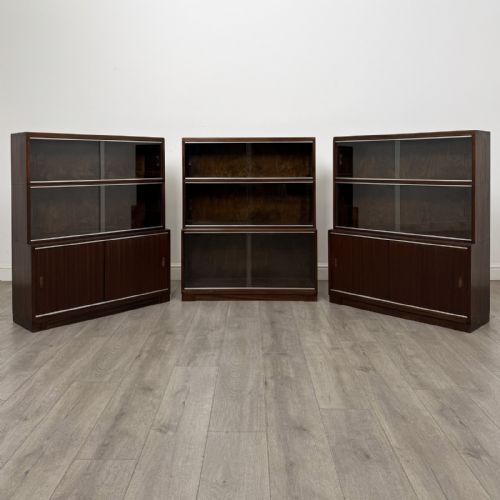
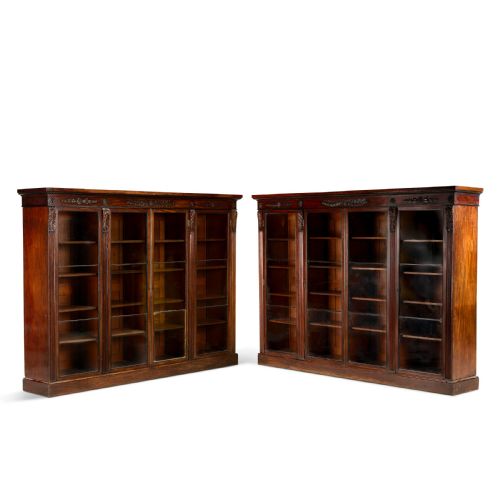
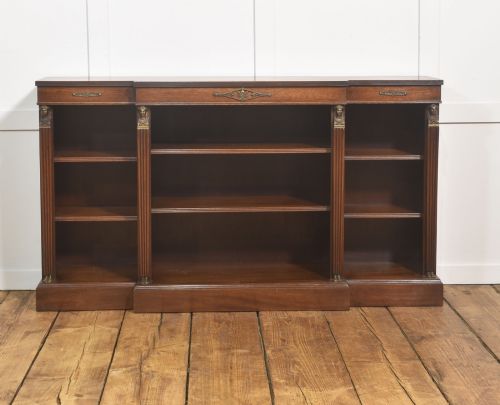
The version most commonly met on this page is the glazed or open bookcase from the Victorian or Edwardian eras, often built with breakfront proportions or fitted with adjustable shelving. Pieces span plain dwarf bookcases to ornate side cabinets incorporating brass mounts, mirror backs, and inlaid satinwood.
Originating largely from British and French workshops, these lower cabinets served drawing rooms, home libraries, and parlours where height was restricted beneath windows or paintings. Their utility lies in combining a low profile with visible storage for books and display objects.
How they were made
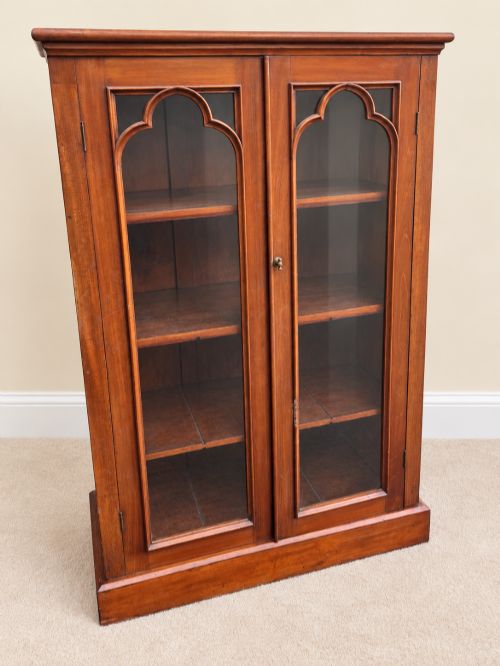
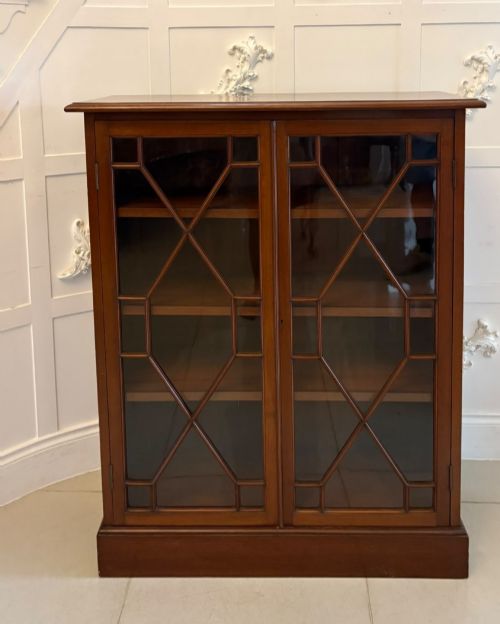
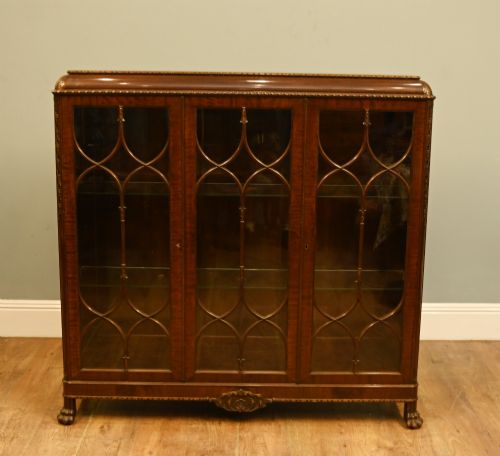
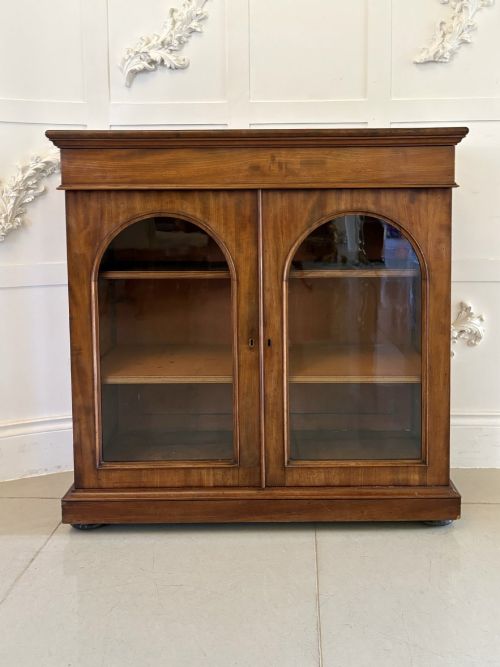
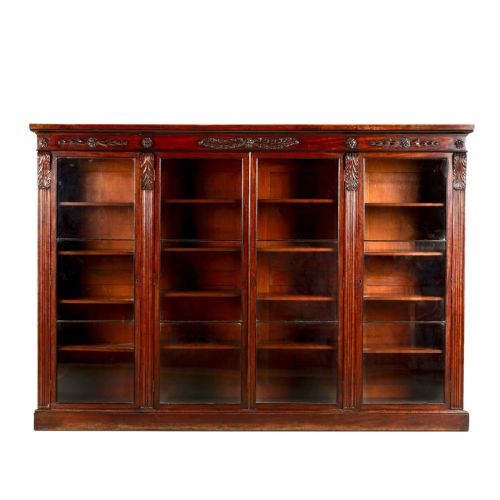
Cabinet makers built these low pieces primarily from solid mahogany and figured mahogany veneers applied to secondary woods, often enhancing the surfaces with satinwood inlay. Glazing required delicate timber astragal bars to hold individual panes of glass securely within the doors.
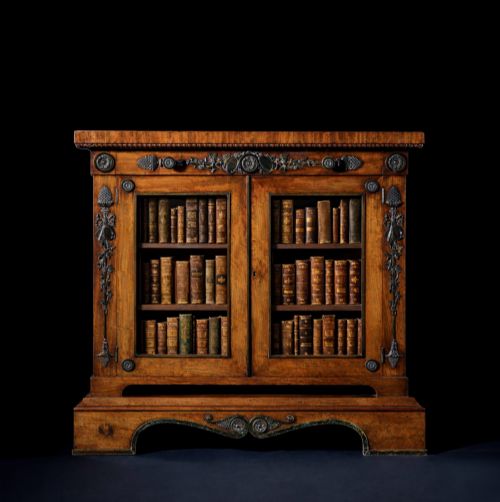
Metal components added structural and decorative detail, utilising cast brass handles, hinges, and castors alongside ormolu mounts and bronze framing. Marble tops appeared on select French bedside and side cabinets, while internal shelving relied on adjustable wooden or glass supports.
Low Mahogany Display Cabinet Retail Price Guide 2026
Typical asking prices for low mahogany display cabinet among the pieces listed under this phrase on Sellingantiques today, from the lower quarter to the upper quarter. They describe what is for sale here now, not the wider market.
Several low bookcases come equipped with original brass castors, ready to roll across the drawing room at a moment's notice.
What varies in quality
The selection of timber grain largely determines the visual standing of a piece, with highly figured mahogany veneers and precise satinwood stringing separating finer examples from plain utility furniture. Cabinetwork quality shows in the tight joining of mitres, the clean execution of astragal glazing bars, and the crisp casting of brass or ormolu mounts.
Proportion and decorative restraint dictate the distinction between standard workshop production and superior cabinet making. Pieces bearing maker stamps or attributed to notable firms exhibit deliberate detailing, such as harmonious breakfront lines, integrated mirror backs, and well-cast hardware.
Waring and Gillow·Gillows Of Lancaster·Gillow
The Low Mahogany Display Cabinet Glossary
- Astragal
- A small moulding profile, often used to divide panes of glass in a cabinet door. These wooden strips form geometric patterns across the front of the bookcase.
- Breakfront
- A piece of furniture where the central section projects forward from the flanking wings. This architectural arrangement creates depth and shadow across the front elevation.
- Dwarf bookcase
- A low shelving unit designed to sit beneath dado height. These compact bookcases keep the upper wall space clear.
- Ormolu
- Gilded bronze used for decorative mounts on furniture. It adds metallic highlights to the mahogany surfaces.
- Vitrines
- Glass-fronted cabinets made for displaying porcelain and objects. They protect contents from dust while allowing all-round visibility.
Low Mahogany Display Cabinet: Frequently Asked Questions
How do I date a mahogany cabinet?
Dating relies on combining stylistic clues, construction methods, and the specific materials recorded in the piece. Regency and Victorian eras display distinct decorative treatments and proportions.
Examining the backboards, drawer linings, and internal fixings helps confirm the period of manufacture alongside any visible stamps or signatures.
Are these cabinets suitable for books?
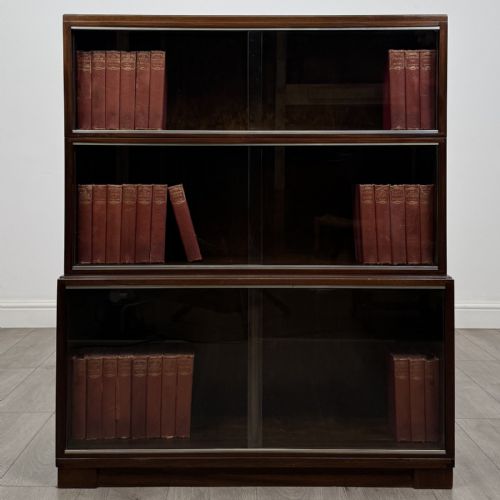
Many low mahogany pieces function specifically as bookcases or combine shelving with display space. Adjustable internal shelving accommodates various book heights.
Open bookcases and glazed door variants protect volumes from dust while keeping libraries accessible in smaller sitting rooms.
Where should I place a low cabinet?
The low profile allows these cabinets to sit beneath windows or artwork without blocking light or sightlines. Drawing rooms and studies suit their dimensions.
Freestanding models require sufficient clearance for doors to swing open, while open bookcase variants need stable placement against a flat wall.