


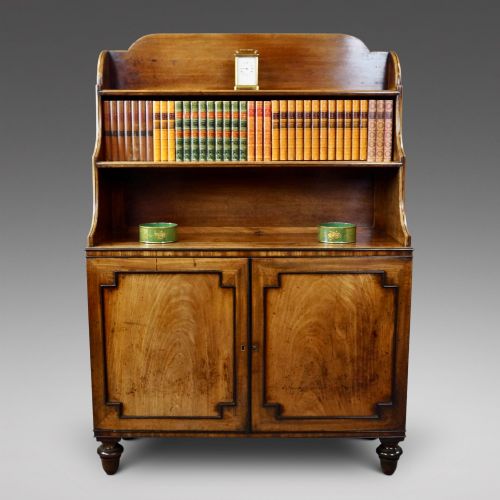


Vintage Waterfall Bookshelf
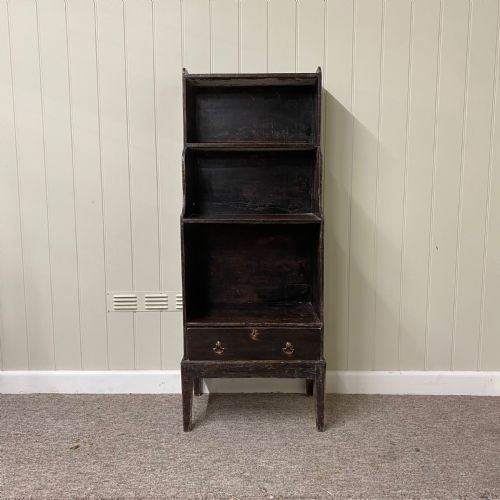
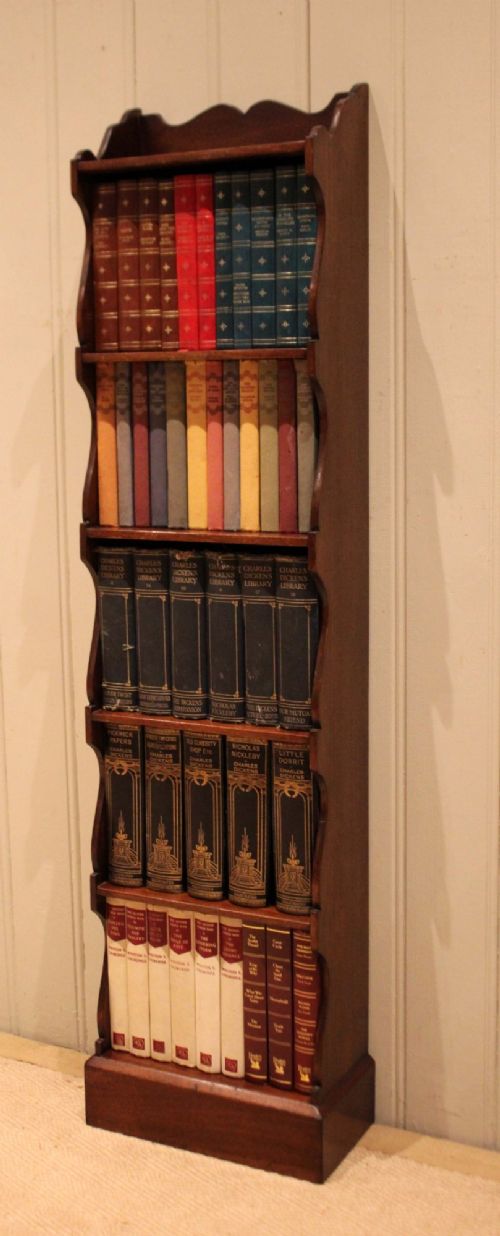
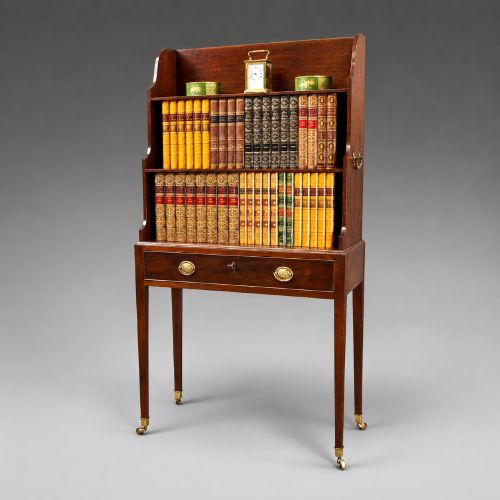
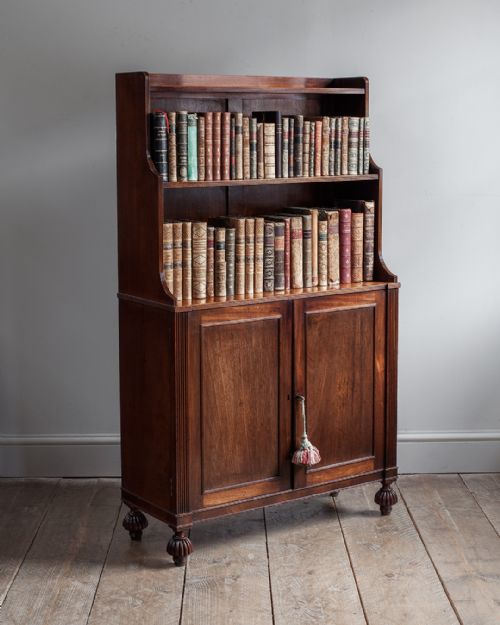
These vintage waterfall bookshelf pieces offer tiered cascading display surfaces that combine utility with distinctive architectural elegance.
Vintage Waterfall Bookshelf
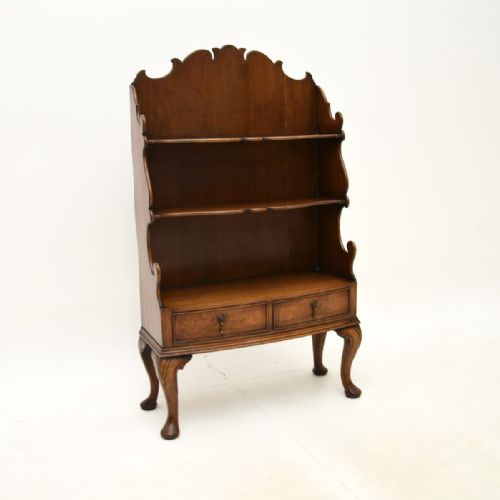
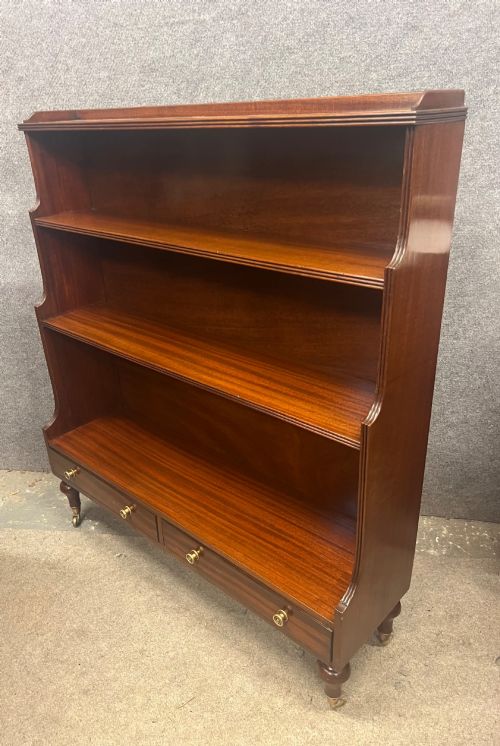
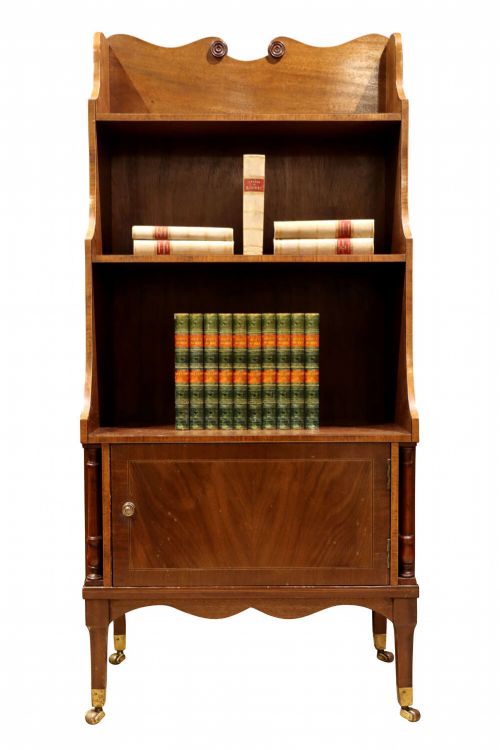
A vintage waterfall bookshelf provides stepped shelves descending in a tier, originating from the Regency period and continuing through the Victorian, Edwardian, and early twentieth century. Buyers seeking this form encounter pieces designed for open display or equipped with lower cupboards and drawers.
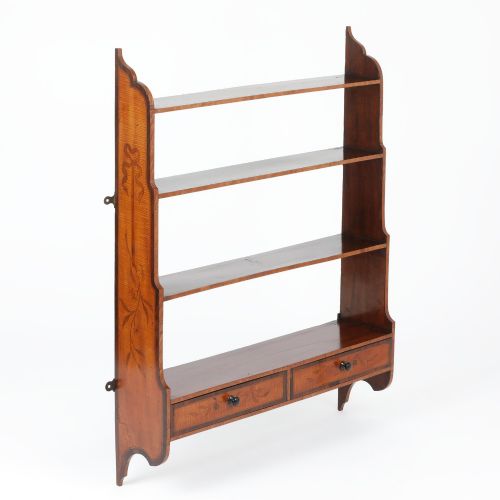
The format varies from freestanding floor units to hanging wall bookshelves and low dwarf cabinets. Mahogany remains the dominant timber across the selection, accompanied by oak, satinwood, burr walnut, yew wood, and teak.
How they were made
Cabinet makers utilised solid timbers and wood veneers, employing mahogany, oak, and walnut to construct the stepped tiers. Inlaid details in satinwood and brass castors frequently appeared on finer examples from the nineteenth century.
Joinery techniques ranged from open gallery framing to enclosed cabinet bases with functional drawers. Certain pieces incorporate specialised woods such as simulated rosewood or teak to achieve specific visual finishes.
Vintage Waterfall Bookshelf Retail Price Guide 2026
Typical asking prices for vintage waterfall bookshelf among the pieces listed under this phrase on Sellingantiques today, from the lower quarter to the upper quarter. They describe what is for sale here now, not the wider market.
Some nineteenth-century makers fitted castors so the towering cascade could easily roll across the drawing room for better reading light.
What varies in quality
The grade of timber selection and the precision of the stepped tier graduation define the standard of a piece. Finer examples display careful attention to wood veneer matching and delicate inlay work.
Structural proportion separates utilitarian items from masterworks, particularly in how the cascading shelves transition into lower drawers or cupboards.
Shapland & Petter
The Vintage Waterfall Bookshelf Glossary
- Waterfall bookcase
- A set of open shelves that decrease in depth from bottom to top, forming a stepped cascade profile. This layout allows for the display of books and decorative objects at varying heights.
- Dwarf bookcase
- A low-standing bookcase designed to sit beneath window height or within reach of a seated person. These units often feature graduated tiers or an open gallery top.
- Canterbury
- A low multi-compartment stand traditionally used for holding sheet music or books, occasionally integrated into the base of a bookcase. The term describes compartmentalised storage sections.
- Inlay
- A decorative technique where contrasting woods or materials are fitted into depressions in the primary surface. Satinwood frequently provides the contrasting tone in mahogany pieces.
- Simulated rosewood
- A painted or stained wood finish designed to imitate the rich grain and colour of genuine rosewood. Cabinet makers utilised this method during the nineteenth century to achieve luxury aesthetics.
Vintage Waterfall Bookshelf: Frequently Asked Questions
What is a waterfall bookshelf?
A waterfall bookshelf is a tiered piece of furniture featuring shelves that recede in depth from bottom to top. This creates a cascading silhouette designed for displaying books and ornaments.
The form gained popularity during the Regency period and continued through the Victorian and Edwardian eras in various timbers like mahogany and oak.
How do I style a waterfall bookcase?
Place smaller volumes and lighter decorative items on the upper, narrower shelves while reserving the deeper lower tiers for heavier books. This mirrors the natural visual weight of the cascading structure.
Freestanding versions suit living spaces and studies, whereas hanging variants function well on empty wall space.
Are these bookcases suitable for heavy books?
The lower shelves on these bookcases naturally accommodate heavier volumes due to their greater depth and robust construction. The upper tiers suit lighter books or decorative objects.
Solid timber examples from the nineteenth century offer substantial support, though timber selection influences overall load capacity.
How do I identify the period of a bookcase?
Period identification relies on observing the primary materials, construction techniques, and stylistic details present in the piece. Regency and Victorian examples often feature mahogany and brass castors, while Edwardian versions utilise varied inlays.
Stylistic cues such as Arts and Crafts influences or Sheraton revival details help narrow down the manufacturing era.