




Four Door Display Cabinet
A four door display cabinet organises a large room with long stretches of glass and timber.
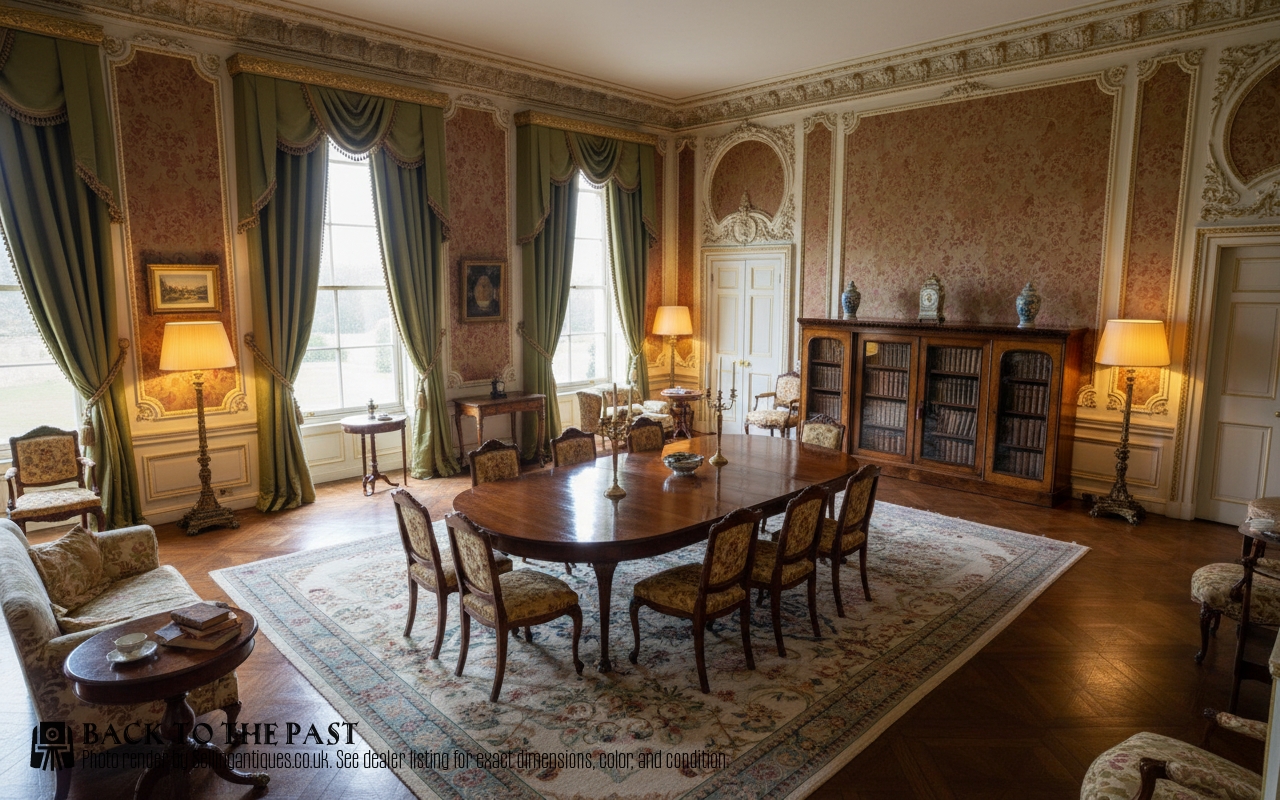
Four Door Display Cabinet
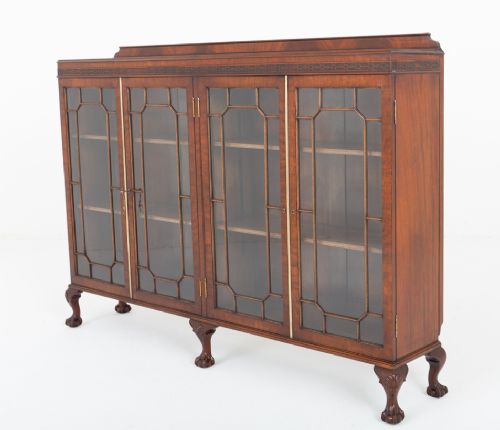
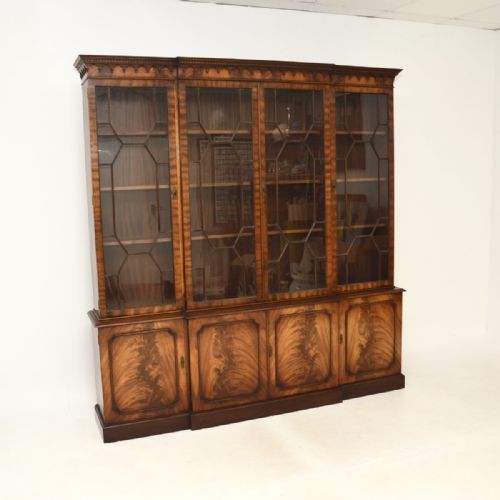
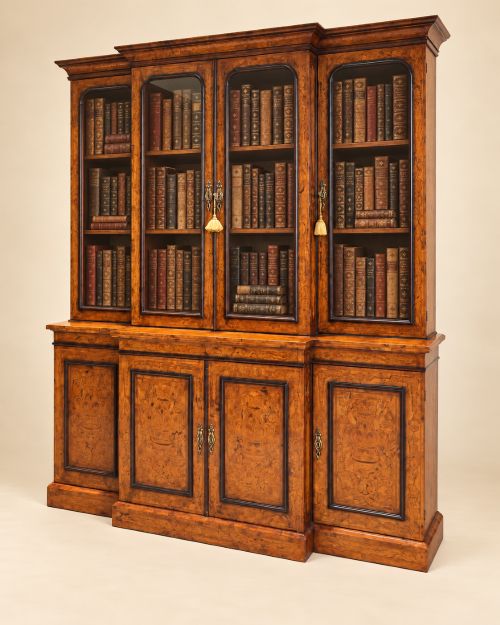
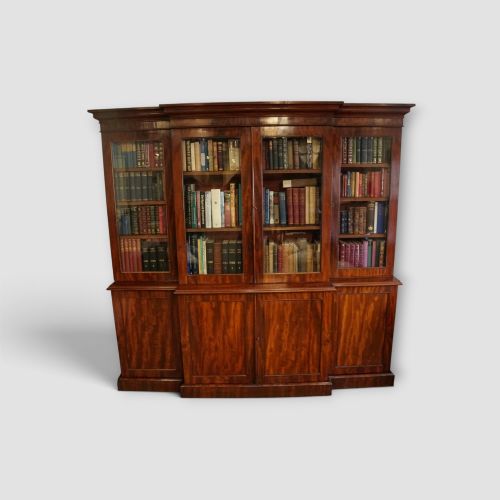
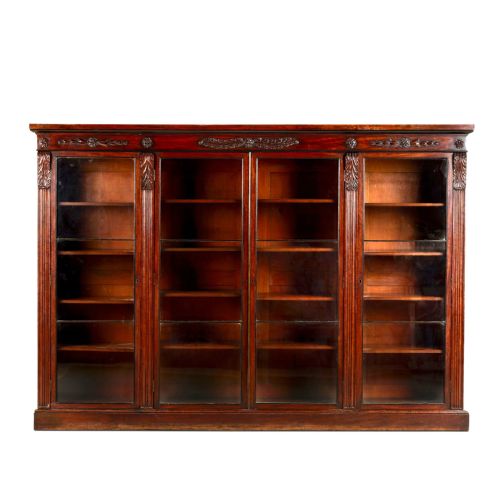
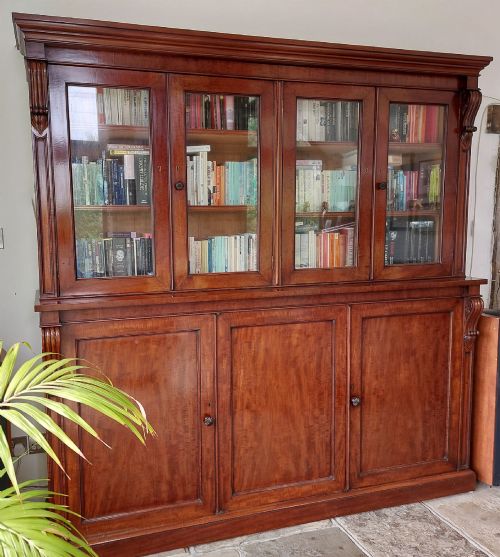
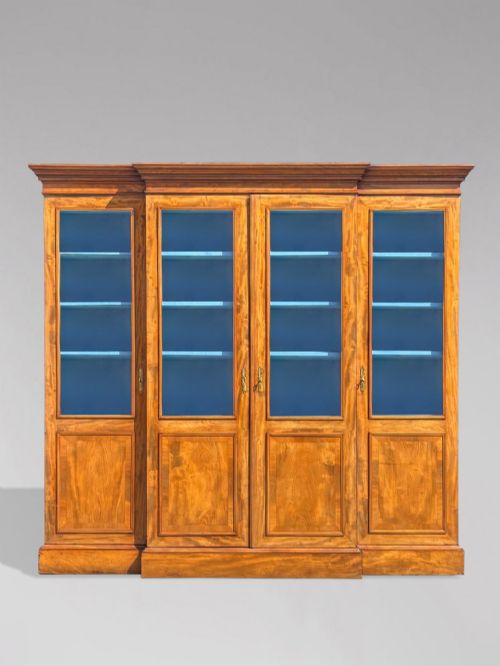
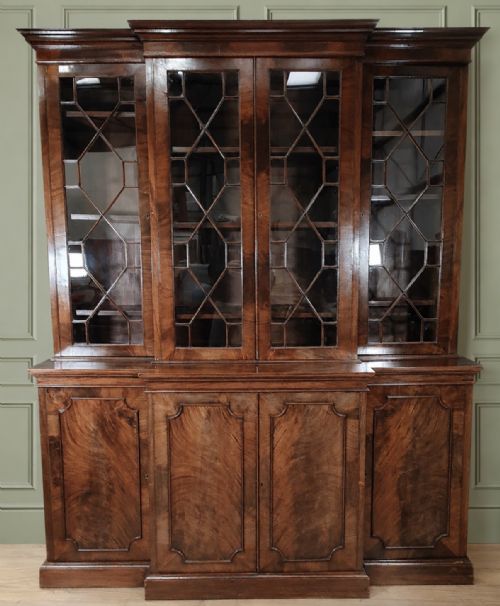
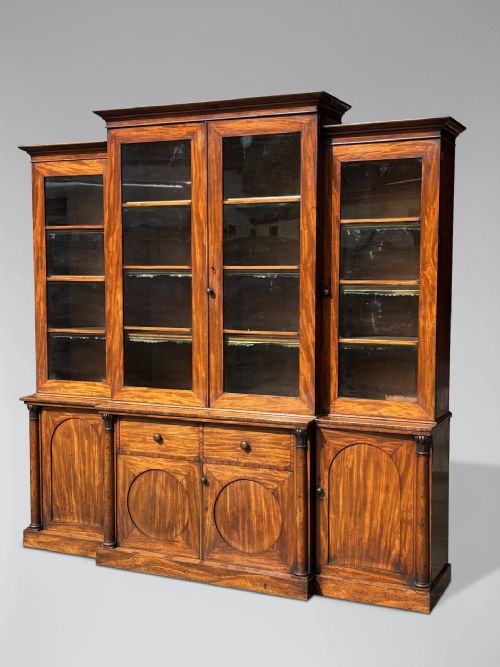
A four door display cabinet unites storage and visibility on a grand scale, frequently taking the form of a breakfront bookcase or library cabinet. These pieces measure wide and tall, offering substantial glazed frontage to exhibit books and collections behind timber frames.
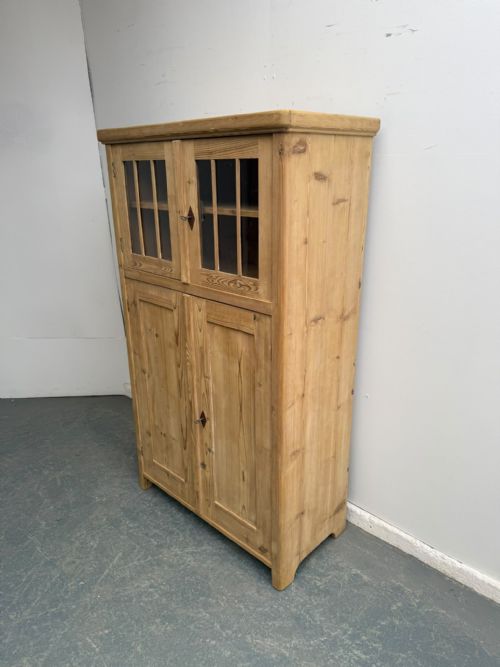
The versions met most often on this page date from the nineteenth century, spanning Victorian, Regency and William IV periods. Mahogany and walnut dominate the forms, supplemented by oak, pine and occasionally exotic flame veneers.
Makers and workshops constructed these large carcasses to anchor principal rooms, combining breakfront proportions with adjustable shelving and lower cupboard doors. Georgian style revivals and French Louis Philippe designs also appear regularly among the selections.
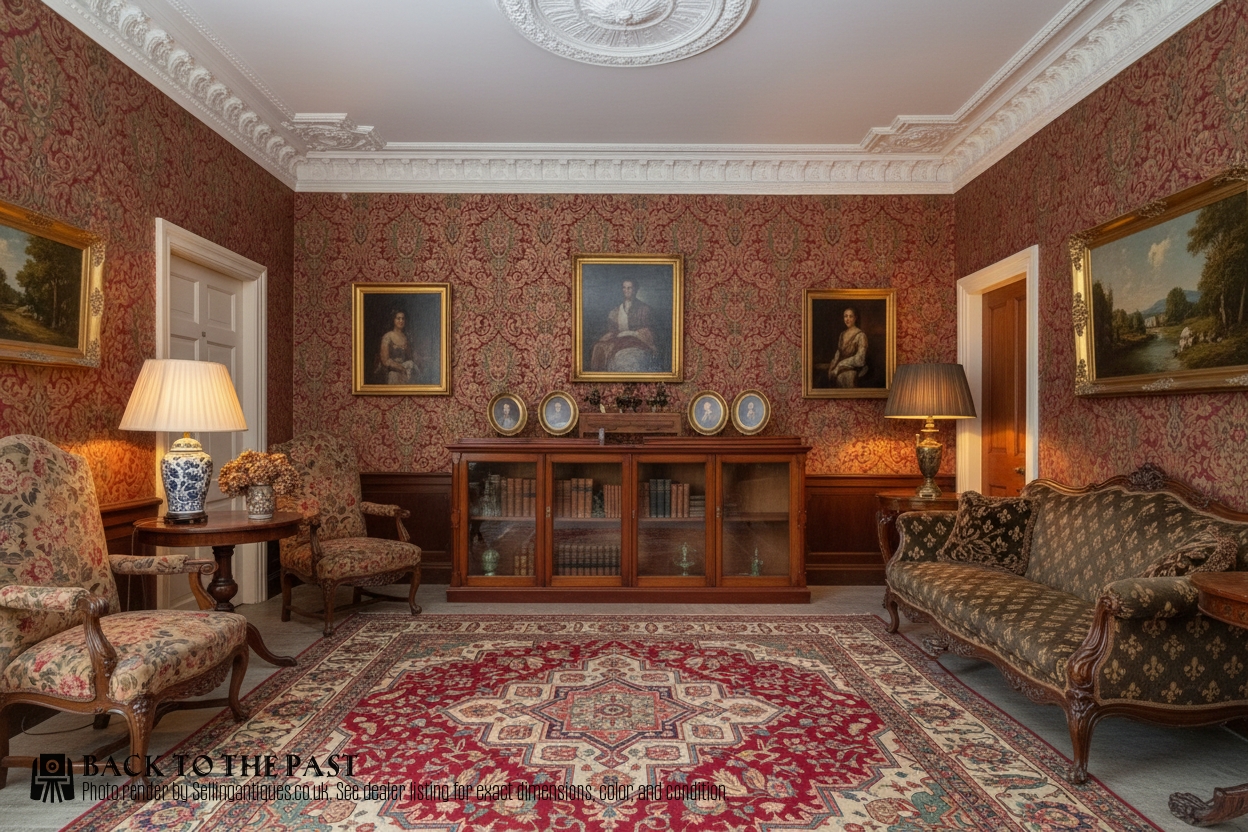
How they were made
Cabinet makers built these imposing carcasses using solid timbers like mahogany, oak and walnut for structural integrity, applying figured veneers such as flame mahogany or burr walnut to prominent display surfaces. Brass hardware, ormolu mounts and Tunbridgeware inlay frequently accent the primary woods.
Glazing bars divide large expanses of glass into geometric panes, while interior shelving rests on adjustable wooden racks or brass pegs. Carved mouldings, serpentine fronts and marquetry panels demand advanced joinery skills across the wider body.
Four Door Display Cabinet Retail Price Guide 2026
Typical asking prices for four door display cabinet among the pieces listed under this phrase on Sellingantiques today, from the lower quarter to the upper quarter. They describe what is for sale here now, not the wider market.
Listings feature mahogany, walnut and oak across Victorian, Regency and William IV periods.
What varies in quality
The grade of timber selection sets the standard across these large cabinets, where book-matched flame mahogany or burr walnut veneers demonstrate superior choice by the cabinet maker. Uniformity in grain alignment across four separate doors reveals deliberate planning rather than hurried assembly.
Carved enrichment and structural depth define the higher tiers of production, seen in crisp mouldings, panelled plinths and substantial brass fittings. Lesser examples rely on plain timber faces and simpler joinery without the architectural breakfront configuration.
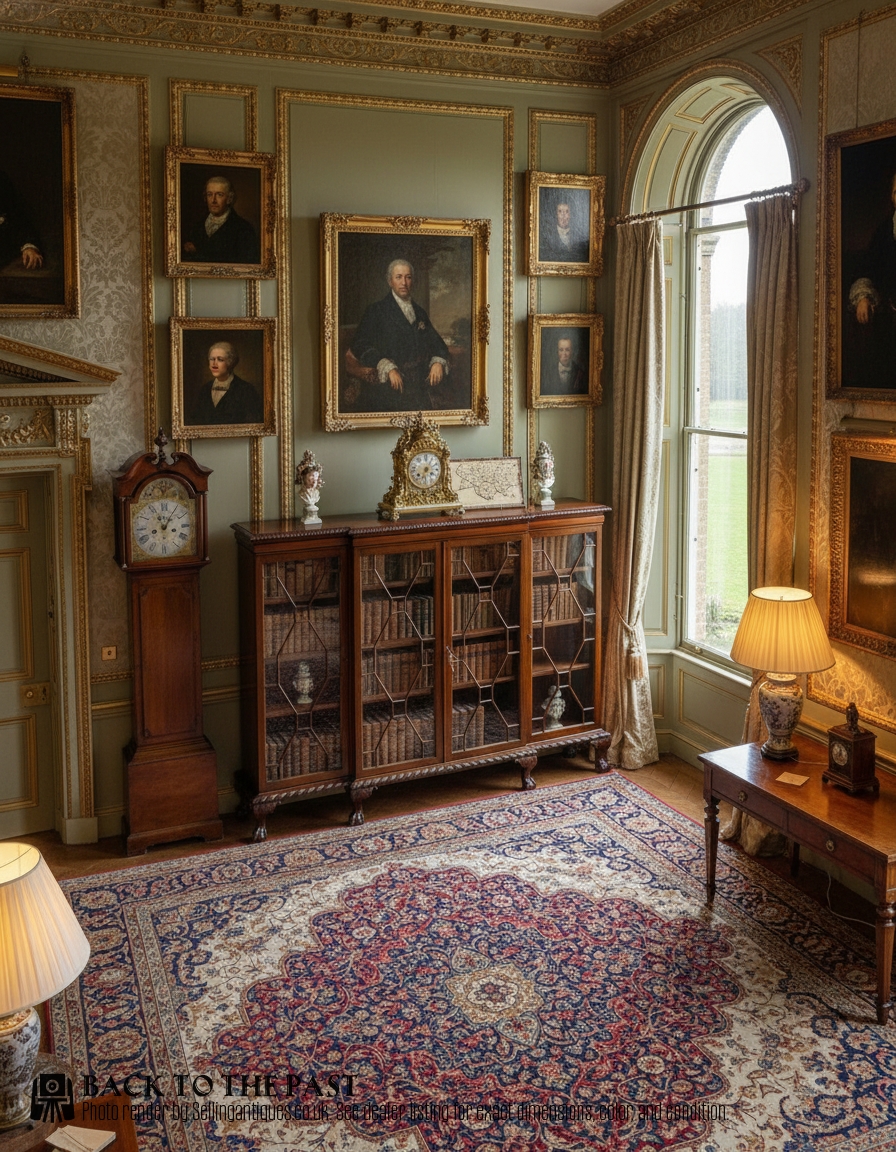
Lamb And Co
The Four Door Display Cabinet Glossary
- Breakfront
- A cabinet front where the central section projects forward from the flanking wings. This architectural arrangement creates depth and shadow across large library bookcases.
- Glazing bar
- A narrow strip of wood holding individual panes of glass within a door frame. Fine glazing bars indicate lighter, more refined cabinet construction.
- Flame mahogany
- Timber cut from the fork of the mahogany tree, showing a distinctive flickering grain pattern. It was favoured for principal doors on high-status nineteenth century furniture.
- Credenza
- A low storage cabinet enclosed by doors, often featuring decorative marquetry or serpentine fronts. They serve primarily for display and surface placement.
- Ormolu
- Gilded bronze mounts applied to furniture for decorative contrast. These brass and bronze ornaments appear on select French and English exhibition pieces.
Four Door Display Cabinet: Frequently Asked Questions
What is a four door display cabinet?
A four door display cabinet is a large storage furniture piece featuring four separate doors, predominantly glazed for viewing contents inside. They usually combine upper display sections with lower wooden cupboards.
These large carcasses function as library bookcases, breakfront storage units and grand credenzas across nineteenth-century styles.
How do I date a large bookcase cabinet?
Dating relies on observing timber choices, construction methods and stylistic revival cues within the piece. Regency and William IV examples display distinct classical proportions, whereas Victorian pieces often feature heavier carved mouldings.
Archival records and listed periods help confirm whether a cabinet belongs to the early nineteenth century or later revival eras.
Where were these large cabinets placed?
These cabinets stood in principal rooms such as libraries, drawing rooms and formal dining spaces. Their substantial length required long wall spans to anchor the interior architecture.
They housed extensive book collections, porcelain and curated display objects behind secure glazed panels.
Are all four door cabinets breakfront?
Not all four door cabinets feature a breakfront configuration, though many nineteenth-century library bookcases do. Some examples maintain a flat front or a serpentine curve across the width.
Breakfront designs project the central doors forward to break the visual plane of the room.