

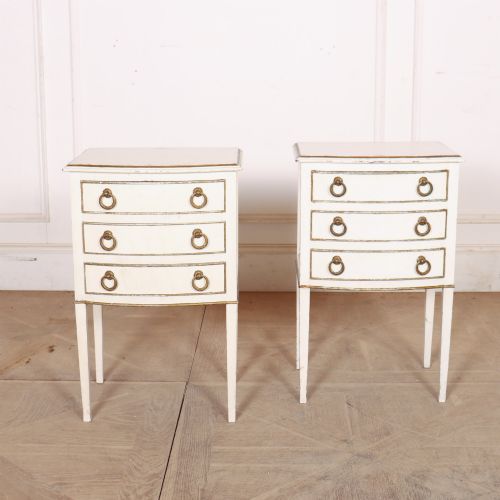
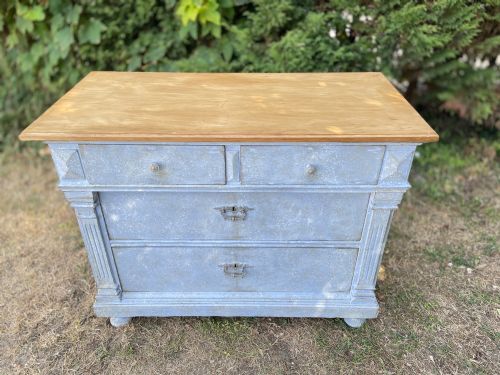


Louis XVI Painted Commode
A louis xvi painted commode brings neoclassical symmetry and soft colour to a room, offering practical storage disguised in painted wood and marble.
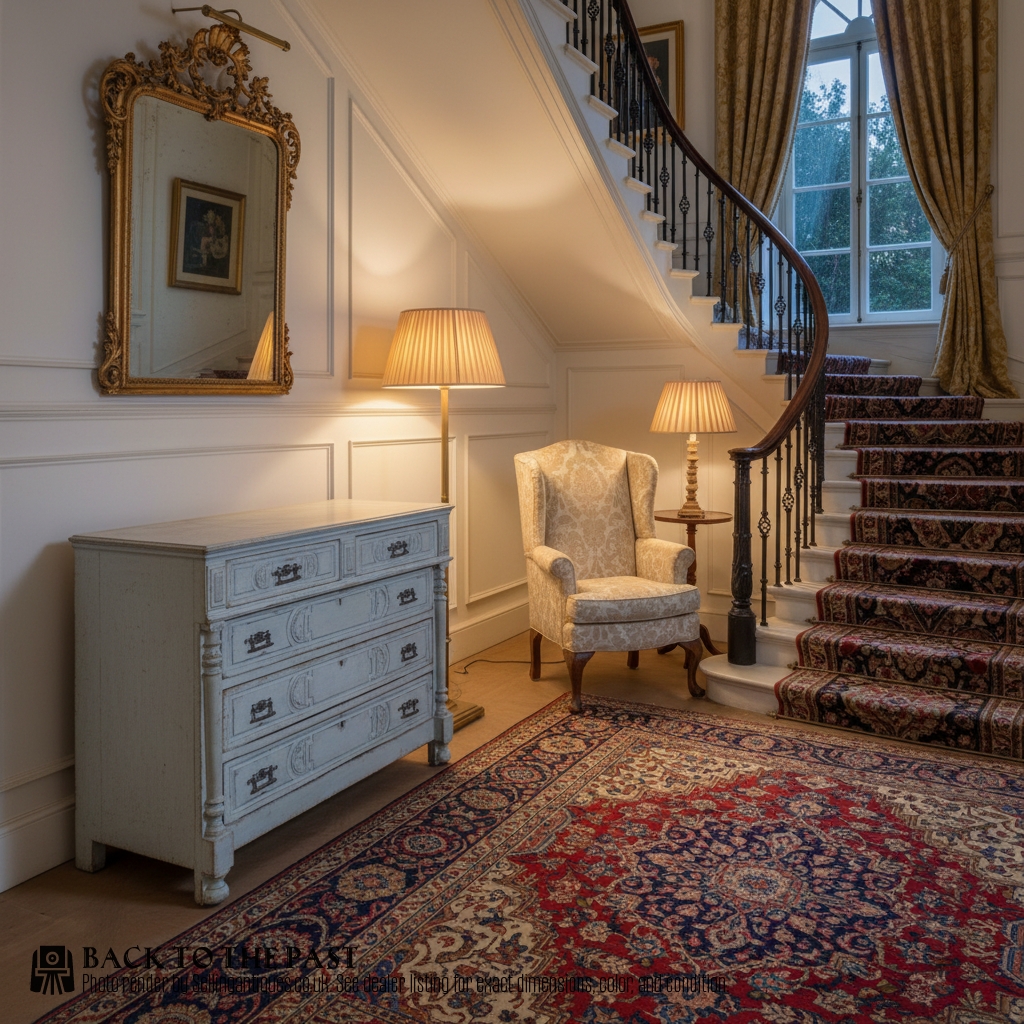
Louis XVI Painted Commode
A louis xvi painted commode is a case piece designed for storage, appearing across this selection as chests of drawers, cabinets and bedside tables. These items emerge from the eighteenth century through to the twentieth century, with nineteenth-century revivals strongly represented.
Buyers will find French provincial pieces, Gustavian examples, and Italian serpentine fronts alongside standard Louis XVI style chests. The common thread is the painted wooden carcass, frequently topped with marble and accented by brass or metal mounts.
How they were made
Construction relies primarily on oak and general wood carcasses finished with layered paint, sometimes combined with satinwood or gilt wood details. Marble slabs form heavy, durable tops on many specimens, while brass elements provide structural and decorative mounts.
Surface decoration ranges from simple painted finishes to diamond-point moulding and specific artist attribution such as Kaufman work. Metal hardware secures joints and corners, balancing the weight of the timber and stone components.
Louis XVI Painted Commode Retail Price Guide 2026
Typical asking prices for louis xvi painted commode among the pieces listed under this phrase on Sellingantiques today, from the lower quarter to the upper quarter. They describe what is for sale here now, not the wider market.
Some nineteenth-century makers evidently loved diamond patterns so much they turned entire drawer fronts into geometric adventures.
What varies in quality
Quality separates through the integrity of the painted finish and the selection of materials like marble and brass versus basic metal. Period authenticity from the eighteenth century contrasts with later revivals from the nineteenth and twentieth centuries.
The refinement of the neoclassical proportions and the crispness of details such as diamond-point moulding define the upper tier. Subtlety in the painted palette and the harmonious integration of bronze or brass mounts elevate a piece above standard utility.
The Louis XVI Painted Commode Glossary
- Neoclassical
- A style drawing inspiration from classical antiquity, marked by straight lines and symmetrical balance. It defines the architectural restraint seen in Louis XVI design.
- Serpentine
- A front contour curving inward centrally and outward at the sides in a gentle 'S' shape. This profile adds movement to Italian and French case pieces.
- Demi Lune
- A half-moon shape applied to tables and cabinet commodes designed to sit flush against a wall. The curved front softens room corners.
Louis XVI Painted Commode: Frequently Asked Questions
Are these commodes suitable for daily use?
These pieces provide sturdy storage with deep drawers and durable marble tops suitable for lamps or decorative objects. Their solid wood construction handles everyday items reliably.
Care should be taken with painted surfaces and natural stone tops to avoid moisture damage or harsh cleaning agents. Using coasters and placemats preserves the historical finish.
How do I date a painted commode?
Dating relies on examining the timber construction, joinery methods, and the wear patterns beneath the paint layers. Eighteenth-century originals differ structurally from nineteenth-century revivals and twentieth-century interpretations.
Stylistic cues such as neoclassical hardware, brass mounts, and specific paint techniques also help place a piece in its correct period. Comparing the carcass materials like oak against later substitutes clarifies the timeline.
Where does a commode work best at home?
A commode serves well as a bedroom chest for clothing or as a bedside table pair in larger sleeping quarters. Its decorative presence suits living room walls or hallways.
The flat marble or wooden top provides a display surface for mirrors, lamps, or ceramics, anchoring the furniture visually in the space.
What is the difference between French and Italian styles?
French examples often lean towards Gustavian restraint, provincial charm, or structured neoclassical symmetry with straight, fluted legs. Painted finishes tend to use soft greys, whites, or muted tones.
Italian variants frequently showcase serpentine fronts and dramatic marble tops. Their proportions can feel bolder, reflecting regional tastes in decorative carving and cabinetmaking.