
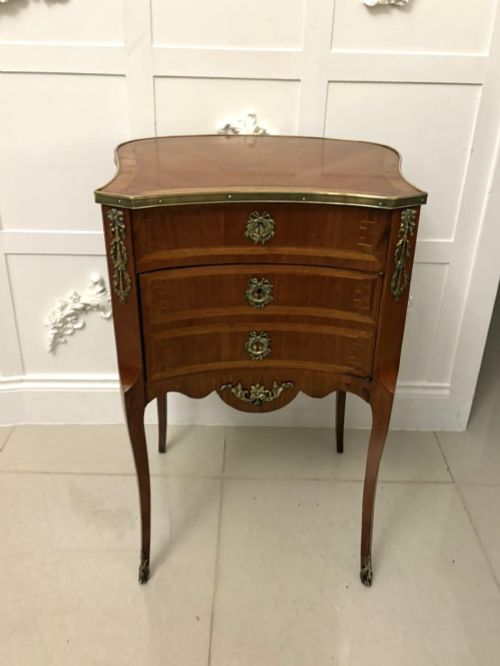
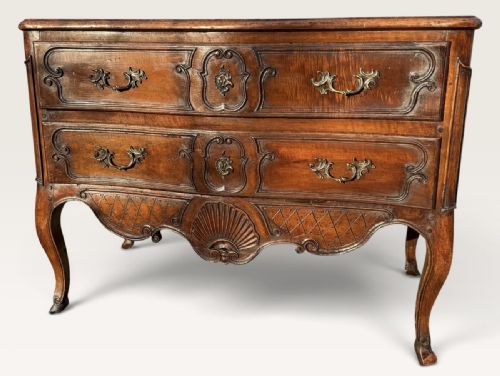
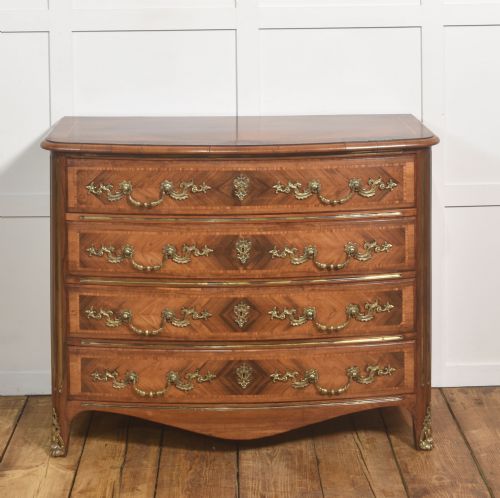
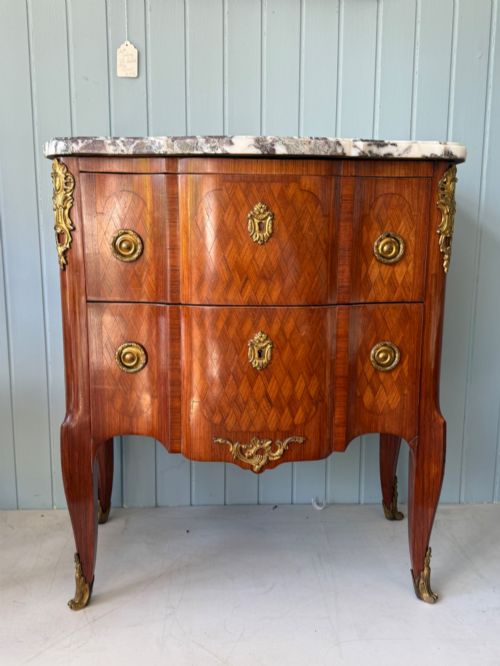
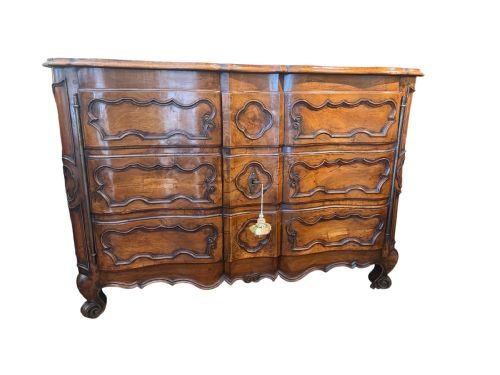
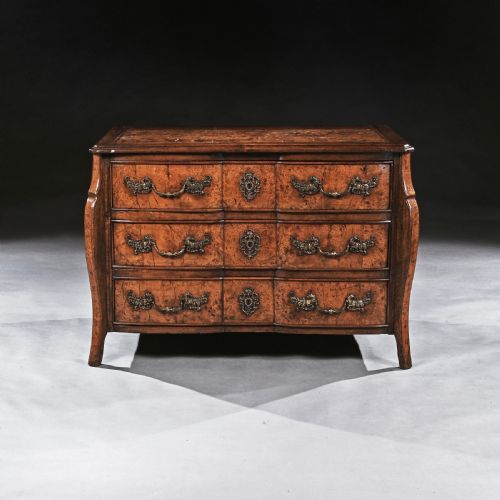
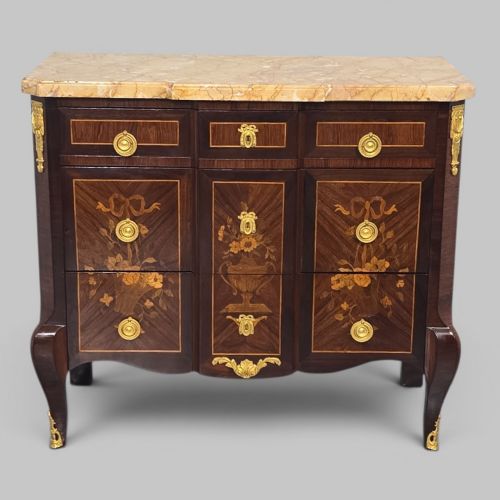
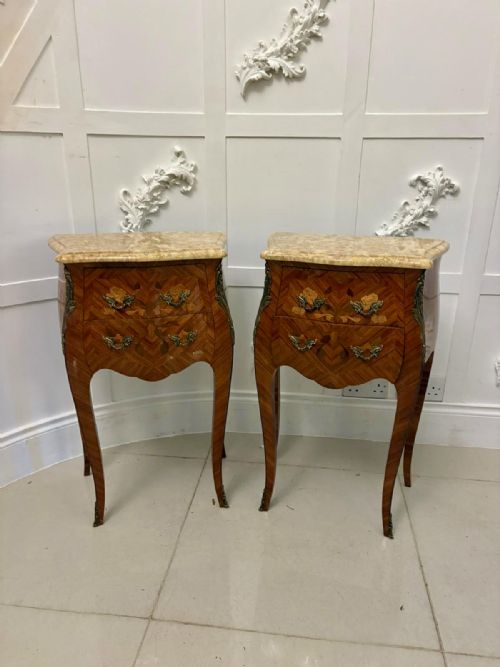
Louis XV Walnut Commode
A louis xv walnut commode brings curvilinear grace and generous storage to a room through traditional French cabinet-making.

Louis XV Walnut Commode
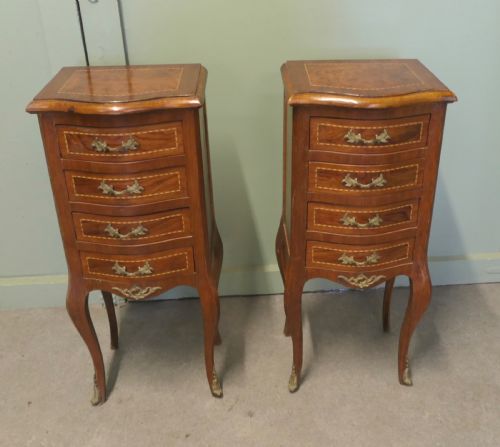
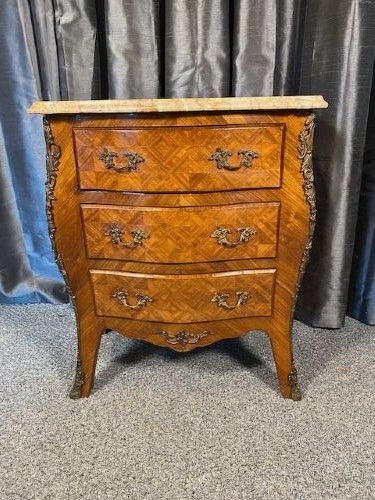
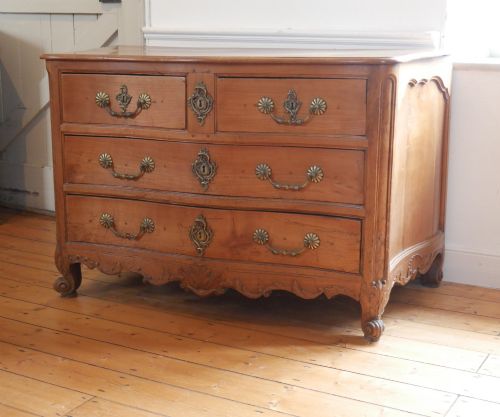
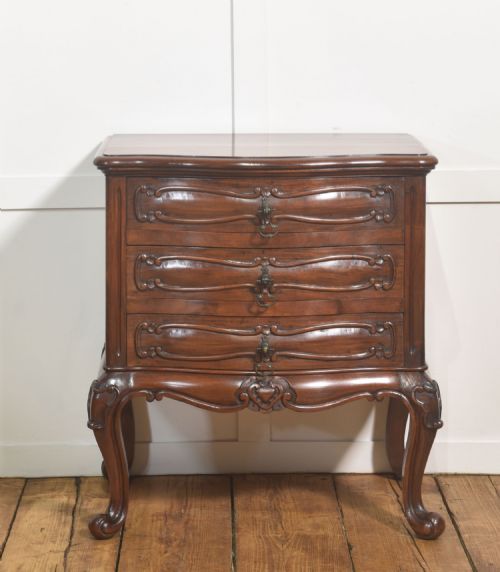
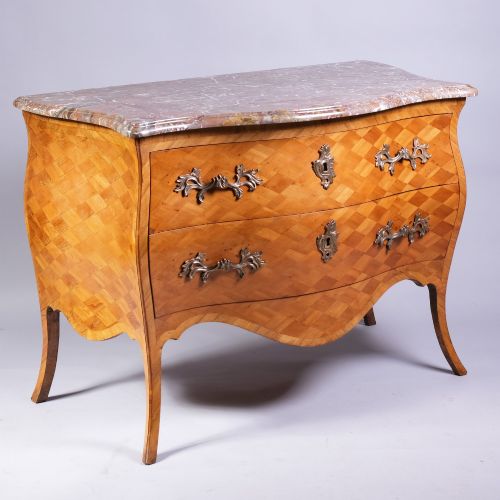
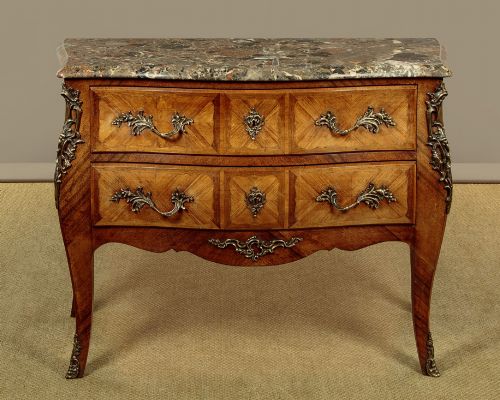
A louis xv walnut commode is a low chest of drawers defined by serpentine or bombe contours, fluid cabriole legs, and understated structural symmetry. The pieces seen here span from original eighteenth-century examples to later revival interpretations produced across the nineteenth and twentieth centuries.
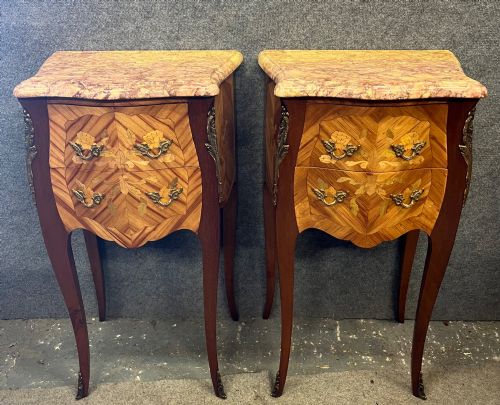
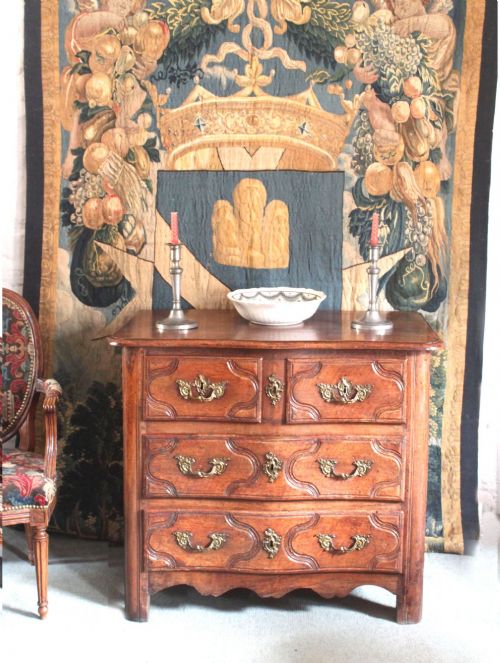
Provincial variations appear alongside sophisticated marquetry and parquetry designs, offering a diverse selection of forms ranging from compact bedside cabinets to substantial marble-topped chests. Walnut remains the principal timber, often accented with contrasting fruitwoods or detailed inlay work.

Materials and construction
Cabinet-makers constructed these pieces using solid walnut and structural secondary timbers, shaping the drawer fronts and carcases to follow sweeping serpentine or bombe lines. Veneers of burr walnut, kingwood, and rosewood were frequently arranged in intricate geometric parquetry or floral marquetry patterns across the surfaces.
Gilded bronze or ormolu mounts, cast and chased, accent the corners, handles, and apron scrolls, while fitted tops of shaped marble complete the standard construction of finer examples.
Louis XV Walnut Commode Retail Price Guide 2026
Typical asking prices for louis xv walnut commode among the pieces listed under this phrase on Sellingantiques today, from the lower quarter to the upper quarter. They describe what is for sale here now, not the wider market.
Some provincial pieces hide shallow secret compartments behind the lower moulding for storing small keepsakes.
Factors determining quality
The sophistication of the timber selection and the crispness of the hand-cut inlay set finer examples apart, particularly where burr walnut or multi-wood marquetry covers the drawer fronts. Finer pieces demonstrate precise joinery in the carcase and drawer linings, with hand-cut dovetails remaining true and tight over centuries.
The weight, chasing, and integration of the ormolu mounts indicate the workshop's standard, with superior mounts displaying sharp detail rather than soft casting. The integration of a thick, correctly contoured marble top that fits the serpentine outline without gaps distinguishes higher-tier pieces.
The Louis XV Walnut Commode Glossary
- Serpentine
- A shape defined by a double-curved line that curves outward in the centre and inward at the sides, creating a flowing silhouette. This profile requires skilled hand-shaping of both the timber and the drawer fronts.
- Bombe
- A swollen, outward-curving profile that expands towards the base of the chest, typical of advanced cabinet-making. It demands complex joinery to maintain structural integrity.
- Ormolu
- Gilded bronze mounts applied to furniture corners, feet, and aprons for decorative effect. The metal is cast and chased to achieve fine surface detail.
- Marquetry
- Decorative patterns formed by fitting small pieces of various coloured veneers into a prepared ground. It often depicts floral or geometric arrangements across the top and sides.
- Parquetry
- Geometric wood inlay arranged in repetitive patterns such as cubes, chequers, orlozenges. This technique highlights the natural grain variations of walnut and companion timbers.
- Cabriole leg
- A curved furniture leg featuring an outward knee and an inward ankle, terminating in a simple pad or scroll foot. It embodies the signature movement of the period style.
Louis XV Walnut Commode: Frequently Asked Questions
How do I spot an eighteenth-century original?
Examine the interior construction and timber shrinkage, looking for hand-cut dovetails, oak or walnut secondary woods, and signs of age-related wear on the drawer runners.
Original eighteenth-century pieces exhibit natural patination and structural quirks unique to hand tools, differing from the machine-sawn precision found in later revival items.
What is the difference between provincial and court styles?
Provincial pieces feature simpler carvings, heavier walnut construction, and local rustic charm, reflecting regional French cabinet-making traditions outside Paris.
Court-style commodes display elaborate marquetry, sophisticated ormolu mounts, and exaggerated serpentine or bombe curves designed for urban interiors.
How should I care for the marble top?
Clean the marble surface using a soft damp cloth and mild, neutral soap, avoiding acidic substances like lemon or vinegar that etch the stone.
Protect the polished finish from heavy impacts and moisture rings by using coasters or felt pads under decorative objects.
Can I use a commode as a bedside table?
Smaller variations, particularly bedside chests and side cabinets, function well next to a bed while offering enclosed storage space within drawers or cupboards.
Measure the height of your bed mattress against the commode surface to ensure proportionate pairing and comfortable access.