


Louis XV Vanity
When you want a louis xv vanity, you are looking for French dressing tables, mirrors, and seats defined by revival styling.
Louis XV Vanity
A louis xv vanity search directs attention towards dressing tables, poudreuses, and matching mirrors or stools rooted in French Rococo revival design. The pieces appearing here span from the mid-nineteenth century through the early twentieth century, capturing various revivals of earlier court aesthetics.
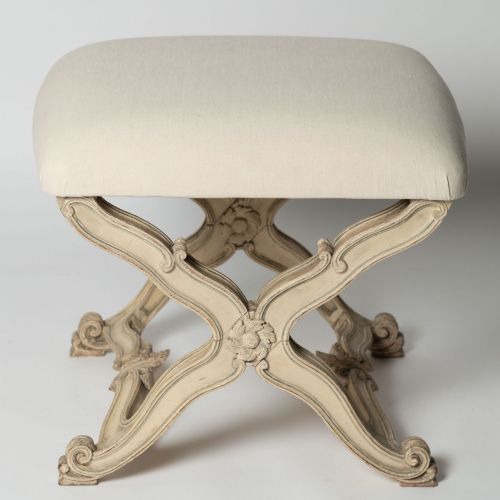
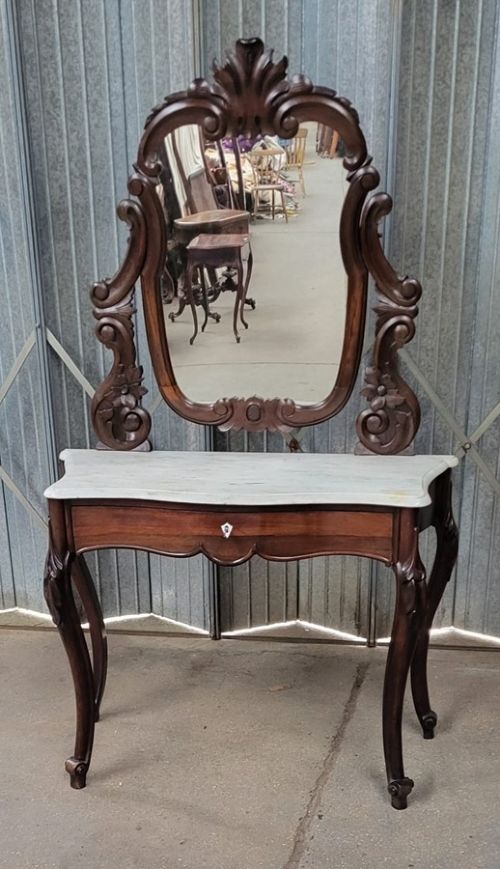
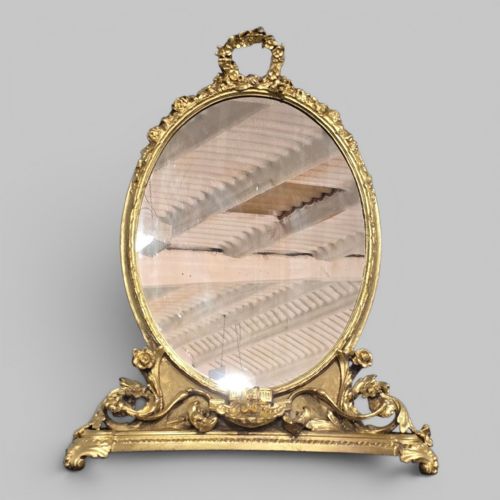
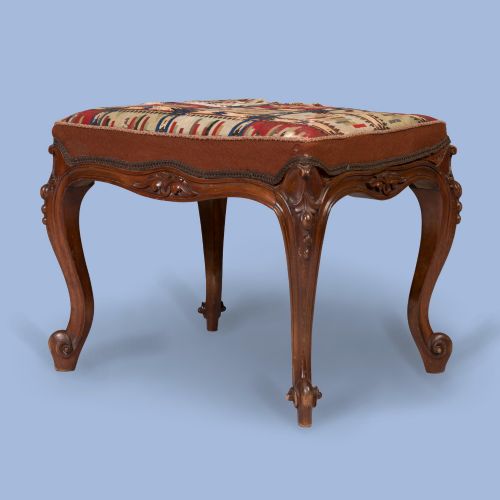
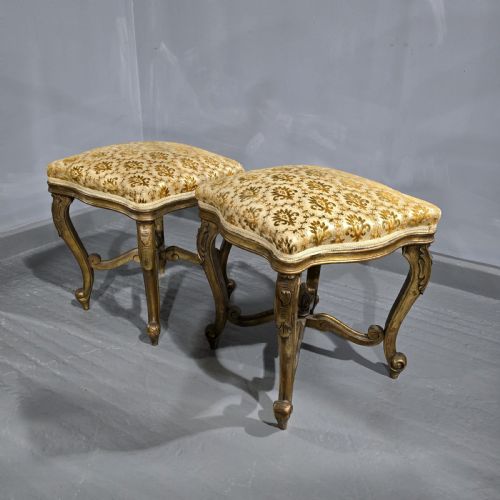
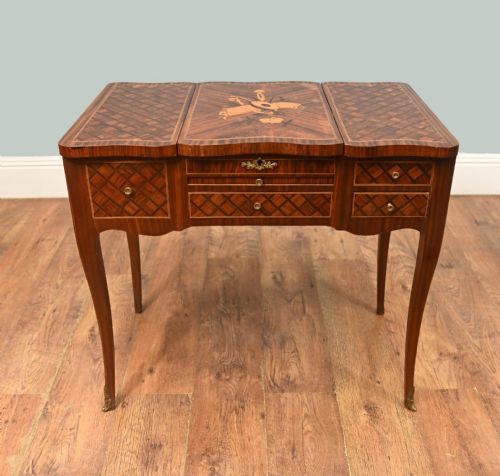
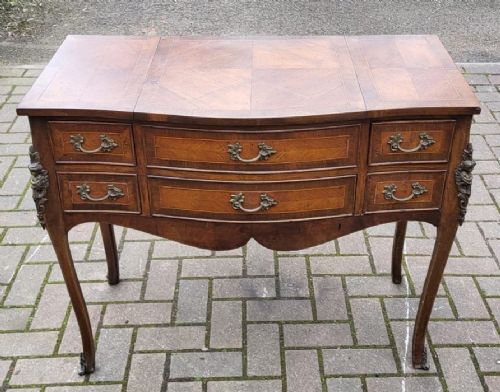
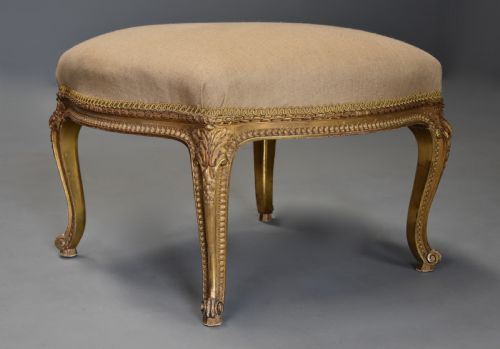
Dressing tables and poudreuses form the core of these listings, often incorporating folding tops, compartments, and inlaid veneers of walnut, kingwood, or tulipwood. Alongside them, you meet related furnishings like giltwood wall mirrors, table mirrors, and carved wooden stools designed for boudoir use.
How they were made
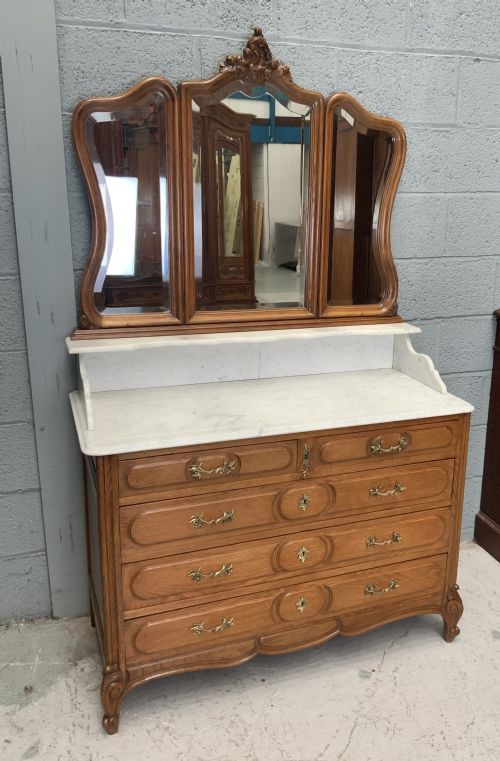
Cabinetmakers utilised solid and veneered timbers including walnut, oak, kingwood, and mahogany, frequently pairing them with marble table tops and cast brass or ormolu mounts. Carved elements in giltwood or painted finishes demonstrate traditional joinery and surface gilding characteristic of continental workshops.
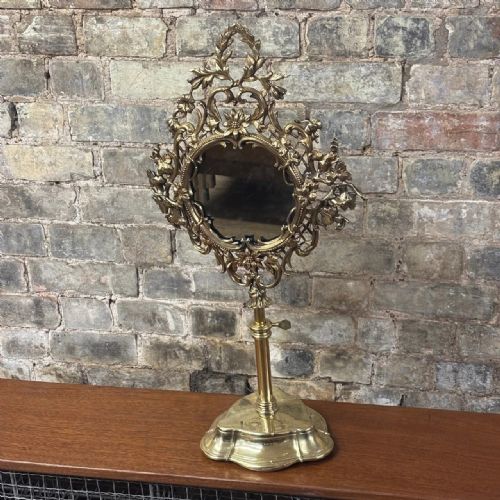
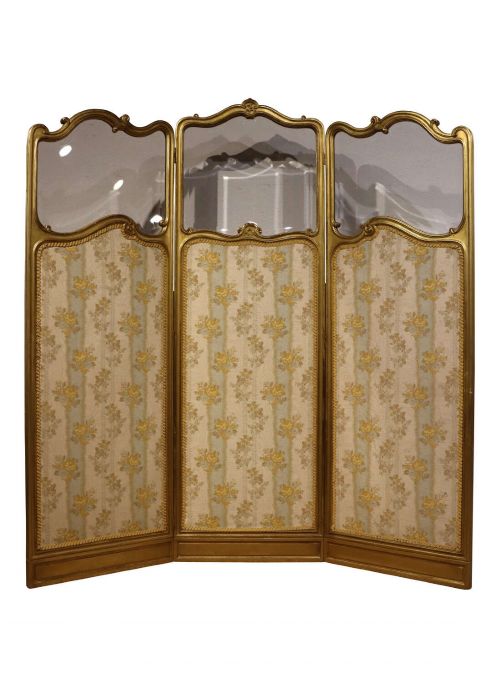
Mirrors employ bevelled glass plates set within carved wooden or solid brass frames, while seating pieces use upholstered silk or fabric panels. The construction relies on shaped cabriole legs, scroll arms, and elaborate floral carvings that echo eighteenth-century models.
Listings span periods from the mid-nineteenth century through the nineteen-thirties, featuring materials like brass, glass, walnut, giltwood, and fabric.
What varies in quality
The standard of carving and the crispness of the giltwood or ormolu mounts dictate the visual strength of each piece. Finer examples display deeply undercut wooden decoration and well-cast metal mounts that sit flush against the timber.
Material selection and veneer work further distinguish the range, from simple painted oak to complex marquetry in kingwood and tulipwood. The integrity of original marble tops, bevelled mirror glass, and silk upholstery panels also shapes the character of the piece.
LOIDRAULT FRERES PARIS
The Louis XV Vanity Glossary
- Poudreuse
- A French dressing table featuring a folding top that opens to reveal a mirror and compartments for cosmetics. These pieces date predominantly from the nineteenth century.
- Ormolu
- Gilded bronze mounts applied to furniture edges and legs. This decorative technique adds metallic contrast to walnut and kingwood surfaces.
- Kingwood
- A dense, exotic timber with contrasting dark and pale grain patterns. Cabinetmakers utilised it for crossbanding and marquetry panels.
- Rococo Revival
- A nineteenth-century design movement mimicking the asymmetrical curves, C-scrolls, and naturalistic motifs of the original French eighteenth-century style.
- Boudoir stool
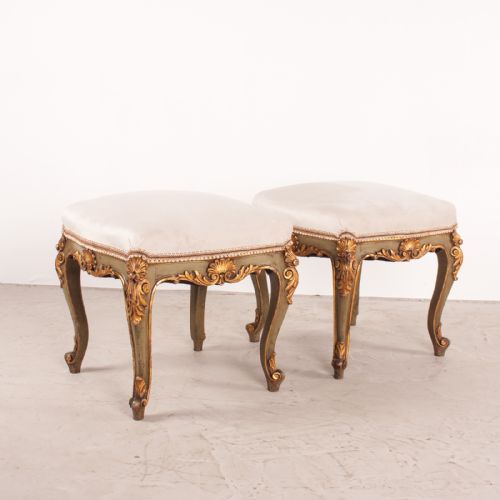
- A low, upholstered seat intended for a dressing room or bedroom. These seats frequently feature carved wooden frames and painted or gilded finishes.
Louis XV Vanity: Frequently Asked Questions
How do I identify a revival piece?
Revival pieces display characteristic Rococo motifs such as cabriole legs, scrollwork, and asymmetrical floral carvings executed in nineteenth-century workshops.
Inspect the wood construction, joinery methods, and mirror glass bevels to determine the approximate period of manufacture.
What woods are used?
Common timbers include walnut, oak, kingwood, tulipwood, and mahogany, often enhanced by decorative veneers and crossbanding.
Giltwood and painted finishes also appear frequently across frames, tables, and matching stools.
How do I clean marble tops?
Wipe marble surfaces with a soft damp cloth using mild soap, avoiding acidic cleaners that etch the polished stone.
Dry the surface thoroughly to maintain the natural sheen of the stone.