


Antique Duchesse Table
An antique duchesse table is a specialised vanity piece combining a pivoting mirror and surface console, sought after for grand bedroom schemes.
Antique Duchesse Table
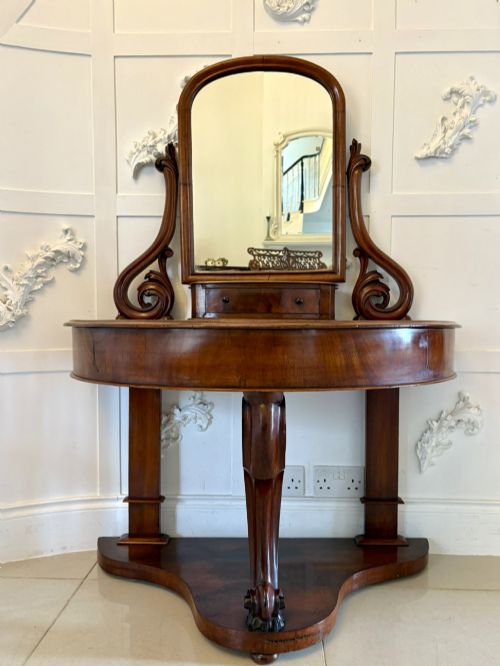
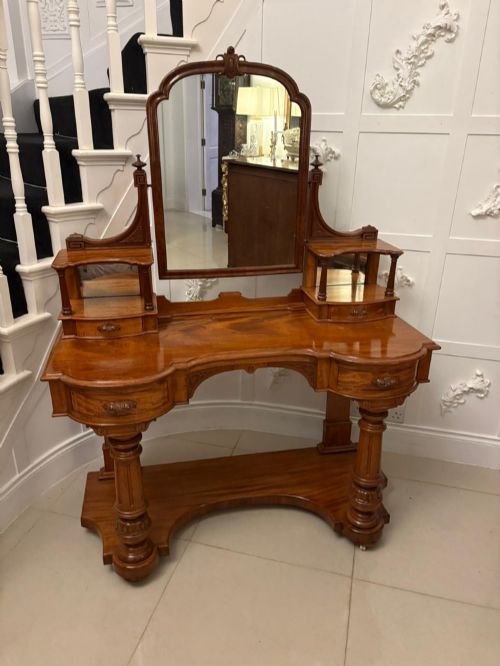
When you search for an antique duchesse table, you encounter nineteenth-century vanity furniture primarily developed during the Victorian period. These pieces typically incorporate a large pivoting mirror mounted above a console or dressing surface, often flanked by smaller drawers or trinket compartments.
The archive and current listings show that the form frequently intersects with dressing chests, console tables, and washstands. Most examples stem from the Victorian era, utilising dense timbers and substantial proportions designed for domestic dressing rooms.
Materials and construction methods
Cabinet makers built these tables predominantly from solid and veneered mahogany, alongside burr walnut and satinbirch. Timber selection defined the primary visual weight, paired with secondary woods for drawer linings and internal framing.
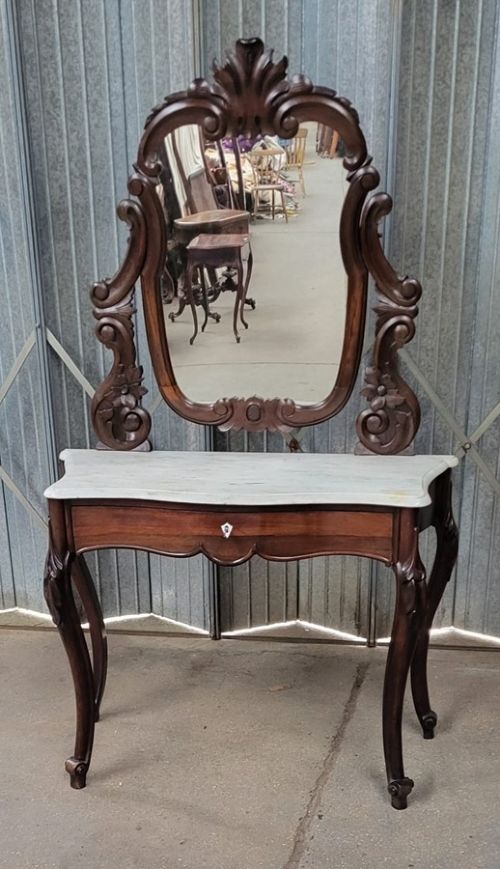
Surface decoration relied heavily on figuring within the wood grain, complemented by satinwood inlay, marquetry, and carved wooden details. Marble tops occasionally appear on console variants, while brass hardware secures pivoting mirror frames and drawer pulls.
Distinctions in construction and finish
Quality rests in the selection of timber veneers, where highly figured burr walnut or dense mahogany indicates superior workshop selection. The crispness of carved wooden details and the integration of marquetry or satinwood inlay further separate standard production from high-tier execution.
Structural integrity reveals itself in the joinery of the console base and the stability of the pivoting mirror supports. Maker attribution, such as pieces bearing the mark of Edwards & Roberts, distinguishes standard Victorian items from documented workshop production.
Edwards & Roberts
The Antique Duchesse Table Glossary
- Duchesse dressing table
- A large vanity table featuring a central pivoting mirror mounted on a console base, popular in nineteenth-century bedrooms. It typically provides a surface for grooming alongside concealed storage compartments.
- Console table
- A side table designed to stand against a wall, frequently utilised in the configuration of duchesse furniture. These surfaces occasionally incorporated marble tops or drawer compartments.
- Marquetry
- Decorative inlay work using various coloured wood veneers to create geometric or floral patterns on the surface. Cabinet makers applied this technique to drawer fronts and tabletops.
- Satinbirch
- A pale, highly reflective British timber used in Victorian cabinet making. It provided a lighter alternative to dark mahogany and walnut finishes.
- Pivoting mirror
- A looking glass hung on adjustable side screws allowing the user to alter the angle of reflection. This component forms the defining upper superstructure of a duchesse table.
Antique Duchesse Table: Frequently Asked Questions
What is an antique duchesse table used for?
These tables served primarily as dedicated dressing and grooming stations in nineteenth-century homes. The broad surface accommodated washing basins or cosmetic items while the pivoting mirror assisted with daily attire.
Today, collectors repurpose them as statement dressing consoles in modern bedrooms or hallways. Their substantial surface area and integrated drawers offer practical storage for contemporary living spaces.
How do I date an antique duchesse table?
Dating relies on identifying the prevailing Victorian or Edwardian stylistic markers present in the woodwork. Pieces originating from the mid-nineteenth century frequently display solid mahogany construction and restrained carving.
Later Victorian and Edwardian examples often introduce burr walnut veneers, marquetry inlay, or French revival influences. Documented maker stamps or retailer marks also provide precise chronological reference points.
Are duchesse tables and dressing chests the same?
While both categories overlap in function, a duchesse table specifically emphasises the console and pivoting mirror arrangement. Traditional dressing chests incorporate full-width drawers extending to the floor beneath the mirror superstructure.
Many listings categorise these forms interchangeably due to shared nineteenth-century domestic origins. Examining the base construction reveals whether the piece functions primarily as a console or a chest of drawers.
How do I care for mahogany and walnut veneer?
Preserving these timber surfaces requires consistent indoor humidity levels to prevent veneer lifting or wood splitting. Regular dusting with a soft, dry cloth maintains the polish without chemical buildup.
Avoid placing antique tables in direct sunlight or near heat sources which dry out historic wood. Application of traditional beeswax helps nourish the grain and protects the polished finish over time.