


Dark Walnut Vanity
These dark walnut vanity pieces range from early eighteenth-century stools to Victorian dressing tables, offering rich timber tones for the bedroom.

Dark Walnut Vanity
A dark walnut vanity search reveals a diverse group of bedroom furniture spanning the seventeenth century through to the Edwardian era. Buyers encounter everything from dressing tables and kneehole desks to adjustable piano stools, shaving stands and small box mirrors.
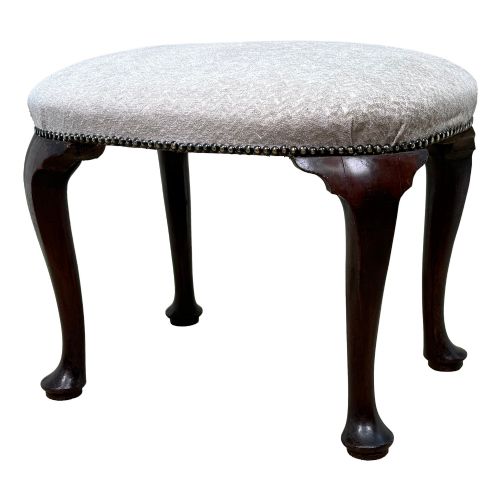
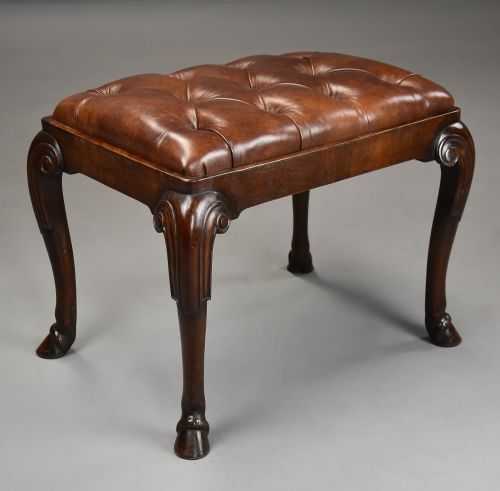
Stools and dressing tables dominate the forms, often standing on cabriole legs or tripod bases. Pieces emerge in styles that include Queen Anne revival, Georgian, French Rococo revival and Kashmiri craftsmanship, showing how makers reinterpreted historical lines.
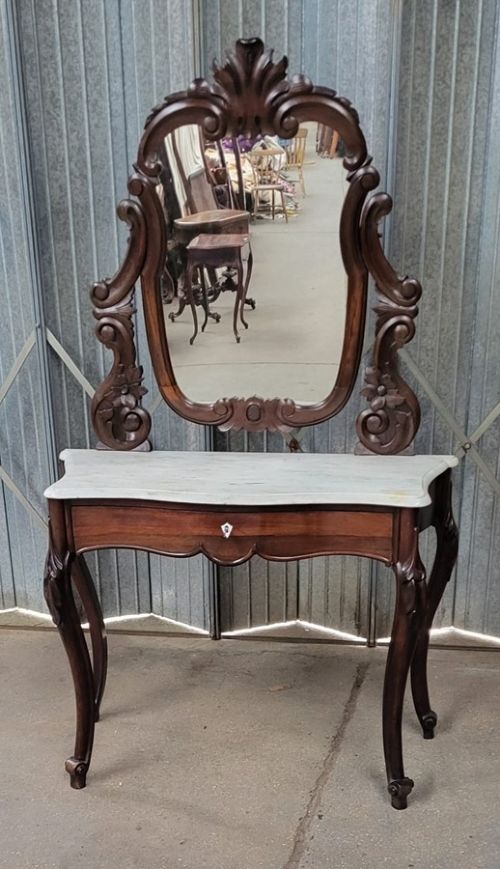
The materials paired with walnut include brass hardware, glass mirror plates, marble tops and seats upholstered in fabric, textile or leather. Boxwood stringing frequently adds contrast to the dark timber surfaces.
Materials and construction methods
Makers utilised solid walnut and burr walnut veneers over secondary timbers, applying hand-carved details to legs, frames and backrests. Figured grain patterns bring natural movement to flat drawer fronts and table tops.
Boxwood inlay and stringing provide linear contrast against the dark walnut background on mirrors and desks. Brass handles, hinges and adjustable mechanisms offer functional support while marble adds weight to dressing table surfaces.
Victorian piano stools often retain hidden screw threads that creak softly when adjusted, ready for another century of rehearsal.
Assessing quality in walnut furniture
The refinement of hand-carved elements, such as cabriole legs and decorative frames, separates standard items from exceptional examples. Timber selection also matters, particularly where figured burr walnut is matched across multiple drawers or surfaces.
Original upholstery, intact mercury glass plates and functioning adjustable screw mechanisms in piano stools contribute to historical integrity. The precision of boxwood inlay and structural joinery further defines the standard of each piece.
The Dark Walnut Vanity Glossary
- Burr walnut
- A specialised timber cut from the abnormal growth of a walnut tree, showing swirling and knotty grain patterns. It is typically sliced into thin veneers for decorative drawer fronts and table tops.
- Cabriole leg
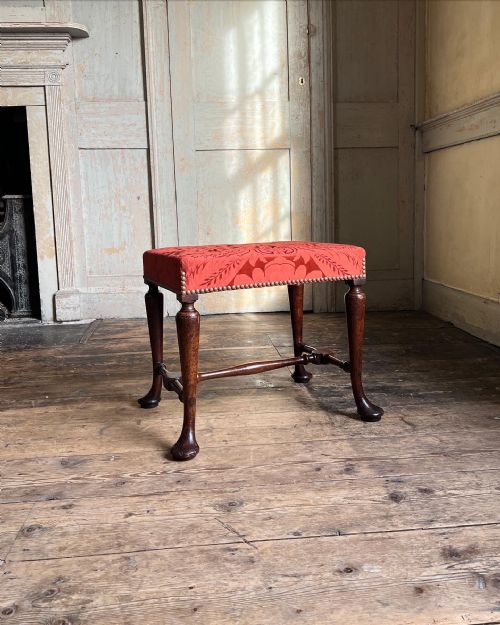
- A furniture leg that curves out in a convex shape at the top and tapers inward in a concave shape toward the foot. This form originates from ancient Chinese designs and became prominent during the Queen Anne and Georgian periods.
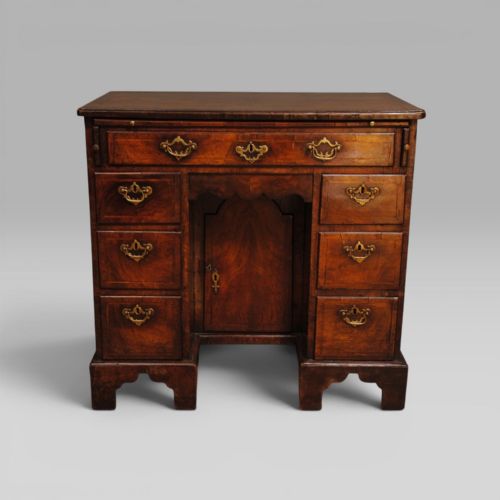
- Kneehole desk
- A compact desk featuring a central recess for the user's legs, flanked by banks of small drawers. These pieces often incorporate figured walnut veneers and brass hardware.
- Shaving mirror
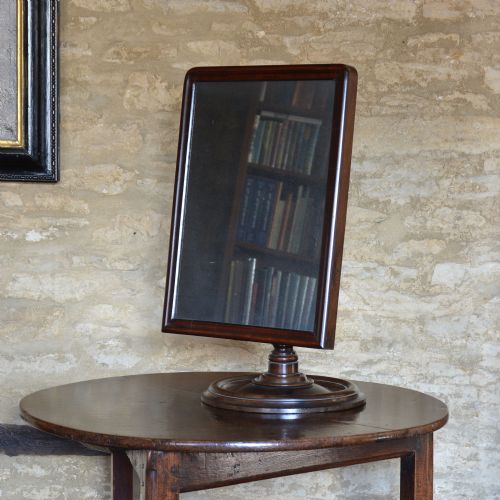
- A portable or stand-mounted mirror designed for grooming, frequently featuring an adjustable tilting glass plate above a small box base with drawers. Early examples date to the seventeenth and eighteenth centuries.
- Tripod stool
- A seat supported by three legs radiating from a central column, common in Victorian piano stools. Many incorporate a screw mechanism for adjusting the seat height.
Dark Walnut Vanity: Frequently Asked Questions
What is a dark walnut vanity?
A dark walnut vanity encompasses dressing tables, shaving stands, desks and matching stools made from walnut timber. These items serve functional roles for grooming and writing while displaying rich, dark grain patterns.
Buyers find forms ranging from seventeenth-century box mirrors to Edwardian nursing chairs. Each piece reflects the aesthetic preferences of its period, from plain Georgian lines to ornate Victorian carving.
How do I date a walnut dressing table?
Dating relies on examining construction techniques, hardware types and stylistic details such as cabriole legs or turned supports. Eighteenth-century pieces often feature simpler joinery and solid timber panels, while Victorian and Edwardian examples may use machine-cut veneers and complex adjustable mechanisms.
Comparing the secondary timbers inside drawers and the bevel of mirror glass helps establish the era of manufacture. Secondary woods like oak or pine often shift in availability and preparation methods over the centuries.
Where were these pieces used?
These items belonged primarily in domestic bedrooms, dressing rooms and private boudoirs. Shaving stands and dressing tables provided dedicated spaces for morning routines, while stools offered comfortable seating.
Smaller mirrors sat atop chests of drawers or dedicated dressing tables to catch natural light. Desks served for personal correspondence and managing household accounts.
How do I care for walnut furniture?
Walnut benefits from stable room temperatures away from direct sunlight and strong heat sources. Regular dusting with a soft, dry cloth preserves the finish without building up heavy chemical residues.
Leather and fabric upholstery require gentle cleaning appropriate to their specific textile type. Preserving the original polished surface protects the deep colour of the timber over time.
What styles are common in walnut furniture?
Common styles include Queen Anne revival, Georgian, French Rococo revival and Victorian designs. Makers frequently drew inspiration from earlier centuries, producing revival pieces that reinterpreted classic proportions.
Details such as carved cabriole legs, boxwood stringing and shaped mirror frames define these distinct aesthetics. Each style brings a different visual weight to interior spaces.