



Pedestal Shaving Stand
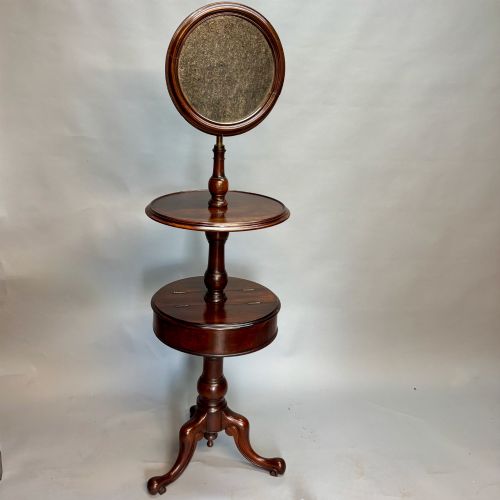
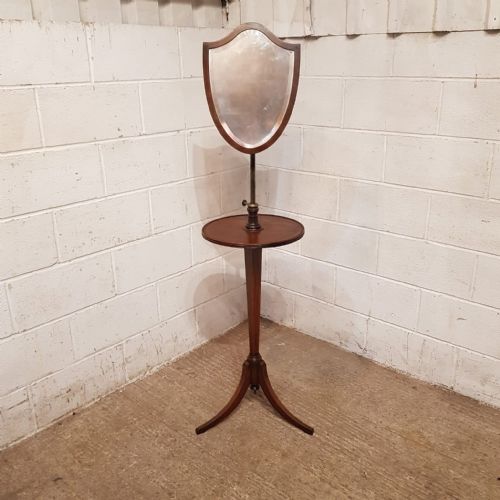
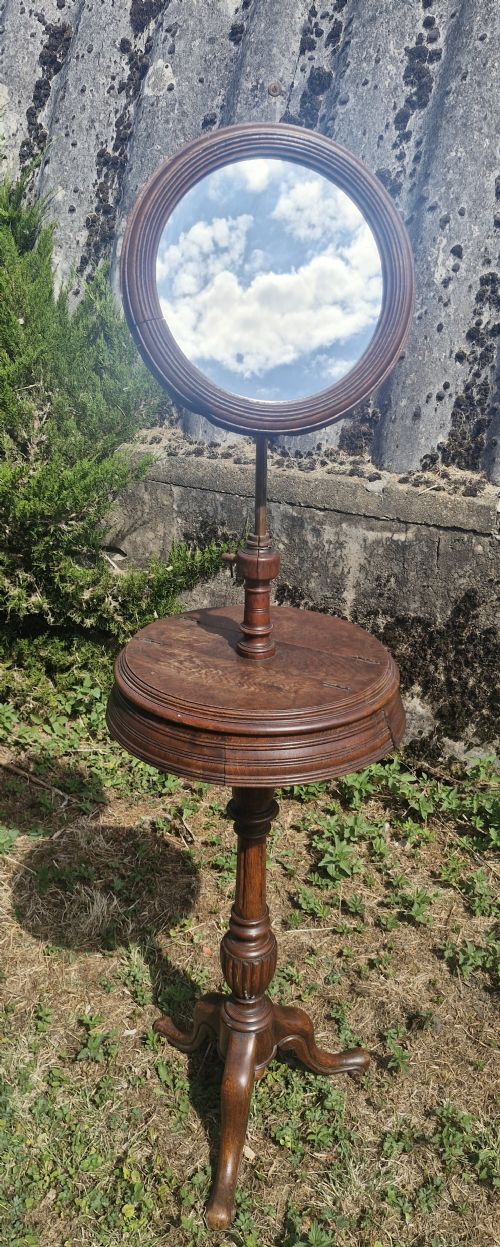
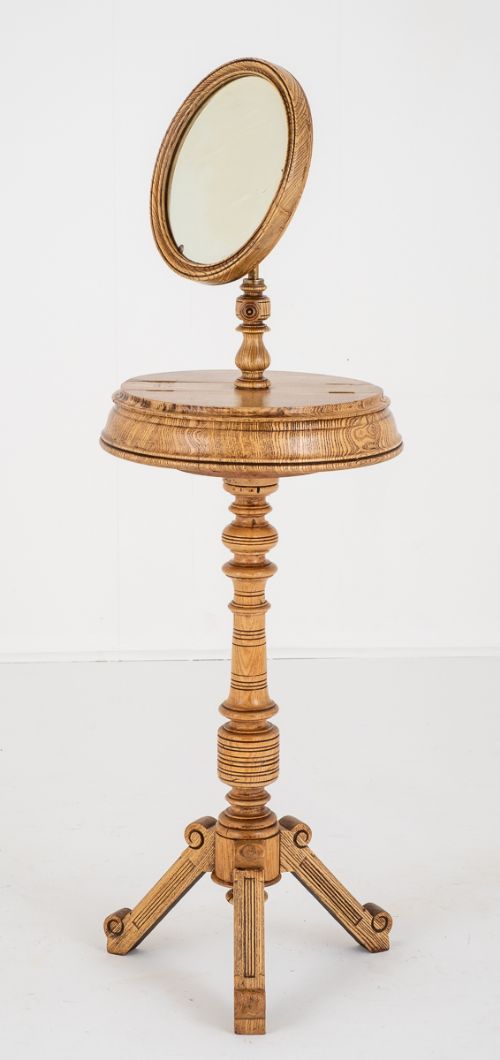
A pedestal shaving stand is a purposeful morning companion designed for grooming, combining a mirror and support in mahogany, walnut, or oak.

Pedestal Shaving Stand
A pedestal shaving stand provides a dedicated surface for daily grooming routines, typically featuring an incorporated mirror and supported by a central column or tripod base. These pieces span the Victorian, Edwardian, and Art Deco periods, reflecting changing domestic habits across the nineteenth and early twentieth centuries.
The versions most frequently met on this page are constructed from timbers such as mahogany, walnut, and oak, often incorporating adjustable or telescopic mechanisms for the mirror. Examples range from compact tripod dressing mirrors to standing cupboards fitted with mirrors and storage.
Originating to serve gentlemen's morning toiletry needs, these stands evolved from simple table mirrors on stands into sophisticated pieces of bedroom furniture. Their survival demonstrates the enduring utility of adjustable glass and sturdy wooden pedestals in historic interiors.
Materials and construction methods
Makers utilised solid hardwoods, notably mahogany, walnut, and oak, selected for stability and suitability for fine turning on a lathe. Brass fixtures frequently provided the necessary tension and movement for adjustable mirrors and telescopic columns.
Glass forms the reflective element of the mirror, mounted within wooden or brass frames designed to tilt or pivot smoothly. Later twentieth-century examples introduce chrome elements alongside painted wood finishes to suit contemporary tastes.
The pieces span the Victorian, Edwardian, and 1930s Art Deco periods.
Assessing quality and proportion
The distinction between standard and superior pieces rests upon the integrity of the timber selection and the precision of the turning on the central pedestal. Finer examples display harmonious proportions between the height of the stand, the weight of the base, and the scale of the mirror frame.
The mechanical ingenuity of the adjustable components reveals the maker's skill, where smooth operation of telescopic shafts and secure pivots indicates careful assembly. The quality of the joinery in the tripod bases or cupboard carcases further separates utilitarian production from finer workshop output.
James Shoolbred
The Pedestal Shaving Stand Glossary
- Telescopic
- An adjustable mechanism allowing the central shaft or mirror height to be raised or lowered smoothly.
- Tripod base
- A support structure resting on three feet, commonly utilised on nineteenth-century stands for stability.
- Gentleman's mirror
- A specialised pivoting looking glass designed for shaving, often mounted on a stand or small cupboard.
- Adjustable mirror
- A reflective glass mounted on pivots or hinges to alter the viewing angle.
Pedestal Shaving Stand: Frequently Asked Questions
What is a pedestal shaving stand?
A pedestal shaving stand is a piece of antique furniture designed for morning grooming, featuring a mirror mounted on a vertical stand or column.
These pieces typically incorporate adjustable mechanisms and timber supports like mahogany, walnut, or oak to assist with daily shaving routines.
How do you adjust the mirror?
Mirrors on these stands are usually fitted with brass pivots, hinges, or telescopic shafts that allow the glass to tilt or alter in height.
Users simply adjust the angle or slide the shaft to suit their viewing requirements during grooming.
Which woods were used?
The listings show makers working predominantly with traditional hardwoods including mahogany, walnut, and oak.
Painted wood finishes and later chrome elements also appear in examples from the early twentieth century.
How to date a shaving stand?
Dating relies on observing the prevailing style, construction timber, and mechanical hardware such as brass fittings.
Victorian and Edwardian examples often display characteristic turned pedestals and tripod bases associated with those specific periods.