


Victorian Adjustable Mirror Stand
A victorian adjustable mirror stand offers period craftsmanship and flexible positioning, making it a practical addition to a traditional dressing room or bedroom.

Victorian Adjustable Mirror Stand
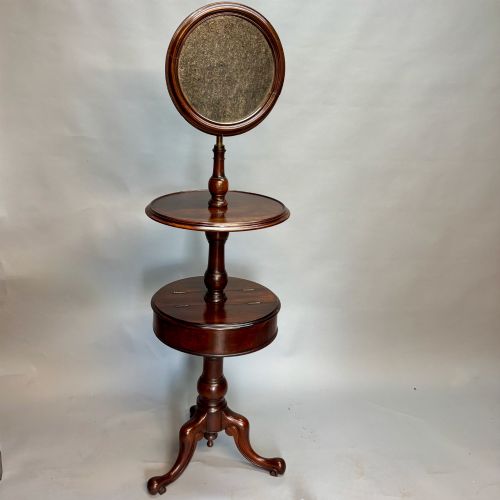
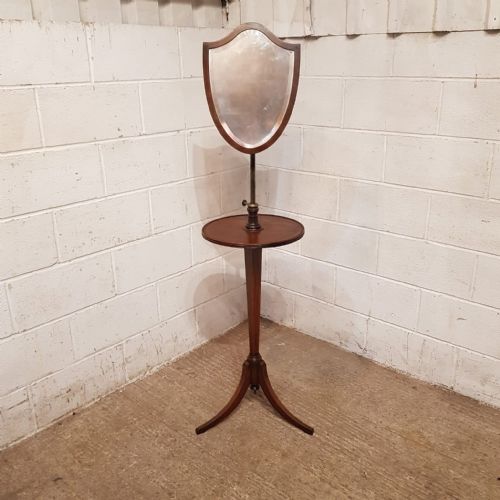
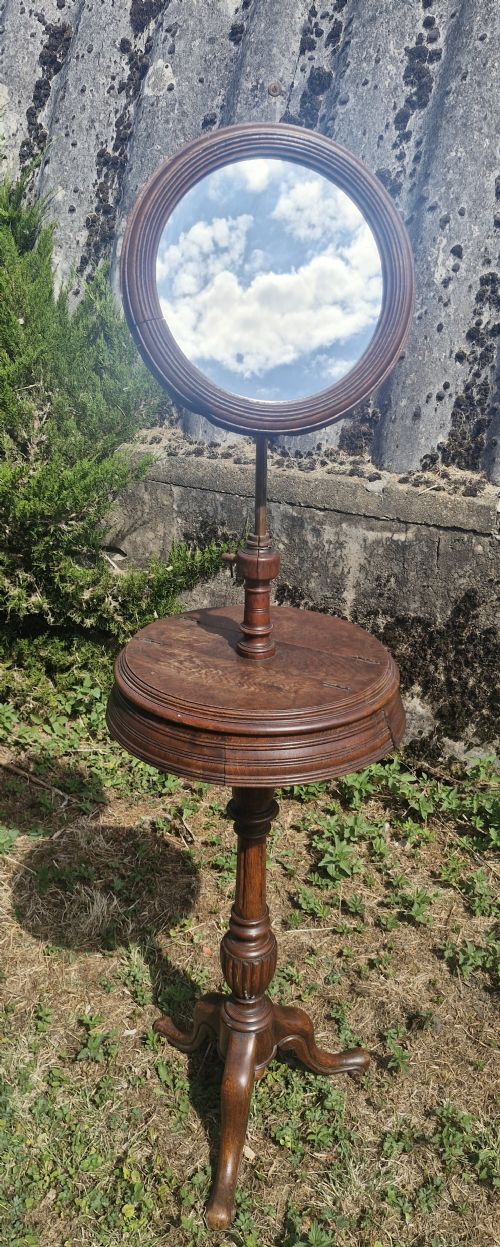
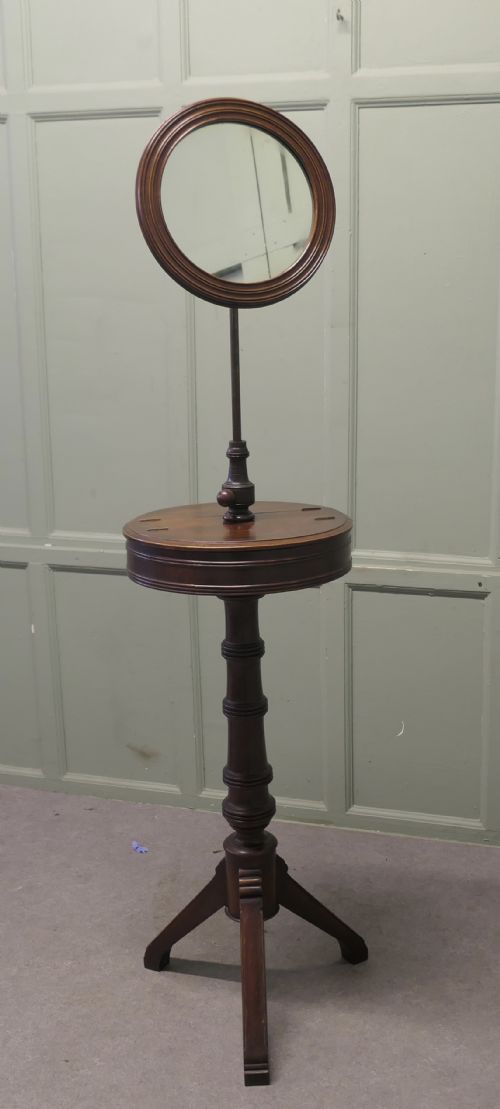
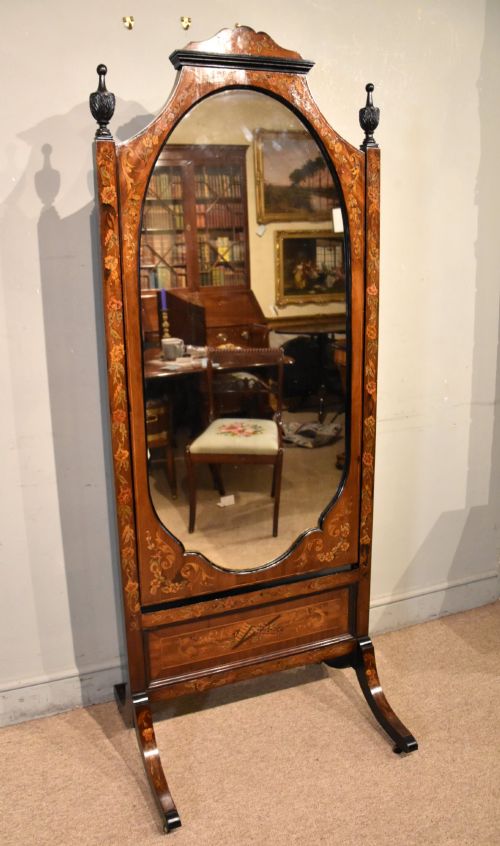
A victorian adjustable mirror stand brings together functional nineteenth-century design and traditional cabinet-making, appearing primarily as shaving stands, toilet mirrors, and freestanding cheval mirrors. These pieces originate predominantly from the Victorian period and the nineteenth century, alongside occasional Regency and later examples.
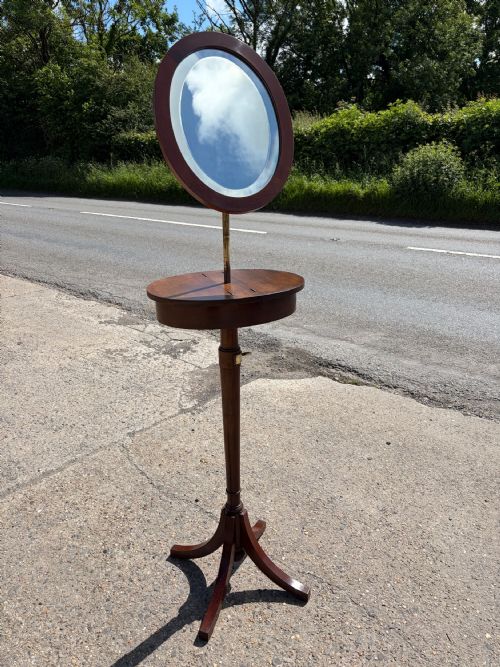
Buyers seeking a victorian adjustable mirror stand most frequently encounter mahogany and walnut iterations fitted with pivoting or telescopic mechanisms. These range from compact tripod shaving mirrors to larger floor-standing dressing stands designed for personal grooming.
Materials and construction methods
Cabinet-makers constructed these stands using solid timbers such as mahogany, walnut, oak, and ash, frequently enhanced with marquetry inlay or wood inlay. Brass fittings provide the mechanical movement for telescopic columns and pivoting swing frames.
Glass mirrors, including bevelled variants, sit within secure wooden frames attached to adjustable stems or tripod bases, allowing users to alter the height and angle of the reflective surface.
Some nineteenth-century examples are recorded specifically as boot maker's mirrors, designed for inspecting footwear rather than shaving.
Factors of design and finish
Quality in these pieces rests upon the selection of timber grain, the precision of the inlay work, and the robustness of the brass adjustment mechanisms. Finer examples display careful turning on tripod bases and solid construction that maintains stability at full extension.
The sophistication of the joinery and the retention of original mirror glass or matching hardware distinguish workshop pieces from standard utility items.
J. Shoolbred
The Victorian Adjustable Mirror Stand Glossary
- Cheval mirror
- A large freestanding mirror supported on a frame with vertical pivots, allowing the glass to swing freely.
- Telescopic
- A vertical stem design featuring sliding sections that permit height adjustment.
- Marquetry inlay
- Decorative patterns formed by fitted pieces of contrasting wood veneer embedded into the primary surface.
- Tripod base
- A three-legged support structure commonly utilised on nineteenth-century shaving stands for stability.
- Swing mirror
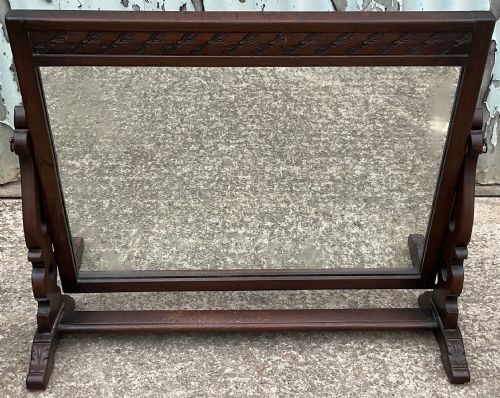
- A plate glass mirror mounted on lateral pivots between two upright posts.
Victorian Adjustable Mirror Stand: Frequently Asked Questions
How do I adjust the height on these stands?
Many examples utilise a telescopic brass column secured by a thumb screw or friction collar, allowing the vertical shaft to raise or lower smoothly.
Other variations rely on a pivoting frame fixed between uprights, which tilts to the desired angle and holds position through tensioned side screws.
Where were these stands placed originally?
Gentlemen's shaving stands and toilet mirrors typically sat upon dressing tables, washstands, or chests of drawers in nineteenth-century bedrooms and dressing rooms.
Larger cheval mirrors stood directly on the floor as freestanding furniture pieces for full-length viewing.
Are the mirror glasses original?
Mirrors of this age frequently show signs of foxing, silver loss, or replacement due to the fragile nature of nineteenth-century glass.
Examining the backing and the bevel edges helps determine whether the glass plate dates from the period of the stand.