





Louis XV Style Mantel Clock
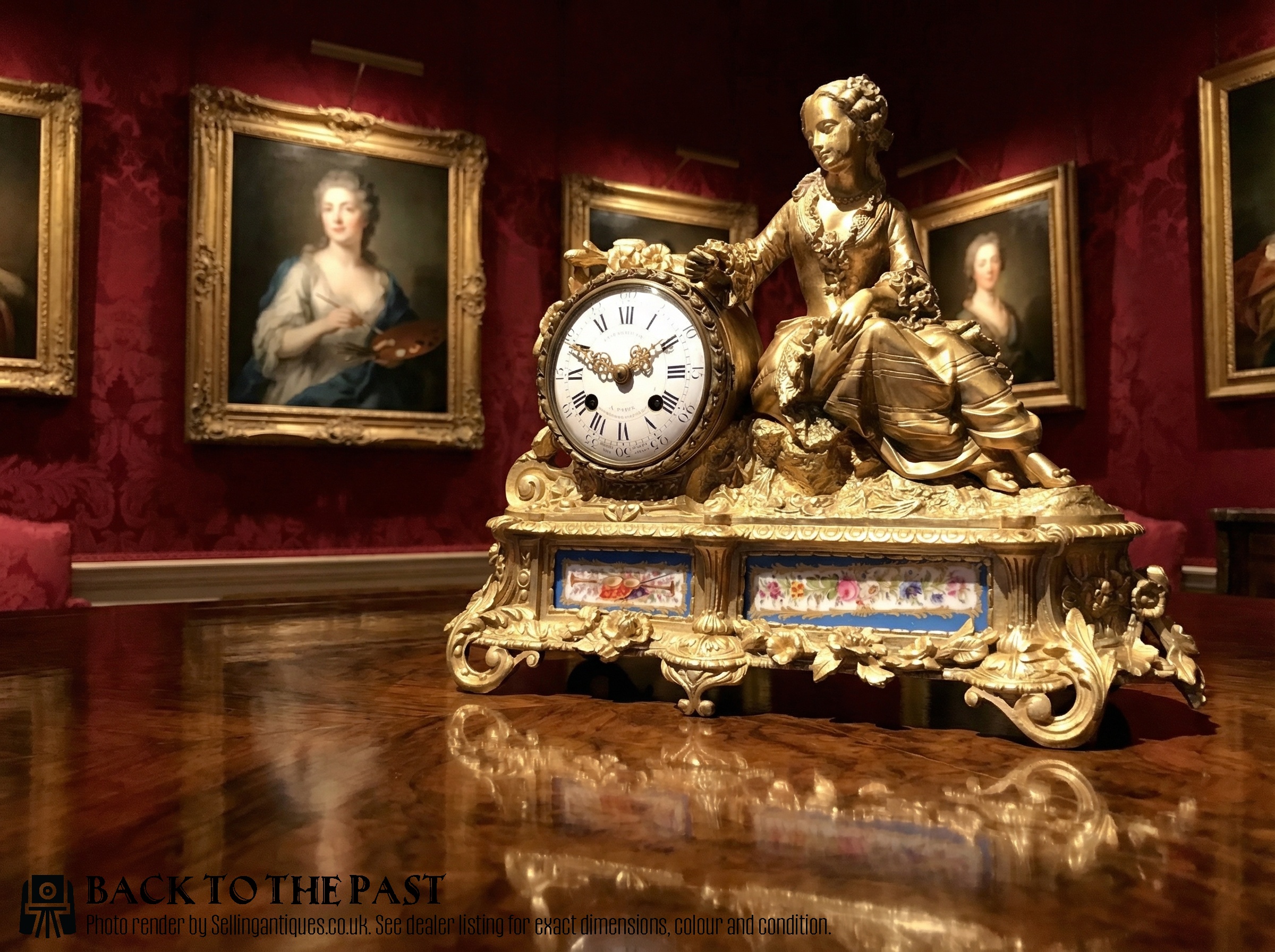
When you search for a louis xv style mantel clock, you are looking at ornate 19th-century French timepieces designed to bring asymmetry and organic curves into a room.
Louis XV Style Mantel Clock
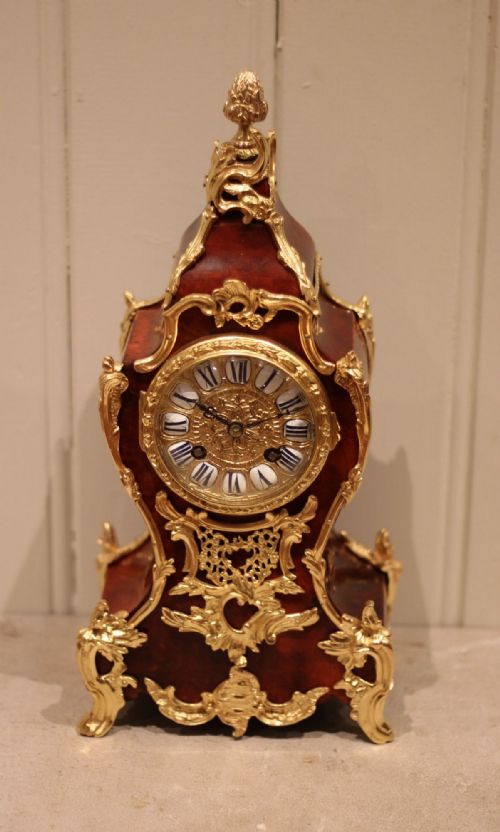
A louis xv style mantel clock typically presents the sweeping C-scrolls, asymmetric cartouches, and naturalistic foliage characteristic of the Rococo Revival. Most examples encountered here originate from nineteenth-century French workshops, spanning periods from the 1860s through to the early 1900s.
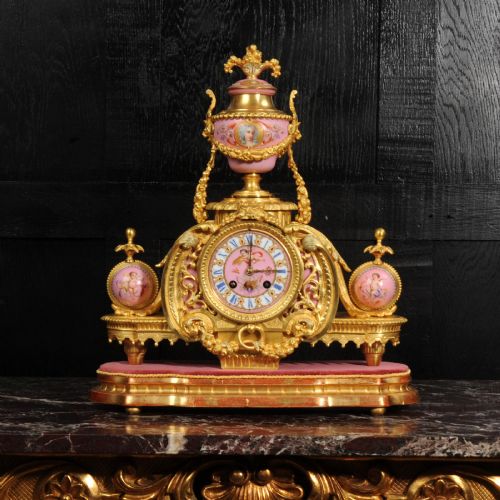
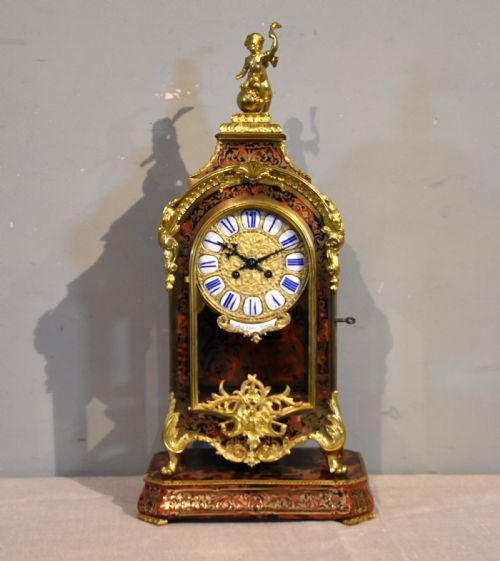
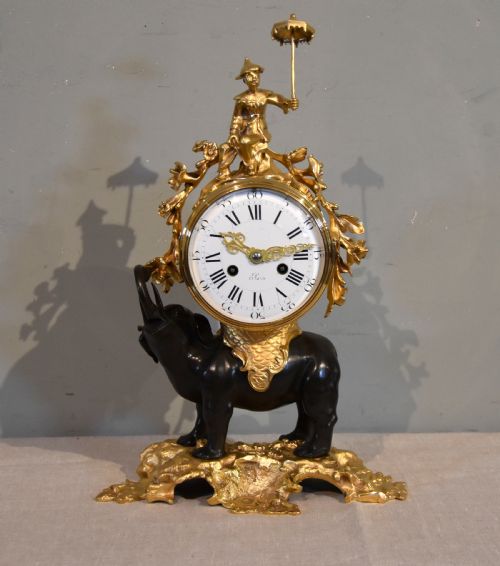
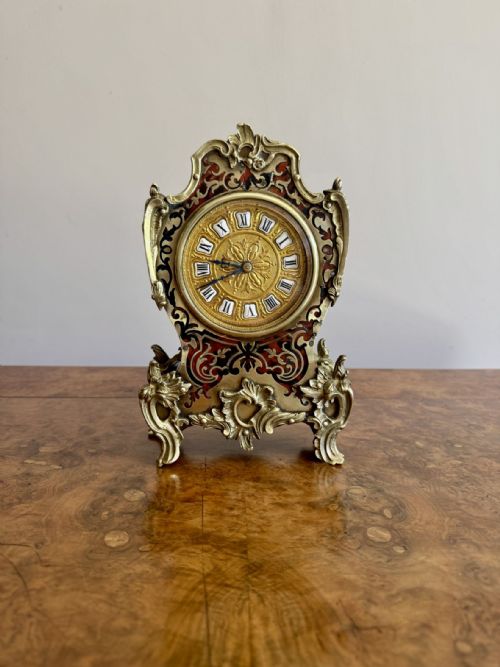
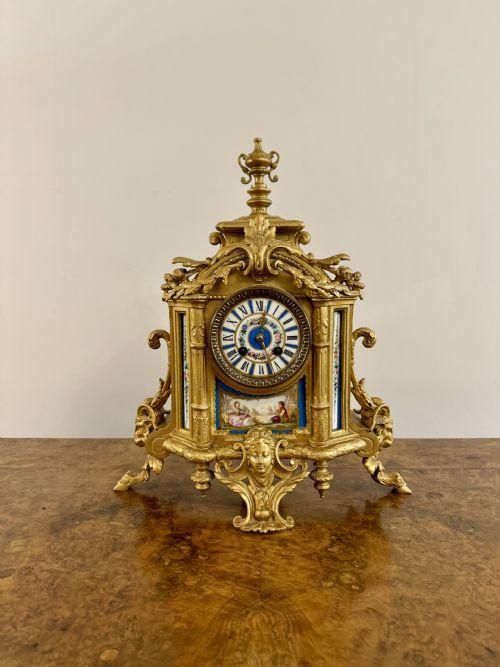
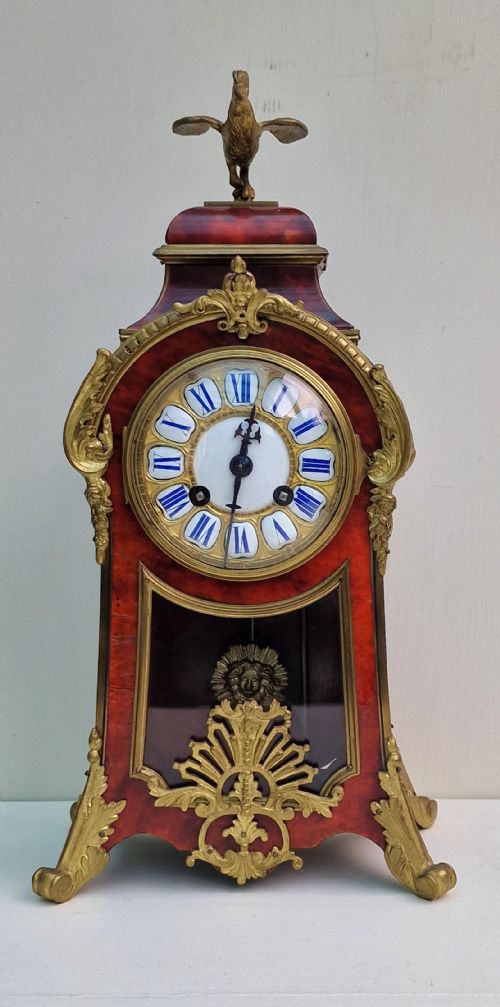
The physical format ranges from compact boudoir clocks and waisted bedside timepieces to grand architectural cases and matching garniture sets with side vases. Many utilise tortoiseshell or intricate Boulle marquetry alongside cast metal frameworks, while others take figural shapes such as elephants or incorporate painted porcelain panels.
Materials and construction
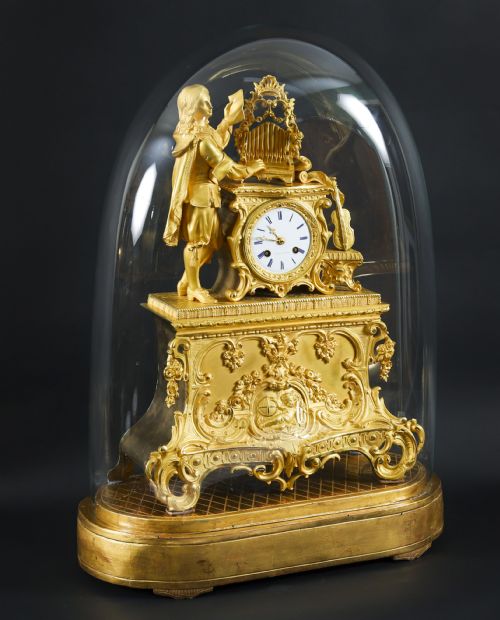
Foundations rely heavily on cast ormolu, gilt bronze, and brass, shaped into fluid frames that embody the revival of eighteenth-century aesthetics. Artisans combined these metallic elements with glazed enamel dials and hand-painted ceramic plaques depicting pastoral scenes or floral motifs.
Tortoiseshell veneer and brass inlay define the Boulle pieces, which require meticulous cutting and fitting around curved wooden carcases. Movements commonly utilise eight-day mechanical systems produced by prominent French clockmakers of the Victorian era.
Listings demonstrate a strong prevalence of nineteenth-century French production, pairing gilt bronze ormolu mounts with Sevres-style porcelain panels and tortoiseshell Boulle marquetry.
Assessing the craftsmanship
The refinement of the cast bronze or ormolu mounts dictates much of the visual hierarchy, with superior pieces showing crisp chisel work and deep, even gilding. Softer, shallower surface details and repetitive machine stamping indicate lower production standards.
The integration of the dial components also separates grades, where individually numbered enamel cartouches and finely pierced hands outrank simpler painted faces. Complete matching garniture sets and fully restored original movements further distinguish exceptional survivals.
Achille Brocot·Delettrez·Leroy Paris·Leon Message·Jollet et Cie·Samuel Marti·Japy Freres·Miroy Freres·Hausburg·Vincenti·Raingo·Henri Picard
The Louis XV Style Mantel Clock Glossary
- Ormolu
- Gilded bronze produced through a mercury amalgamation process common in nineteenth-century French metalwork. This technique yields a warm, durable golden surface.
- Boulle
- Marquetry style combining brass and tortoiseshell inlaid in contrasting patterns across furniture and clock cases. It is named after the master cabinetmaker André-Charles Boulle.
- Garniture
- A set comprising a central clock flanked by matching decorative objects such as vases or candelabra. These arrangements were designed for symmetrical placement on a mantelpiece.
- Cartouche
- An ornamental panel or plaque, often framing the individual numerals on an enamel clock face. The term also describes ceramic plaques inset into the clock case.
- Fusee
- A conical pulley connected to the mainspring by a chain or cord to equalise the drive force as the spring unwinds. This mechanism improves timekeeping accuracy across the power reserve.
Louis XV Style Mantel Clock: Frequently Asked Questions
How do I wind a french mantel clock?
Most mechanical pieces on this page utilise an eight-day movement driven by springs that require weekly tensioning using a matching winding key. Care should be taken not to overwind the mainspring.
Moving the hands requires gentle handling, turning the minute hand clockwise while avoiding sudden shifts that could disrupt the escapement or strike train.
What is the difference between louis xv and louis xvi styles?
Louis XV design embraces asymmetrical forms, flowing C-scrolls, and exuberant Rococo naturalism without straight lines. The aesthetic mimics organic growth through shell and leaf motifs.
In contrast, Louis XVI styling introduces strict symmetry, neoclassical columns, straight edges, and architectural restraint. Marble bases and urn ornaments frequently appear in the later revival period.
Where should I place a antique mantel clock?
These clocks suit stable horizontal surfaces away from direct sunlight, excessive moisture, and rapid temperature fluctuations. Placing them on a firm mantelpiece or sideboard prevents vibrations from interfering with the pendulum or balance wheel.
Allowing adequate clearance around the case ensures the bell or gong can resonate clearly when the clock strikes the hours and halves.
Are these clocks suitable for daily timekeeping?
Nineteenth-century mechanical clocks can keep reliable time if they have been professionally serviced and cleaned. They operate via pendulum or spring-driven escapements that benefit from periodic calibration.
While functional for everyday use, older movements require gentle handling and occasional professional intervention to maintain consistent operation over long periods.