



Ornamental Shelf Clock
An ornamental shelf clock sits proudly on the mantelpiece, bringing sculptural elegance and dependable timekeeping to a room.
Ornamental Shelf Clock
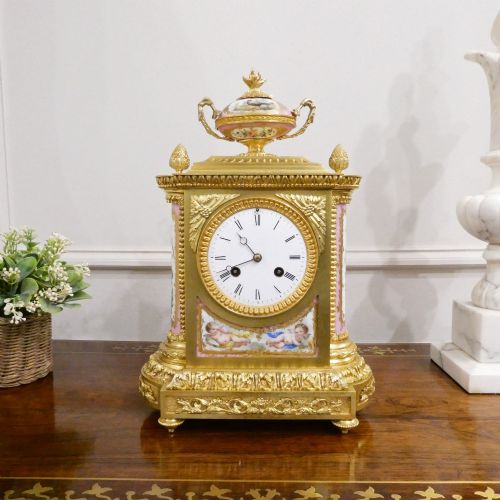
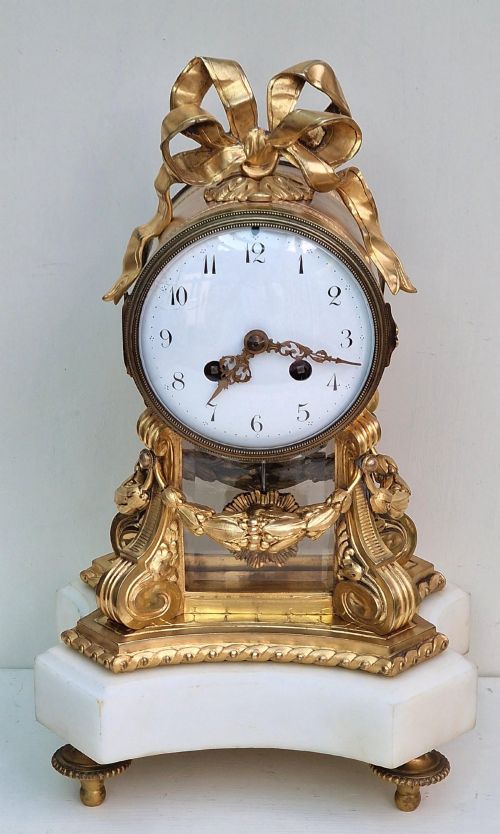
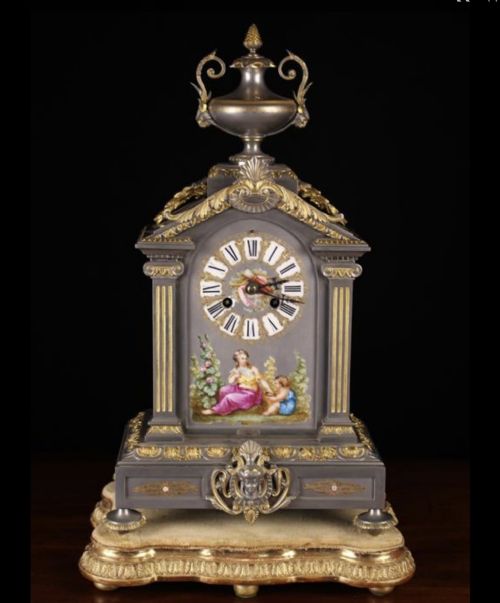
An ornamental shelf clock combines decorative artistry with mechanical timekeeping, designed specifically to anchor a mantelpiece or sideboard. When you search for an ornamental shelf clock, you encounter pieces that serve simultaneously as fine sculpture and functional horology.
The examples gathered here span the Victorian era and the nineteenth century, with French origins dominating the selection. You will frequently find mantel clocks finished in gilt bronze, ormolu, and porcelain, reflecting revivalist tastes of the period.
Forms range from classical marble bases to elaborate Rococo Revival and Louis XVI style cases. These pieces capture an era when interior decoration demanded both visual richness and mechanical precision in domestic furnishings.
How they were made
Maker-craftsmen built these clocks using robust metallic foundations paired with decorative surface treatments. Gilt bronze, ormolu, and gilt metal provide the structural and ornamental chassis, often shaped through detailed casting.
Porcelain and enamel elements are integrated into the dials and decorative panels, frequently featuring painted details. Marble is utilised for substantial bases, offering a solid architectural footing for the metallic and ceramic elements above.
What varies in quality
Quality rests upon the crispness of the metal-casting and the finesse of the surface gilding. Finer pieces display sharply defined ornamentation in the ormolu or gilt bronze without softness in the relief work.
The integration of porcelain panels and enamel dials distinguishes finer examples from simpler production. Superior clocks unite the mechanical movement with a harmonious architectural case, such as swept front marble bases or balanced revivalist proportions.
Jean-Baptiste Delettrez
The Ornamental Shelf Clock Glossary
- Ormolu
- Gilded bronze, produced by applying a mixture of gold and mercury to a bronze base and heating it. This technique creates a rich, durable golden finish characteristic of fine French decorative metalwork.
- Rococo Revival
- A nineteenth-century design movement drawing on the asymmetrical scrolls, naturalistic foliage, and exuberant curves of the eighteenth-century Rococo style. It appears frequently in ornamental clock cases of the Victorian period.
- Louis XVI Style
- A neoclassical design aesthetic featuring straight lines, symmetry, classical architectural motifs, and restraint. Pieces in this style often incorporate porcelain panels and formal proportions.
- Mantel Clock
- A clock designed to sit on the shelf or mantel above a fireplace. These domestic timepieces double as decorative ornaments for principal rooms.
- Eight day
- A mechanical movement requiring winding only once every eight days. This denotes a reliable domestic clock standard of the nineteenth century.
Ornamental Shelf Clock: Frequently Asked Questions
Where should I place an ornamental shelf clock?
These clocks are traditionally designed for the mantelpiece above a fireplace, where their decorative cases command attention. They also sit well on sideboards, console tables, or sturdy shelves in principal reception rooms.
Ensure the surface is level and stable to support the weight of marble and metal cases, and keep them away from direct heat sources to protect mechanical movements and dial enamels.
How do I wind an eight day clock?
An eight day movement requires winding using a specific key inserted into the winding holes on the dial face. Turn the key gently until you feel resistance, avoiding over-winding to preserve the internal spring mechanism.
If the clock has been stationary, set the time carefully by moving the minute hand rather than forcing the mechanism backwards against the gear train.
How can I tell a Louis XVI style clock from Rococo Revival?
Louis XVI style clocks rely on geometric symmetry, straight columns, classical urns, and restrained neoclassical proportions. They often feature white marble bases and disciplined rectangular or architectural silhouettes.
Rococo Revival clocks embrace asymmetry, sweeping C-scrolls, and exuberant naturalistic foliage. Their cases curve organically without the rigid straight lines found in neoclassical designs.
What materials are typical in nineteenth century French clocks?
Nineteenth century French makers frequently combined gilt bronze, ormolu, and gilt metal for the structural and decorative case work. Porcelain panels and enamelled clock faces added colourful contrast and refined detail.
Marble, particularly white marble, served as a heavy, supportive base material, occasionally shaped with swept fronts to elevate the overall sculpture.