


Gold Enamel Clock
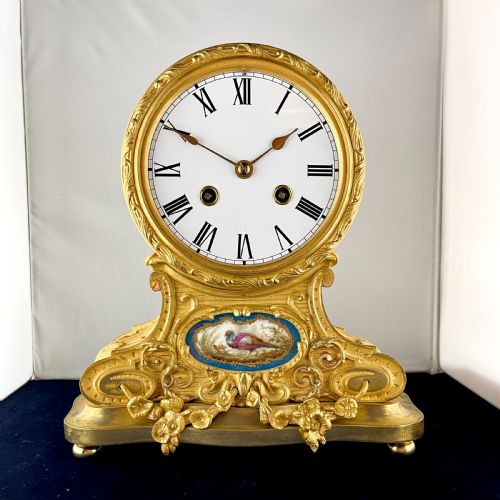
A gold enamel clock brings together bright metalwork and colourful glazed panels, offering a decorative timepiece for the mantel or desk.
Gold Enamel Clock
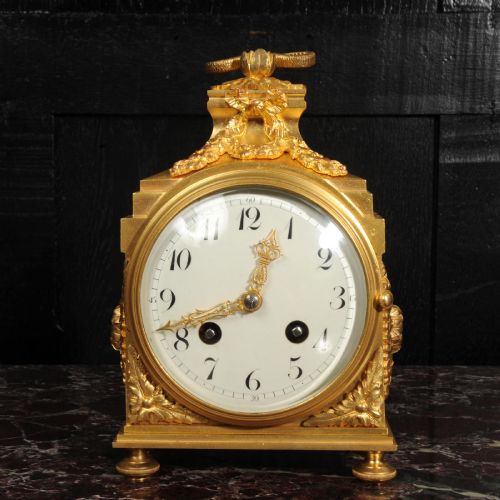
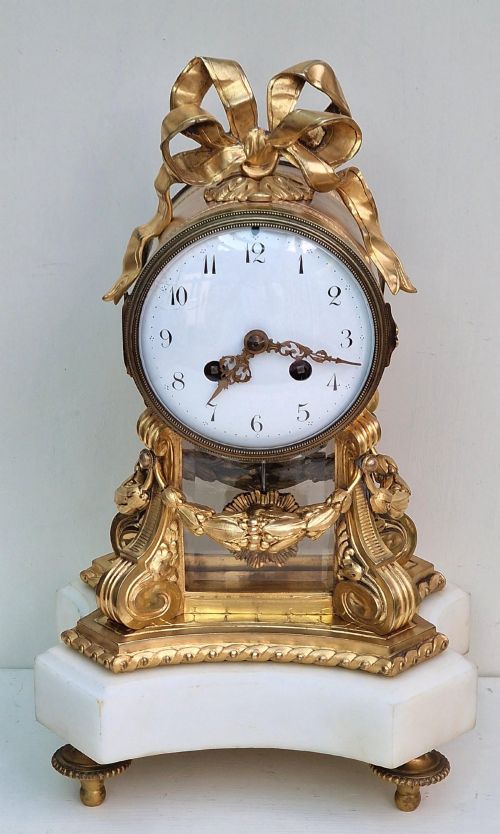
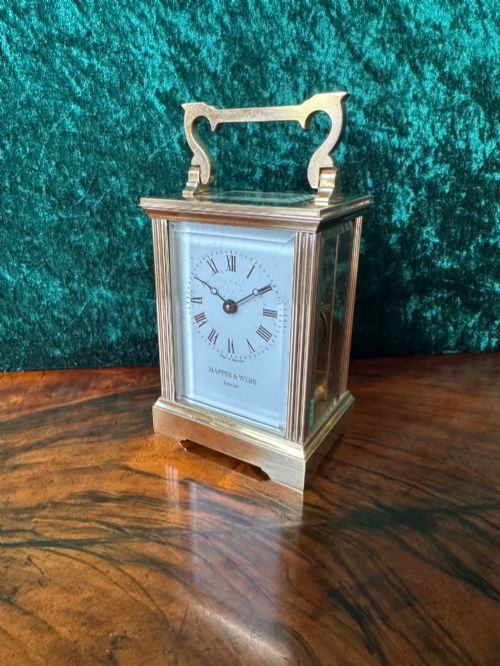
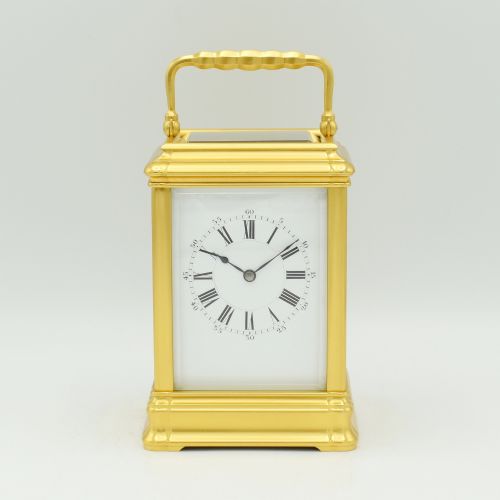
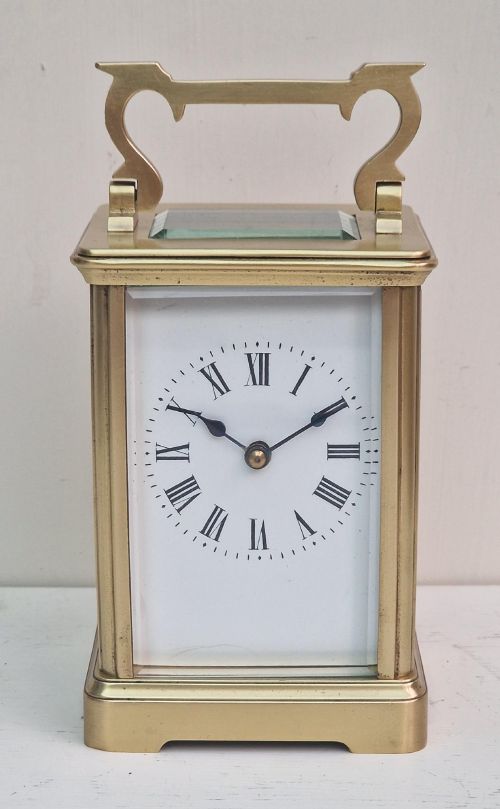
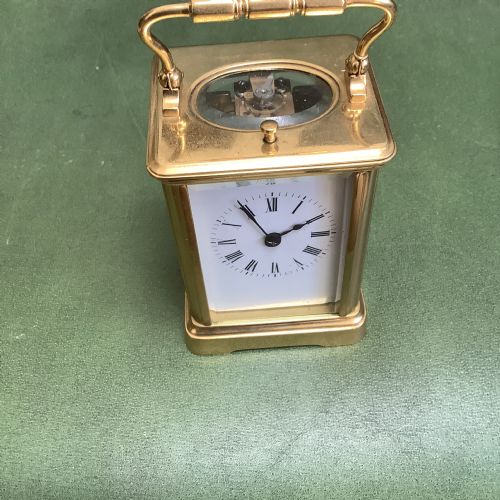
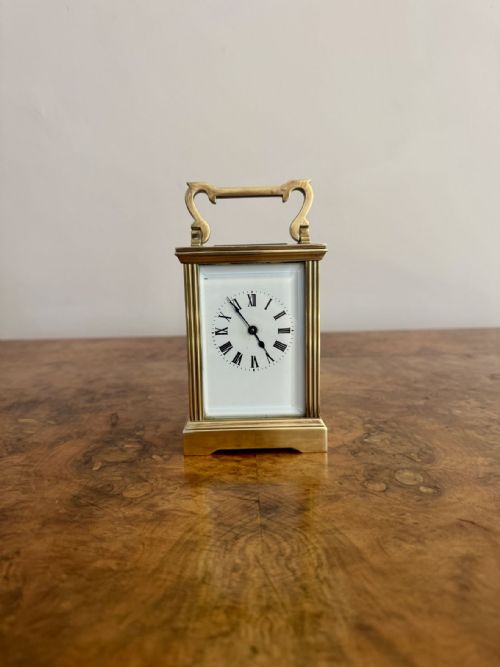
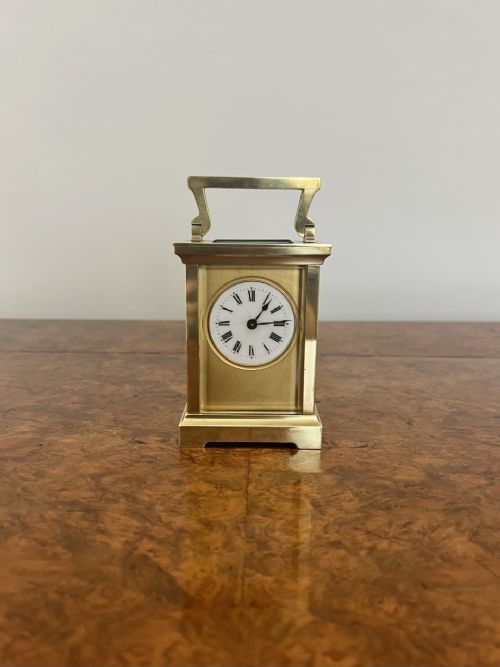
A gold enamel clock represents a distinct type of decorative timepiece found across nineteenth-century and early twentieth-century periods. These pieces range from substantial mantel timepieces to portable carriage clocks and smaller desk designs.
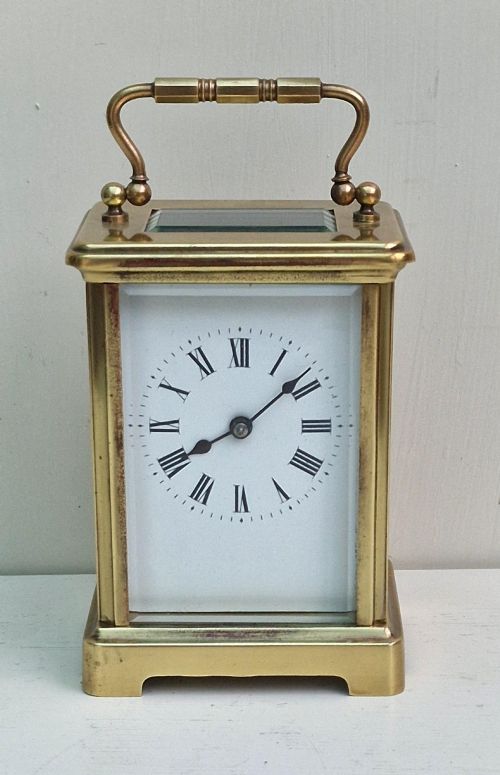
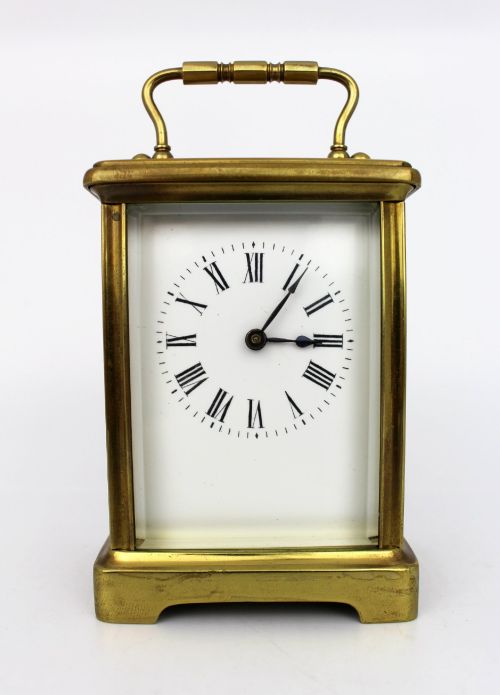
The selection on this page centres primarily on French and English pieces, encompassing styles such as Victorian, Edwardian, and French Rococo Revival. Buyers encounter carriage clocks with glass panels, drumhead mantel clocks, and four-glass desk models.
Makers and retailers from Paris and London shaped this category, producing objects that combined mechanical clockwork with ornate gilt brass, ormolu, and champlevé enamel decoration.
Materials and construction
Makers utilised brass, gilt bronze, and ormolu as the structural foundation for these timepieces, often applying fire gilding or polished finishes. Glass panels were fitted to allow views of the movement, while marble provided heavy, stable bases for mantel clocks.
Some travel clocks arrived with leather outer cases, ensuring the brass handle took the bumps of nineteenth-century carriage rides.
Distinctions in quality
Quality rests in the precision of the cast metalwork and the crispness of any hand engraving on the case. Finer examples display heavier gauge brass, thicker gilding, and undamaged enamel dials free from hairline fractures.
The sophistication of the internal movement further separates standard timepieces from superior examples. Carriage clocks with repeating mechanisms, bell strikes, or platform escapements by known makers demand closer appreciation.
Mappin and Web·Henri Jacot·Drocourt Paris·T. Martin and Co·C. Detouche Paris·Paul Garnier·Jaeger LeCoultre
The Gold Enamel Clock Glossary
- Carriage clock
- A small, portable spring-driven timepiece designed for travel, typically fitted with a carrying handle and glass panels. They originated in France during the nineteenth century.
- Ormolu
- Finely ground high-carat gold mercury-gilded to a bronze object. The technique creates a rich, warm metallic lustre on clock mounts and cases.
- Champlevé
- An enamel technique where troughs are dug out of a metal plate and filled with vitreous enamel powder before firing. The resulting surface shows coloured patterns divided by metal lines.
- Pendule d'Officier
- A specific French military or travelling clock style featuring a distinct arched top and handle. These robust timepieces date from the nineteenth century.
Gold Enamel Clock: Frequently Asked Questions
How do I wind a carriage clock?
Most carriage clocks require a dedicated key inserted into the arbours on the backplate to tension the mainspring.
Turn the key gently until resistance increases, taking care not to overwind the mechanism.
What is a repeating carriage clock?
A repeating carriage clock sounds the last hours and quarters when a button or pendant on the case is pressed.
This function allowed owners to check the time in the dark without lighting a candle.
How are champlevé enamel clocks cleaned?
Dust the glass and metal surfaces gently with a soft, dry brush to prevent accumulation of debris.
Avoid liquid cleaners entirely, as moisture can damage old enamel and discolour exposed brass.
Where were most antique carriage clocks made?
The vast majority of nineteenth-century carriage clocks originated in workshops located in Paris, France.
Retailers in London often imported these movements and added their own signatures to the dials.