
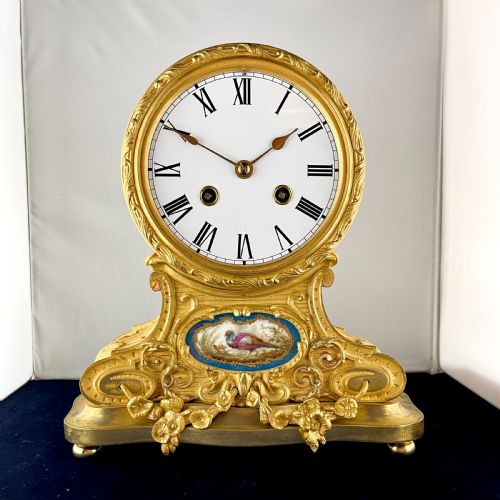


Floral Enamelled Clock
A floral enamelled clock brings vibrant colour and meticulous hand-painted detail into a room, offering both precise timekeeping and fine decorative art.
Floral Enamelled Clock
When you search for a floral enamelled clock, you encounter timepieces ornamented with delicate floral motifs rendered in enamel on materials such as gilt bronze, silver, and porcelain. These objects range from miniature carriage clocks to substantial mantel clocks housed in ormolu or painted wood.
You are most likely to meet 19th-century French examples on this page, including carriage clocks with enamel flower designs and drumhead mantel clocks. Styles span from French Rococo Revival and Louis XVI Revival to Victorian and Edwardian periods.
The selection also includes specialised forms such as boudoir timepieces and repeating carriage clocks. Each piece combines mechanical movement with decorative enamel work, reflecting the period tastes of the nineteenth and early twentieth centuries.
How they were made
Makers utilised vitreous enamel applied to metal surfaces, often incorporating techniques like champlevé where recessed areas hold the coloured glass paste before firing. This coloured decoration adorns cases cast in gilt bronze, ormolu, and silver.
Structures combine metal casting with glass panels for carriage clocks, while mantel clocks employ painted wood or bronze stands. Movements are housed securely within these decorative housings, often featuring striking mechanisms or platforms for precise escapements.
Some floral clocks hide their ticking hearts behind delicate glass panels, letting you watch the tiny brass wheels turn beneath painted petals.
What varies in quality
The refinement of the enamel work dictates the upper tier of quality, where hand-painted floral details display subtle shading and precise line work without pitting or firing flaws. Superior pieces feature crisply cast ormolu or gilt bronze mounts with deep chasing.
Mechanism complexity and signature movements separate standard timepieces from finer examples, particularly those with repeating functions or quarter striking. The integration of the enamel design with the overall housing style determines the visual harmony of the piece.
Leroy & Fils·Marti
The Floral Enamelled Clock Glossary
- Enamel
- A glassy substance fused to metal through high-temperature firing to provide durable colour and decoration. It forms the vibrant floral panels seen on dials and clock cases.
- Ormolu
- Gilded bronze utilised for decorative mounts and clock housings during the eighteenth and nineteenth centuries. The technique imparts a rich golden finish to cast metal.
- Carriage clock
- A portable spring-driven timepiece equipped with a carrying handle, originally designed for travel. Many examples feature glass panels that reveal the interior movement.
- Champlevé
- An enamelling technique where troughs or cells are hollowed out of a metal surface and filled with enamel powder before firing. This method creates defined borders around coloured floral patterns.
- Drumhead mantel clock
- A clock featuring a circular dial housing shaped like a drum, mounted upon a supporting base. These pieces often employ gilt bronze or marble structures.
Floral Enamelled Clock: Frequently Asked Questions
How do I wind a carriage clock?
Most carriage clocks require a specific winding key inserted into the arbours located on the backplate of the movement. Turn the key gently until you feel resistance, taking care not to over-wind.
Ensure you handle the timepiece by its case rather than the handle if the handle is hinged loosely, and set the time carefully by moving the minute hand in a clockwise direction.
Where should I place a mantel clock?
Position your mantel clock on a stable, level surface away from direct sunlight and sources of extreme heat or dampness. A sturdy mantelpiece, shelf, or side table provides an ideal location for viewing and hearing the movement.
Keep the clock away from heavily vibrating doors or walls to ensure the pendulum or balance wheel maintains a steady beat.
How do I identify a 19th-century clock?
Examine the materials and construction methods, as nineteenth-century pieces frequently utilise gilt bronze, champlevé enamel, and specific escapement types such as the platform cylinder. Maker stamps or serial numbers stamped on the backplate often provide clues to the production era.
Stylistic cues such as Rococo Revival curves or Victorian proportions also help date the piece accurately when compared against period design records.
What is a repeating carriage clock?
A repeating carriage clock includes a mechanism that chimes the last hour or quarter-hour on demand when a button or lever on the case is pressed. This feature allowed owners to check the time in the dark.
The complication requires additional gear trains within the movement, making these timepieces more intricate than standard time-only clocks.