
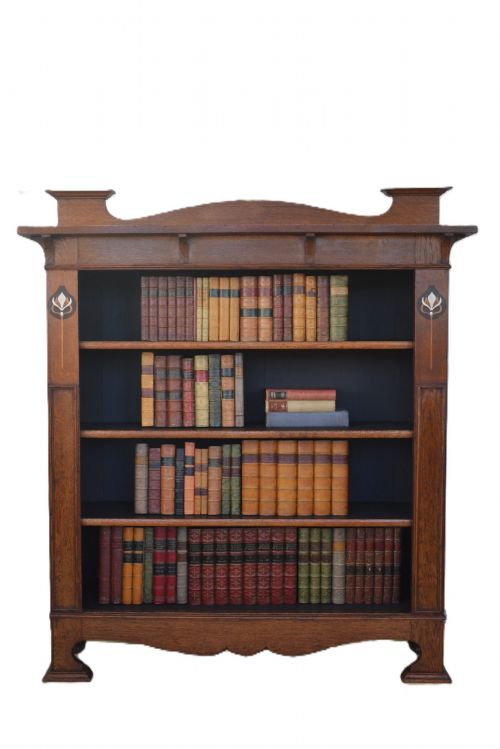


Liberty Oak Cabinet
These liberty oak cabinet pieces embody Arts and Crafts integrity, offering practical storage anchored in solid timber.
Liberty Oak Cabinet
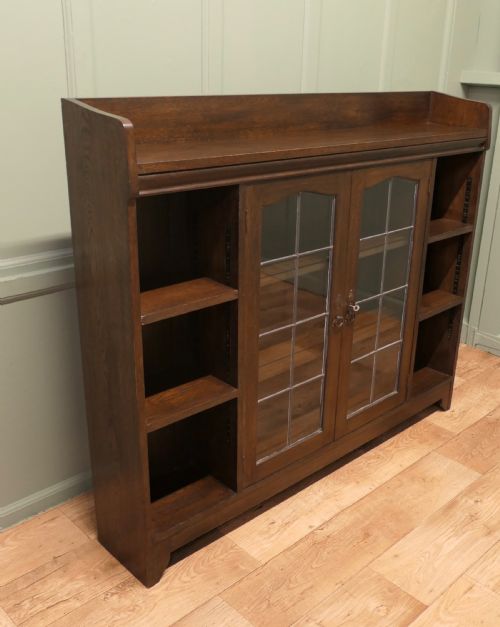
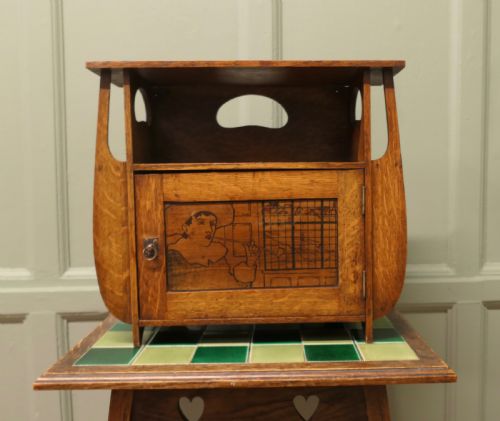
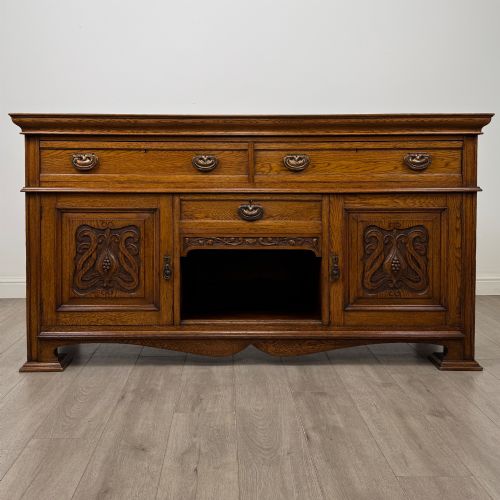
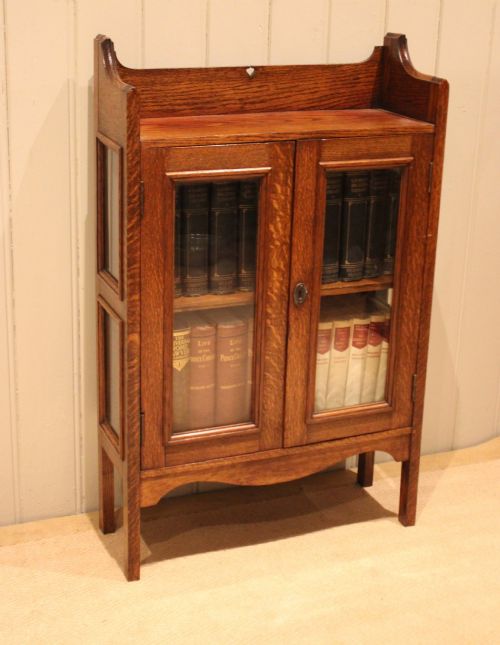
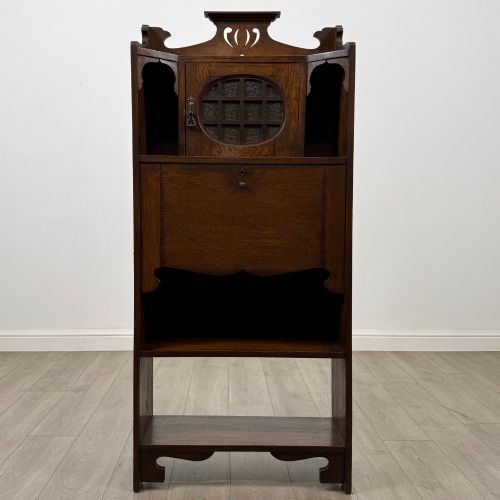
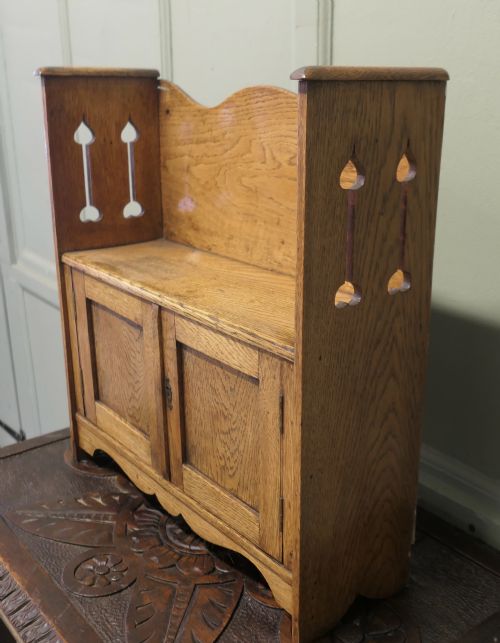
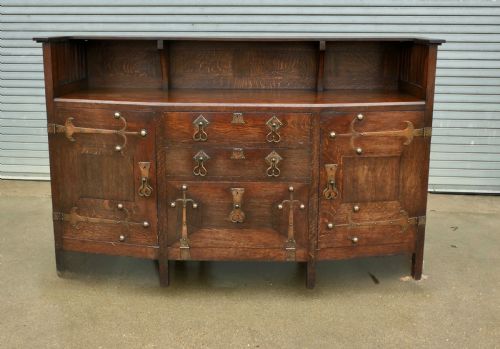
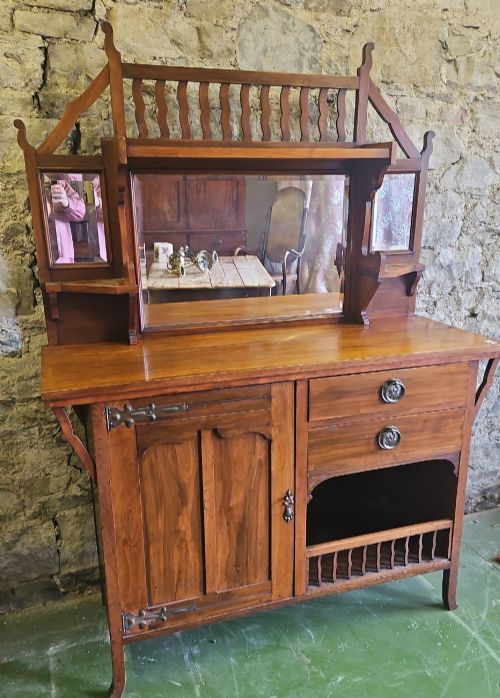
A liberty oak cabinet represents the distinctive Arts and Crafts aesthetic produced during the late nineteenth and early twentieth centuries. These pieces combine utility with honest construction, taking forms such as bookcases, sideboards, bureaux, and wall cabinets.
The versions most commonly met on this page span the Victorian, Edwardian, and early twentieth-century periods. They reflect the design ethos associated with Liberty and Co, alongside contemporary makers of the movement.
Buyers seek these cabinets for their robust timber construction and distinctive stylistic details. They function as storage furniture while serving as focal points within an interior.
How they were made
Makers constructed these cabinets primarily from solid oak, sometimes utilising golden oak varieties. This timber provided the durable framework necessary for sideboards, bookcases, and bureaux.
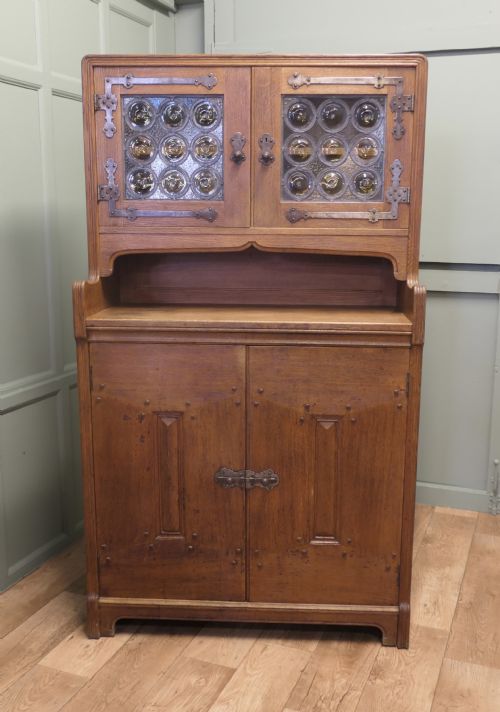
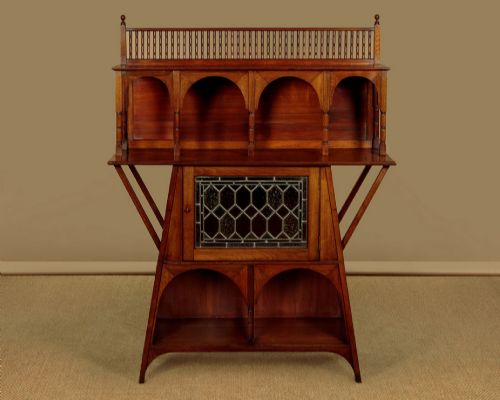
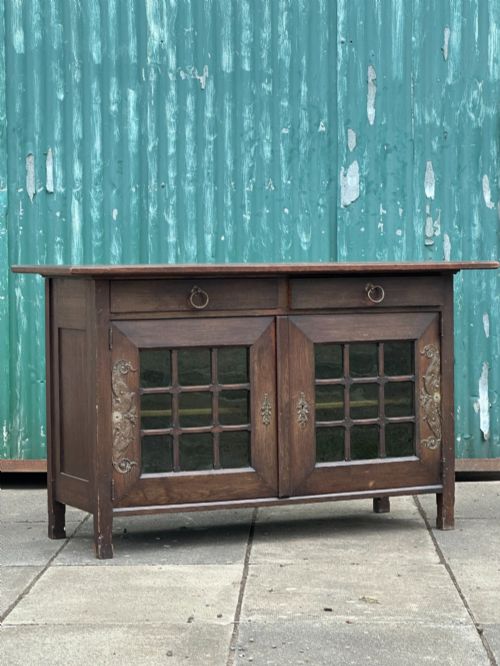
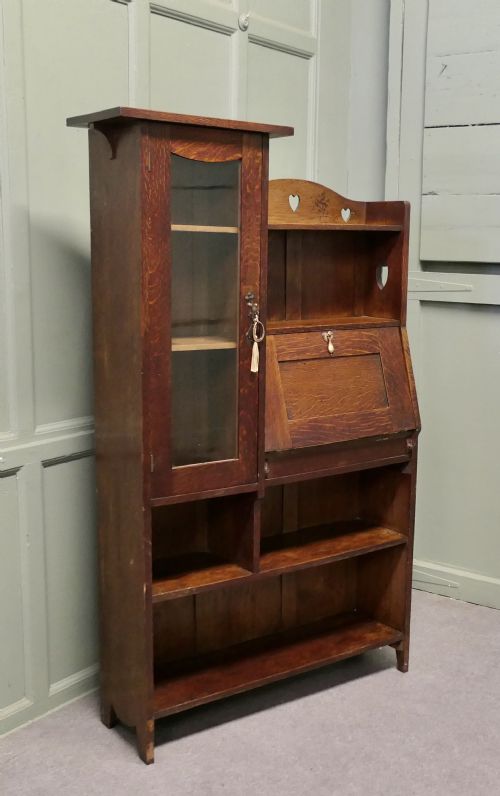
Hardware and decorative elements incorporate brass, copper, and iron for hinges, handles, and escutcheons. Glazed sections frequently feature lead and leaded glass to create geometric or stylised patterns.
The furniture forms span sideboards, bookcases, bureaux, and wall cabinets in Arts and Crafts styles.
What varies in quality
The distinction between tiers rests upon the ambition of the design and the refinement of the cabinetmaking. Pieces designed specifically for Liberty by known designers show superior proportion and decorative integration compared to standard commercial output.
The handling of materials also separates examples, seen in the selection of figured oak and the execution of metalwork fittings like copper hinges and leaded glass panels. Attention to structural joinery underpins the longevity of each cabinet.
Liberty and Co·Leonard Wyburd·Shapland and Petter
The Liberty Oak Cabinet Glossary
- Arts and Crafts
- A design movement spanning the late nineteenth and early twentieth centuries that emphasised handcrafting, local materials, and simple forms. This style forms the foundation of nearly all pieces found in this category.
- Leaded Glass
- Small panes of glass held together by strips of lead, often forming geometric or floral patterns in cabinet doors. This technique was widely employed in period bookcases and wall cabinets.
- Bureau
- A desk featuring a sloping flap that opens to reveal writing surfaces and pigeonholes, frequently combined with bookcase shelving above. These items served functional domestic roles in Edwardian and Victorian homes.
- Sideboard
- A large dining room cabinet designed for storing tableware and serving food, typically fitted with cupboards and drawers. They stand as prominent examples of period oak furniture construction.
Liberty Oak Cabinet: Frequently Asked Questions
What defines a liberty oak cabinet?
These pieces belong to the Arts and Crafts movement, characterised by solid oak construction and thoughtful design. They encompass bookcases, sideboards, and wall cabinets produced during the late nineteenth and early twentieth centuries.
Many examples link directly to Liberty and Co or echo their distinct aesthetic. Their appeal lies in honest craftsmanship combined with everyday utility.
How do I place one in a room?
Oak sideboards and dressers anchor dining spaces or hallways with substantial storage capacity. Smaller wall cabinets and bookcases fit comfortably into living rooms or studies.
Allow the natural timber grain to complement neutral walls or traditional interior schemes. Pairing them with other Arts and Crafts furniture maintains a cohesive period context.
Are these cabinets practical for daily use?
Solid oak construction and adjustable shelving make these cabinets well suited to modern storage needs. Bookcases and bureaux offer functional workspaces and shelving for books or display.
Routine dusting and occasional wax maintenance keep the timber surface conditioned. The robust joinery ensures they withstand regular handling.
How are different periods identified?
Victorian and Edwardian pieces display subtle shifts in hardware styling and decorative carving. Pieces from around eighteen-eighty to nineteen-ten often exhibit characteristic copper handles and leaded glass.
Examining construction methods and any maker marks helps clarify the date of manufacture. Design catalogues from the period provide further reference for attribution.