

Open Shelf Display Unit
An open shelf display unit brings architectural order to a room, offering exposed timber tiers designed to hold volumes and decorative objects.
Open Shelf Display Unit
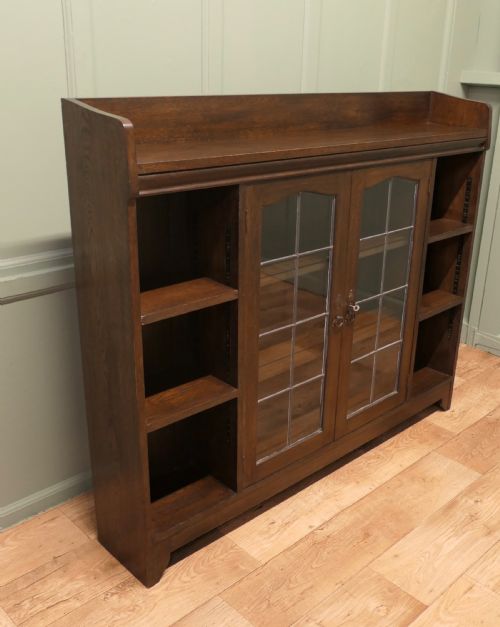
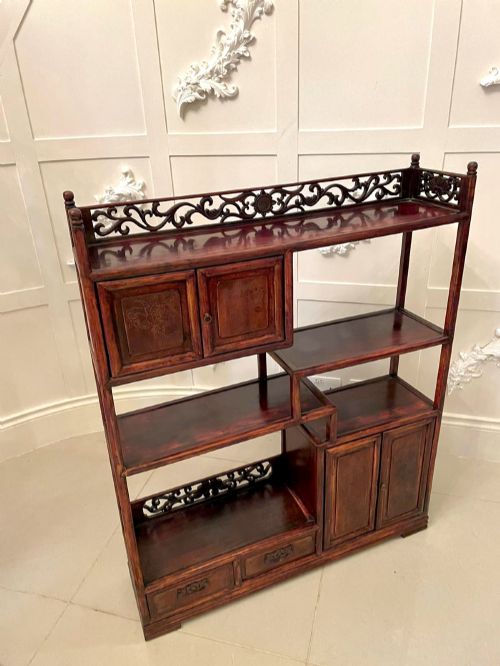
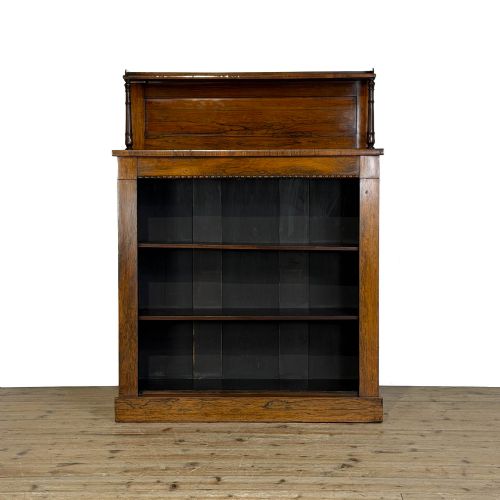
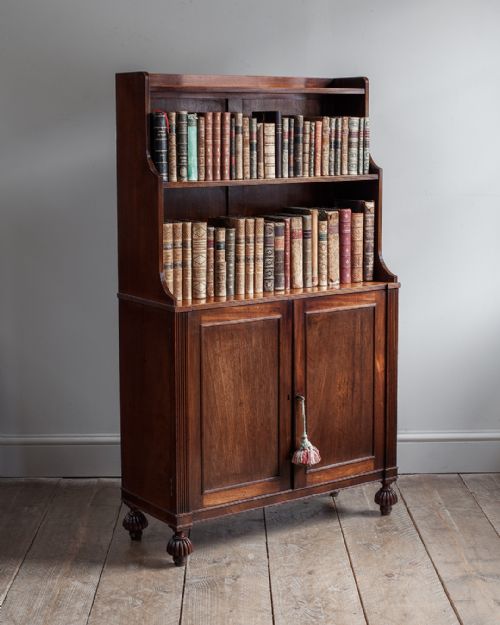
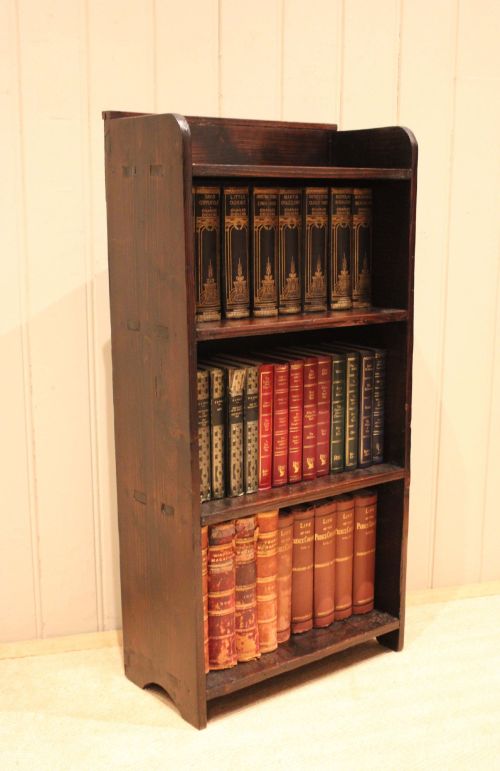
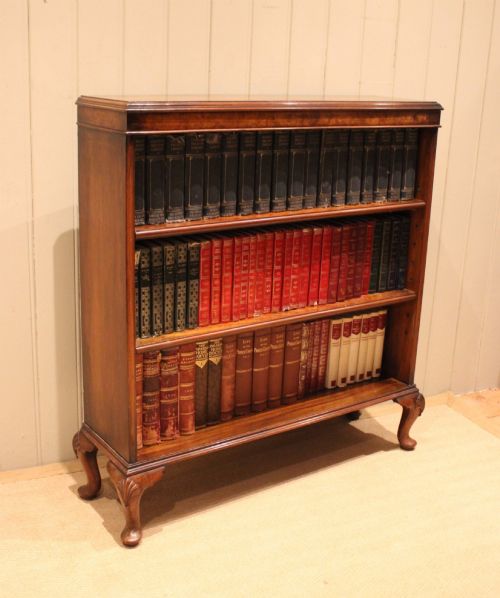
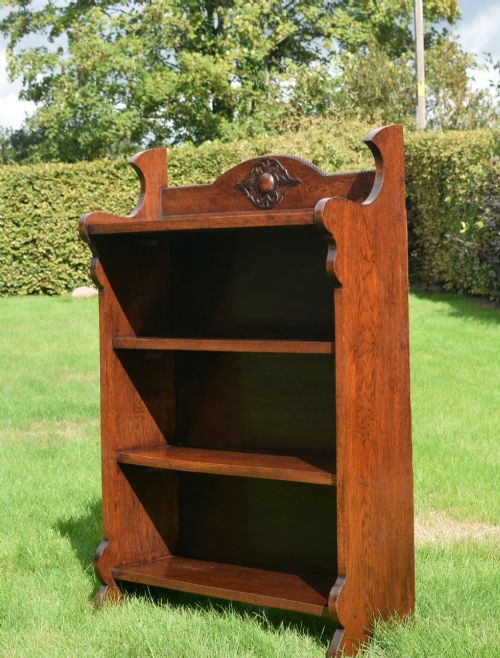
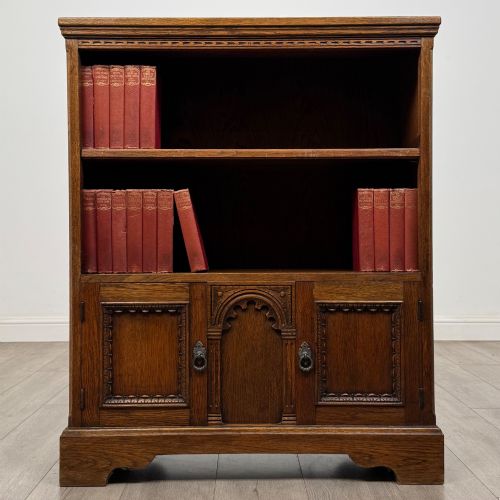
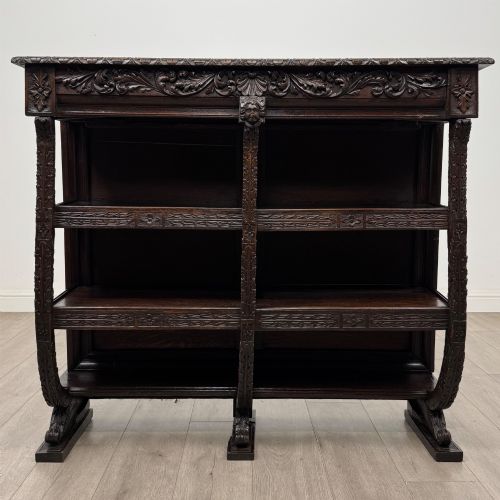
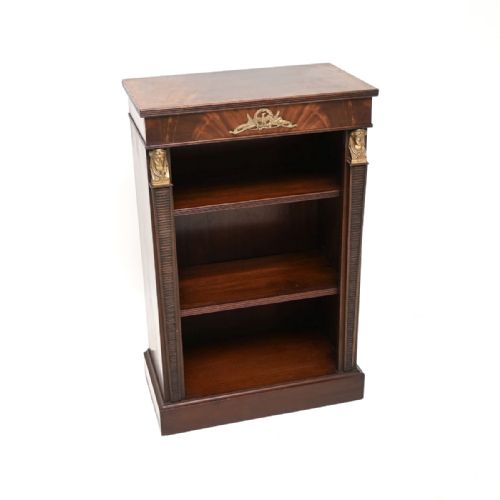
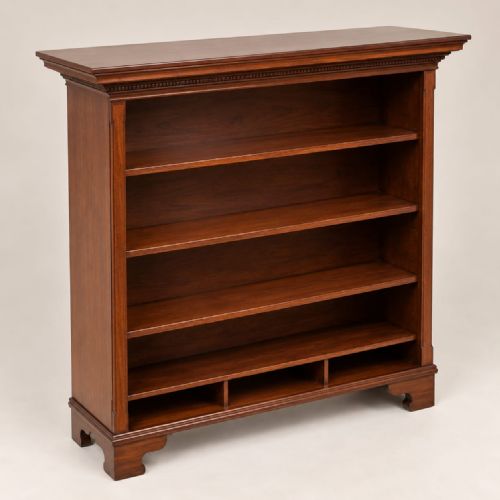
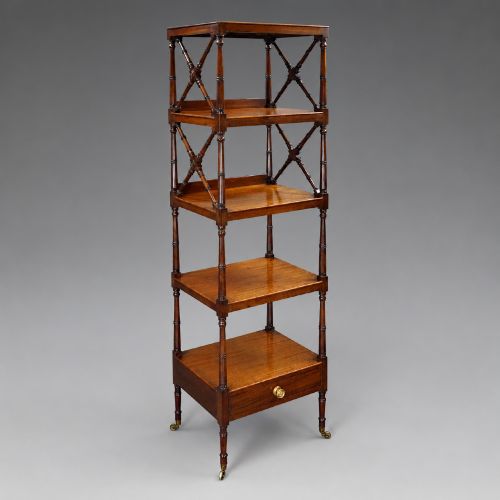
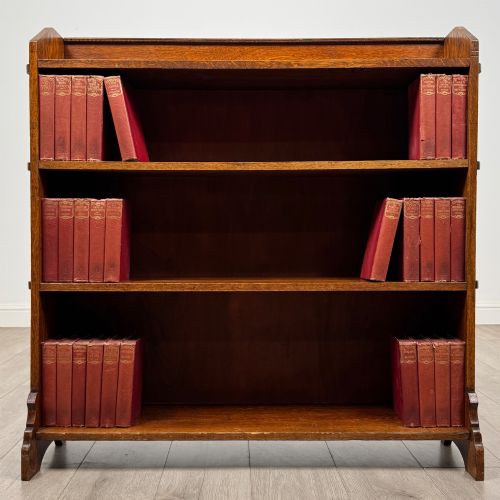
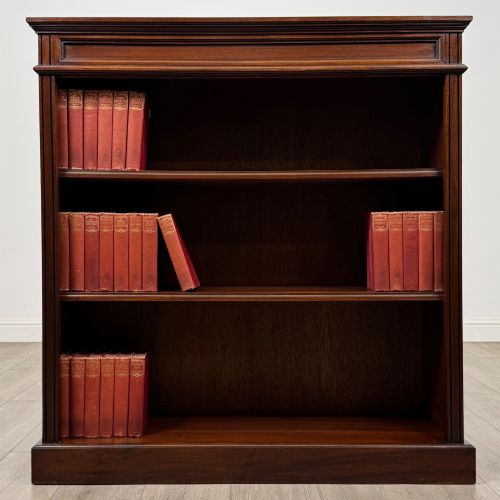
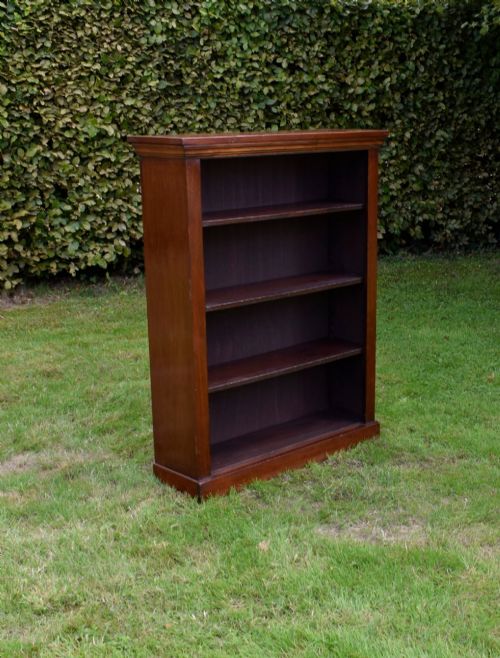
An open shelf display unit is a piece of furniture designed without doors, presenting its contents fully to the room. When searching for an open shelf display unit, you encounter formats ranging from simple wall-hung or floor-standing bookcases to multi-tiered whatnots and etageres. The examples on this page span the nineteenth and twentieth centuries, taking the shape of low bookcases, tall upright shelves, and tiered display stands.
Victorian and Edwardian iterations dominate the selection, predominantly constructed from oak or mahogany with fixed or adjustable shelves. Pieces from the Regency, Arts and Crafts, and Art Deco periods also appear, showing how cabinetmakers adapted the open shelving form to suit changing domestic tastes. Whether rendered in golden oak or figured walnut, these items function primarily to display books and collections without visual barriers.
Materials and construction methods
Makers utilised dense cabinet timbers such as oak, mahogany, walnut, and rosewood, often selecting burr veneers for decorative surfaces. Pine and ash served for provincial or lighter modern pieces, while padauk and exotic woods appear in imported examples. Brass fittings, including castors, provided mobility to larger freestanding shelf units.
Joinery relies on solid board construction, dovetailed joints for internal components, and applied mouldings or hand-carving for surface enrichment. Many examples incorporate adjustable shelving systems using wooden ratchets or brass shelf supports. French polishing and wax finishes sealed the timber while highlighting natural grain patterns.
Some nineteenth-century walnut whatnots arrive on tiny brass castors, ready to roll across the parlour at a moment's notice.
Assessing quality in construction
Structural integrity dictates longevity, particularly in open shelf display units that bear the weight of heavy volumes. Superior pieces maintain rigid corner joints and straight uprights without significant warping under load. The refinement of the finishing work, from the depth of the polish to the crispness of any carved detailing, marks the distinction between standard production and master cabinetmaking.
Heals
The Open Shelf Display Unit Glossary
- Waterfall bookcase
- A shelving unit where each successive shelf is shallower than the one below it, creating a stepped profile that narrows toward the top.
- Etagere
- A French display stand with multiple open shelves intended for ornaments and porcelain. It shares similarities with the English whatnot.
- Burr walnut
- Timber taken from the wart-like growth on a walnut tree, yielding highly figured patterns with swirling grain. Cabinetmakers applied it as a veneer to elite furniture.
- Adjustable shelves
- Shelving supported by moveable pins, ratchets, or saw-tooth tracks inside the cabinet walls. This system allows the user to alter vertical spacing between tiers.
Open Shelf Display Unit: Frequently Asked Questions
What is the difference between a whatnot and a bookcase?
A bookcase is primarily built for storing books in upright rows, often featuring deeper shelves and heavier proportions. A whatnot is lighter, designed specifically to display decorative items across several open tiers.
While some pieces overlap in function, traditional bookcases remain utilitarian in structure whereas whatnots serve a decorative role in formal reception rooms.
How do I care for antique open wooden shelves?
Maintain stable room humidity and keep timber furniture away from direct heat sources to prevent wood from splitting. Dust regularly with a dry cloth and apply a quality beeswax periodically to nourish the polished surface.
Avoid using silicone-based sprays or harsh chemical cleaners, as these strip the historic finish and damage the underlying wood grain over time.
Are these shelves strong enough for heavy books?
Hardwood versions made from oak or mahogany offer substantial structural strength and easily support heavy volumes. Thinner pine or decorative display stands require more care regarding weight distribution.
Check the thickness of the boards and the condition of the shelf supports before loading any antique shelving unit with dense scholarly texts.
How do I date an open shelving unit?
Examine the timber species, construction marks, and decorative style to determine the period of origin. Victorian pieces often show heavier proportions and rich mahogany or walnut, while Edwardian examples favour lighter oak.
Art Deco and Arts and Crafts pieces display distinct stylistic motifs and geometric lines that reflect their specific decades of manufacture.