






Leaded Door Bookcase
These leaded door bookcase pieces combine solid timber and paned glass, offering sturdy storage that keeps books secure while displaying them clearly.
Leaded Door Bookcase
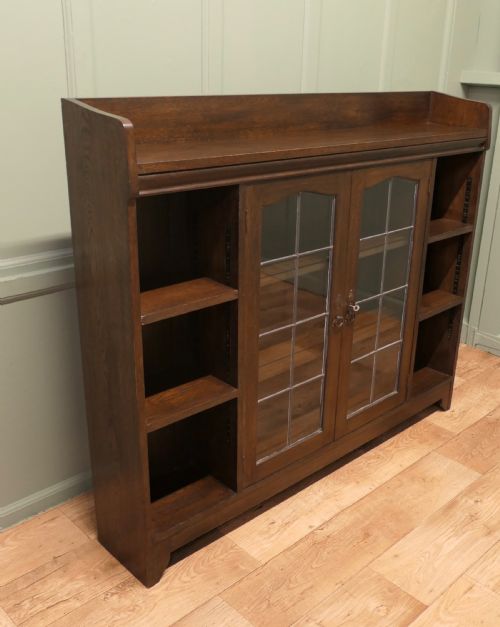
A leaded door bookcase serves primarily to hold and display books while protecting them behind glass panes joined with lead cames. The examples found here span the late nineteenth century through to the 1930s, capturing periods such as the Edwardian era, the Arts and Crafts movement, and the 1920s.
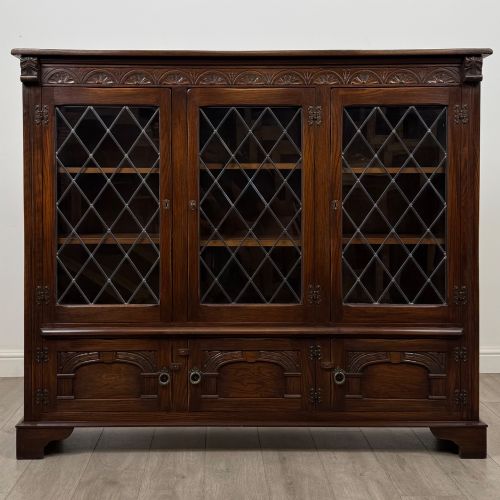
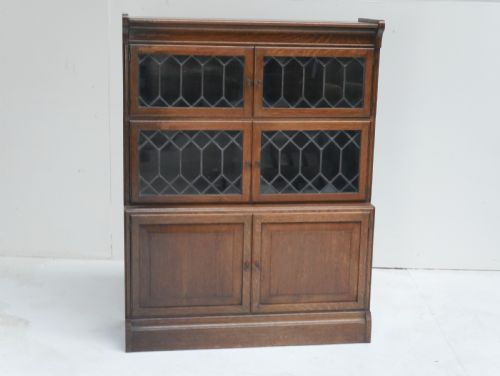
Oak dominates the selections, appearing alongside mahogany and walnut in forms ranging from tall standing cabinets to sectional barrister bookcases and low display units. Many pieces reflect revivalist tastes like Jacobean Revival or the clean lines of early twentieth-century design.
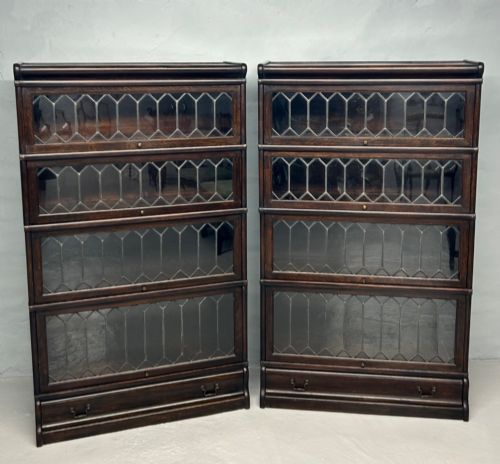
Buyers frequently encounter Edwardian and 1920s oak variations, whether configured as stacking units with lifting glass doors or traditional two-door cupboards. These storage items suit studies and living rooms where visible book collections require both organisation and physical protection.
What varies in quality
The choice of primary timber and the stability of the carcass determine the baseline standard, with dense solid oak and finely figured mahogany standing apart from lighter secondary woods. Superior construction shows in tight joints and robust stacking mechanisms that operate smoothly without sagging.
The execution of the leaded glass work also marks differences across pieces, where neat soldering and secure cames ensure the panes remain rigid. Details like carved ornamentation and original brass or metal hardware further distinguish standard utility items from finer workshop pieces.
Listings feature oak predominantly, alongside mahogany and walnut, spanning periods from the nineteenth century through the 1930s.
Liberty·Globe Wernicke·Minty·Lambs of Manchester
The Leaded Door Bookcase Glossary
- Came
- A slender grooved strip of lead used to hold individual panes of glass together in a leaded window or door. These strips are soldered at the intersections to create a strong lattice.
- Barrister bookcase
- A sectional piece of furniture featuring multiple stacked compartments, each with a glass door that lifts and slides into the cabinet above the books. This design allowed lawyers and offices to expand their storage vertically.
- Jacobean Revival
- A nineteenth and twentieth-century style that imitates the heavy, ornate oak furniture of the early seventeenth century. It often incorporates turned legs, deep carving, and panelled doors.
- Arts and Crafts
- A design movement valuing traditional craftsmanship, simple forms, and natural materials over mass-produced ornamentation. Pieces from this tradition often display honest construction and minimal decoration.
- Glazed
- Fitted with glass panels rather than solid wooden doors. This term describes any cabinet or bookcase designed to display contents while keeping dust away.
Leaded Door Bookcase: Frequently Asked Questions
What is a barrister bookcase?
A barrister bookcase is a modular storage unit made of stacked sections with glass doors that lift and slide inside the case. This design protected law books from dust while allowing the owner to add more shelves as collections grew.
Today, these sectional units remain popular for studies and offices because they combine practical vertical storage with accessible shelving.
How do I care for leaded glass?
Leaded glass requires gentle cleaning with a soft cloth and mild cleaner to avoid damaging the soft lead cames holding the panes. Press lightly when wiping to prevent loosening the soldered joints.
Regular dusting keeps the glass clear and maintains the metalwork without causing structural wear to the door frames.
Are these bookcases suitable for modern homes?
These cabinets fit well in contemporary interiors by providing enclosed shelving that keeps book collections organised and free from dust. Their timber frames and glass panels add traditional character to living rooms and studies.
Many styles, from low oak cupboards to tall stacking units, adapt easily to different room sizes and layouts.
How can I tell an Edwardian bookcase apart from a 1920s one?
Edwardian bookcases often feature heavier carved oak details and darker finishes influenced by Victorian tastes. Pieces from the 1920s tend toward simpler lines, lighter oak treatments, or modular stacking formats.
Examining the construction methods and hardware styles helps clarify the likely manufacturing period.