
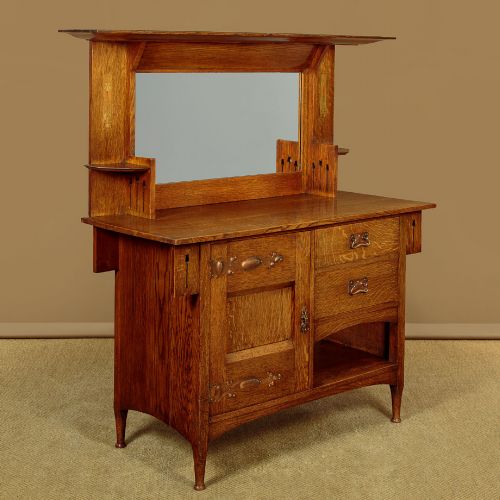
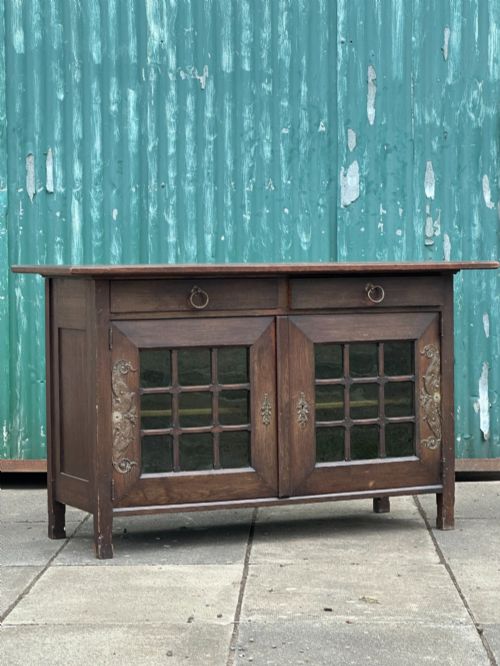


Liberty Style Oak Dresser
A liberty style oak dresser brings genuine Arts and Crafts character into a room through solid construction and honest timber.
Liberty Style Oak Dresser
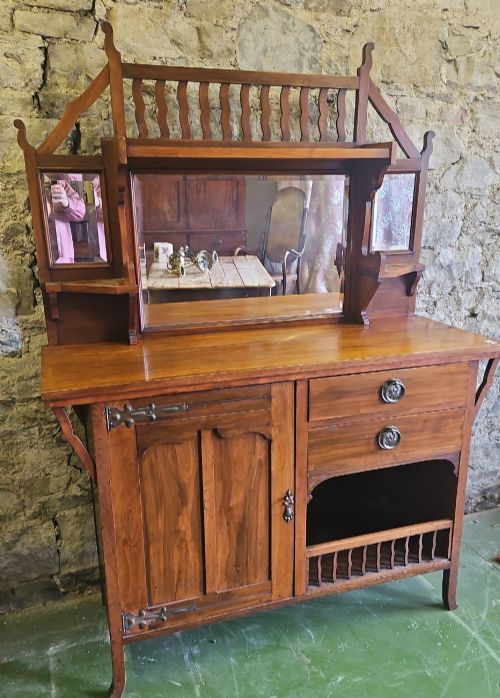
A liberty style oak dresser combines the sturdy utility of traditional storage with the distinctive aesthetic of the Arts and Crafts movement. These pieces typically take the form of sideboards, side cabinets, and combined dressers designed to anchor a dining room or hall.
Most examples found here date from the late nineteenth century through the Edwardian period, capturing the peak of British cabinet-making influenced by Liberty & Co. and contemporary workshops. Buyers encounter variations ranging from simple functional sideboards to elaborate dressers featuring integrated shelving and display space.
The form prioritises practical storage through cupboards and drawers while celebrating the natural grain of oak. Pieces span the decades from the 1880s to the 1910s, reflecting subtle shifts in proportion and decorative restraint as the style evolved.
Materials and construction methods
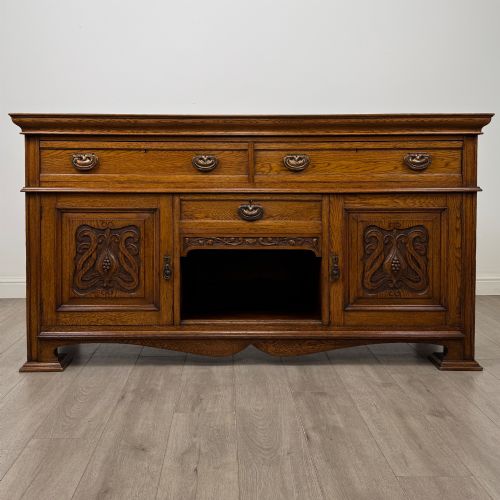
Construction relies predominantly on solid oak, selected for its durability and strong figure, complemented occasionally by wood inlay or marquetry. Timber preparation and jointing follow traditional cabinet-making standards designed to withstand decades of daily use without losing structural integrity.
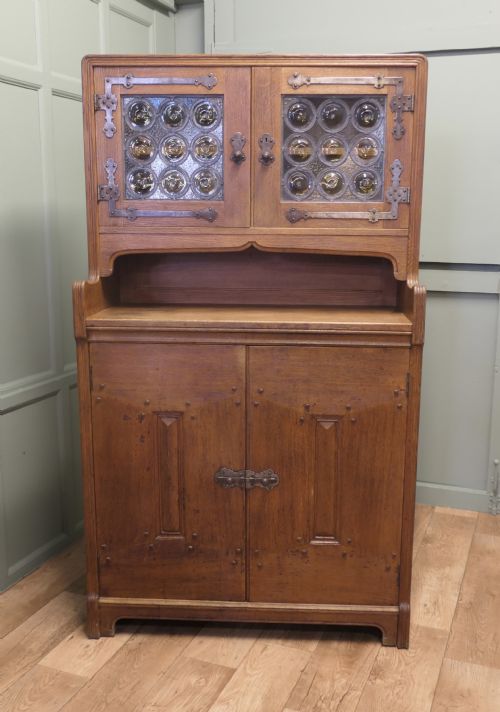
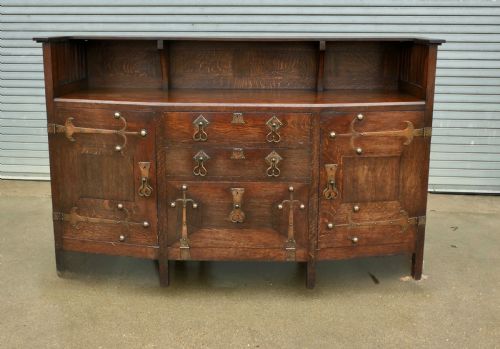
Metalwork plays a crucial functional and decorative role, with copper, brass, and iron used for hinges, handles, and strapwork. These metal elements often display patination and hand-finished details that contrast sharply against the warm tones of the golden oak.
Glass panels appear in cabinet doors to showcase display items, while ceramic details sometimes accent the hardware or internal fittings. Each material is chosen to serve a structural purpose while contributing to the cohesive aesthetic of the piece.
Listings feature pieces spanning the 1880s through the Edwardian era, constructed primarily in oak with copper, brass, and glass accents.
Factors that determine quality
Quality rests on the depth of design and the caliber of execution, distinguishing standard commercial output from pieces produced by prominent designers and workshops. The handling of the oak, from the selection of figured boards to the crispness of any inlaid decoration, dictates the visual impact.
Hardware execution reveals much about a piece, as hand-hammered copper or substantial brass fittings require greater skill than stamped metal components. Structural refinement, such as dovetailed drawer linings and well-hung doors, ensures the furniture functions smoothly over time.
Liberty & Co.·Leonard Wyburd·Shapland and Petter
The Liberty Style Oak Dresser Glossary
- Oak
- A dense, durable hardwood native to Britain and Europe, prized for its pronounced grain pattern and suitability for heavy furniture construction. It forms the primary structural material for nearly all pieces in this category.
- Arts and Crafts
- A design movement spanning the late nineteenth and early twentieth centuries that championed traditional craftsmanship, simple forms, and the use of natural materials. This philosophy directly shaped the aesthetic of Liberty-associated furniture.
- Marquetry Inlay
- A decorative technique where small pieces of various woods are fitted together to form pictorial or geometric patterns on a surface. It adds subtle tonal variation to flat panels on select sideboards.
Liberty Style Oak Dresser: Frequently Asked Questions
How do I date an oak sideboard?
Dating relies on examining the construction methods, hardware styles, and overall proportions seen across pieces from the 1880s to the 1910s. Earlier examples often display heavier proportions and distinct Arts and Crafts detailing.
Later Edwardian pieces may show lighter framing and refined inlay work while maintaining the commitment to solid oak construction.
Where should I place a side cabinet?
A side cabinet suits dining rooms, hallways, or living spaces where substantial surface area and enclosed storage are required. Their strong horizontal lines anchor a room effectively.
Ensure adequate clearance for doors and drawers to open fully, and position the furniture away from direct heat sources to protect the oak timber.
How do I care for antique oak furniture?
Maintain antique oak by dusting with a dry, soft cloth and occasionally applying a traditional beeswax to nourish the timber. Avoid silicone-based polishes that can build up and dull the finish.
Keep the furniture in a stable environment with moderate humidity levels to prevent the solid wood from drying out or splitting.