
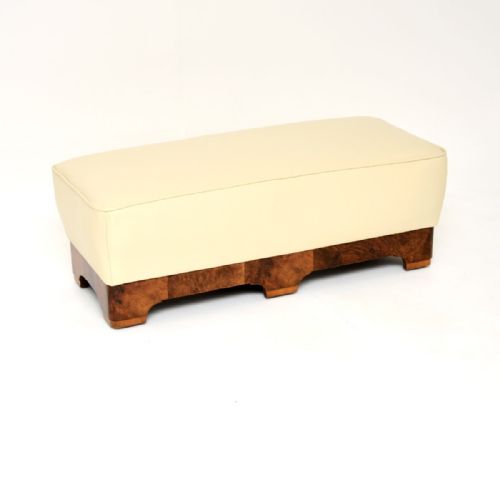
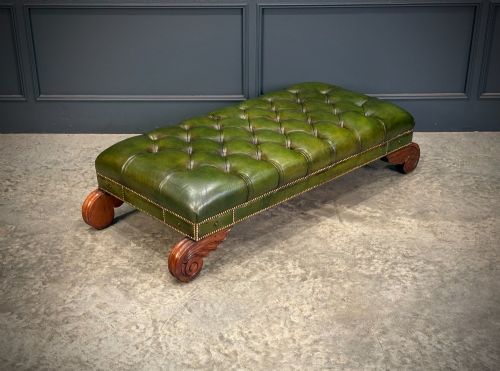
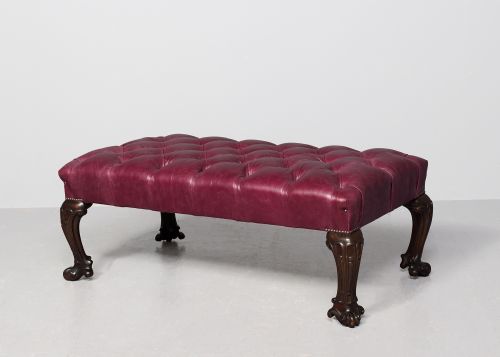
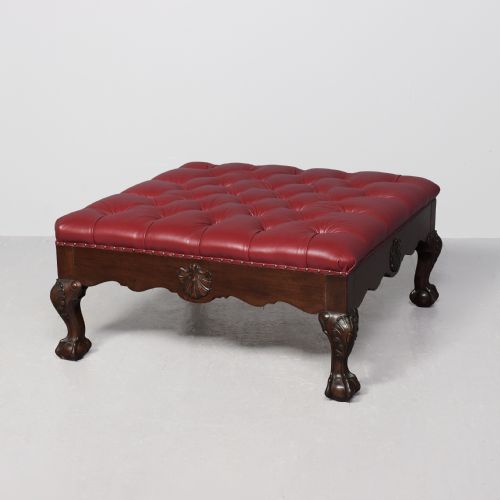
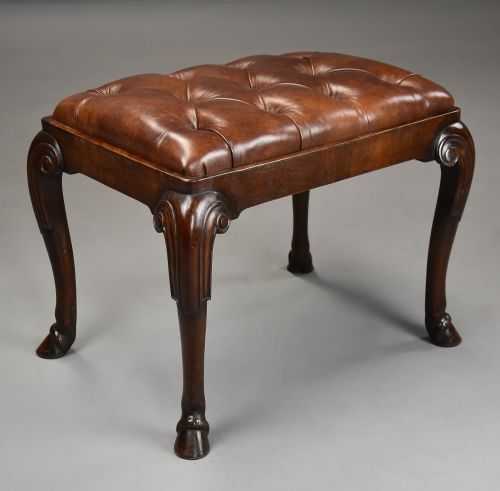
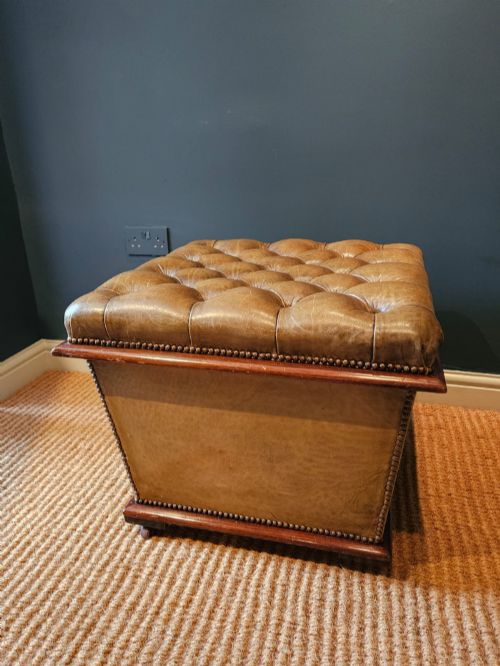
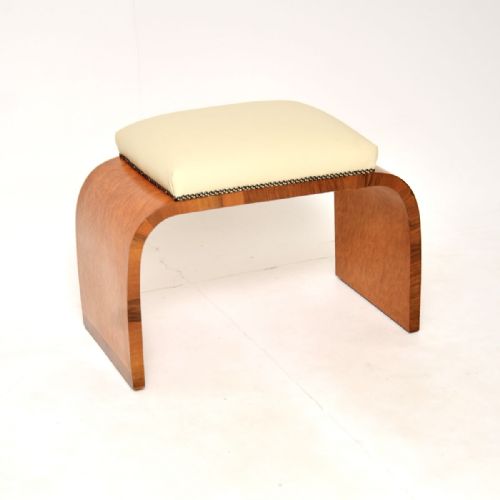


Leather Upholstered Footstool
A leather upholstered footstool brings solid timber framing and tactile hide together, offering a dependable low seat or rest.
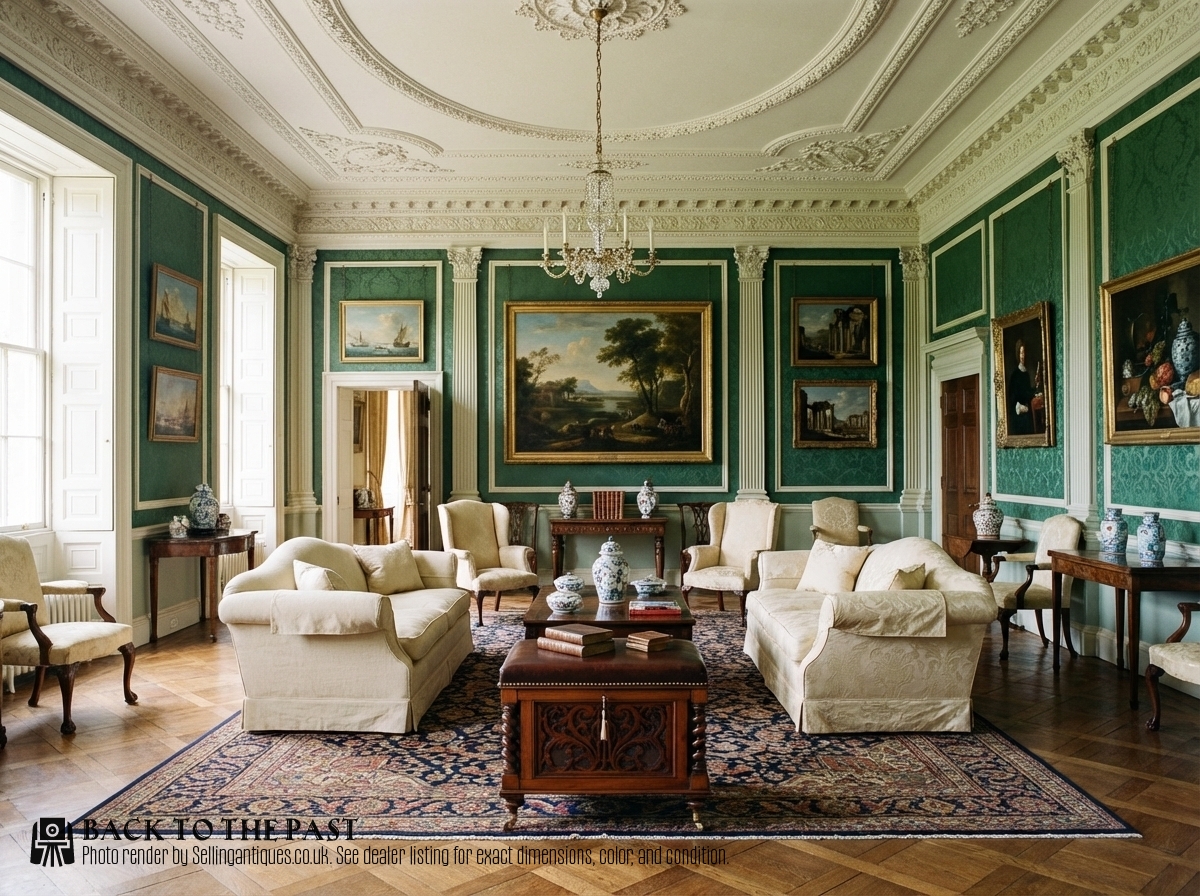
Leather Upholstered Footstool
A leather upholstered footstool combines a wooden frame with a padded hide top, serving as a functional rest or low seat in traditional rooms. You will frequently encounter Victorian and Edwardian examples alongside Regency and Art Deco iterations.
The form ranges from compact square footstools to long window seats, ottomans, and piano stools. Mahogany, walnut, and oak dominate the timber frames, supporting buttoned or plain leather surfaces.
How they were made
Frames rely on hardwoods such as mahogany, walnut, rosewood, and oak, shaped with cabriole legs, turned supports, or straight rails. Joinery involves traditional methods suited to load-bearing low seating.
Leather hides are stretched over padding, often secured with brass studs and finished with deep buttoning. Decorative elements include carved details and box compartments in specific ottoman designs.
What varies in quality
The distinction between standard pieces and exceptional ones rests on timber selection and frame carving. Figured woods like burr walnut or birds-eye maple elevate the visual weight of a stool.
Upholstery execution dictates the finish, where precise buttoning and substantial hide thickness indicate higher workshop standards. Period authenticity in revival styles also separates routine items from finer commissions.
Liberty·James Shoolbred
The Leather Upholstered Footstool Glossary
- Ottoman
- A low upholstered seat or stool, frequently featuring a hinged lid for internal storage. These pieces function as seating or surface rests.
- Cabriole leg
- A furniture leg that curves outward and then tapers inward, inspired by animal limbs. This form appears frequently on walnut and mahogany frames.
- Buttoning
- An upholstery technique where depressions are formed in the padding by pulling twine through to the frame. Secured buttons create a distinctive diamond pattern on the hide.
- Joint stool
- A traditional wooden stool constructed with mortise and tenon joints rather than turned parts. Early oak examples display this sturdy method.
- Box ottoman
- A stool incorporating a hollow compartment beneath the upholstered seat. The top often lifts to reveal storage space for textiles.
Leather Upholstered Footstool: Frequently Asked Questions
What is a leather upholstered footstool used for?
These pieces function primarily as rests for tired feet or as low seats positioned near firesides and windows. Larger versions serve as centre tables or casual ottomans.
Many designs incorporate internal storage compartments, making them useful for concealing blankets or small household items while maintaining a tidy room.
How do I identify a Victorian footstool?
Victorian examples rely heavily on dense mahogany or walnut frames, often featuring deep buttoned leather upholstery and turned or cabriole legs. Proportions tend to be generous and robust.
Look for traditional construction methods and signs of age in the timber and hide to confirm the period.
Are Art Deco footstools different?
Art Deco pieces introduce exotic veneers such as burr walnut and birds-eye maple alongside streamlined wooden frames. The lines are cleaner and less ornate than Victorian counterparts.
These stools reflect the design shifts of the 1930s, pairing geometric wood grain with smooth leather tops.
What timbers were used?
Cabinet makers utilised durable hardwoods including mahogany, walnut, oak, and rosewood for structural stability. Lighter woods like yew and maple appear in specific regional or modernist pieces.
Timber choice generally reflects the prevailing fashion of the period in which the stool was manufactured.