
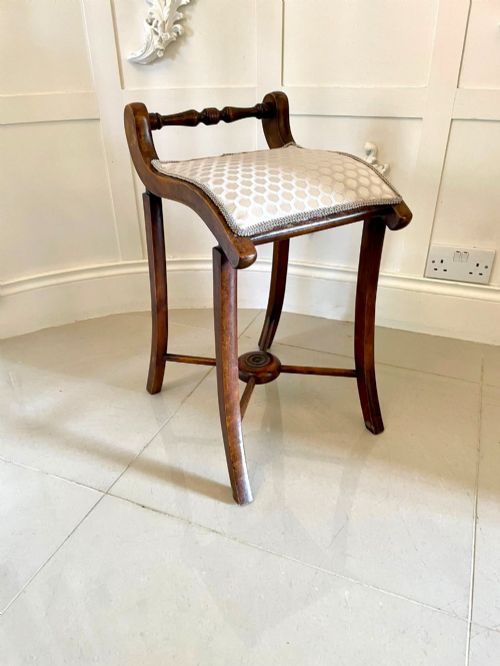
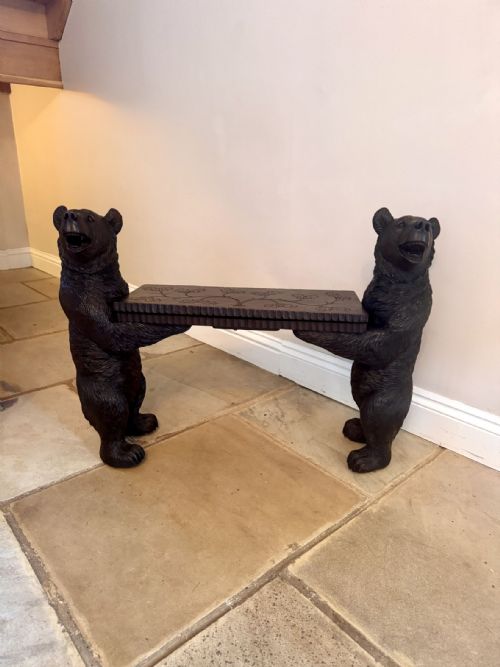
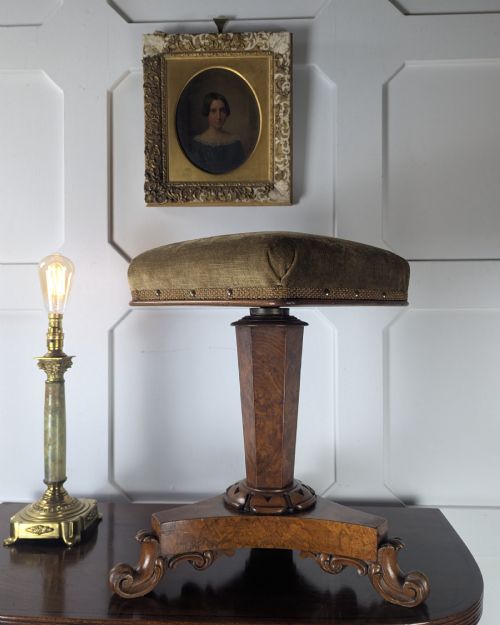
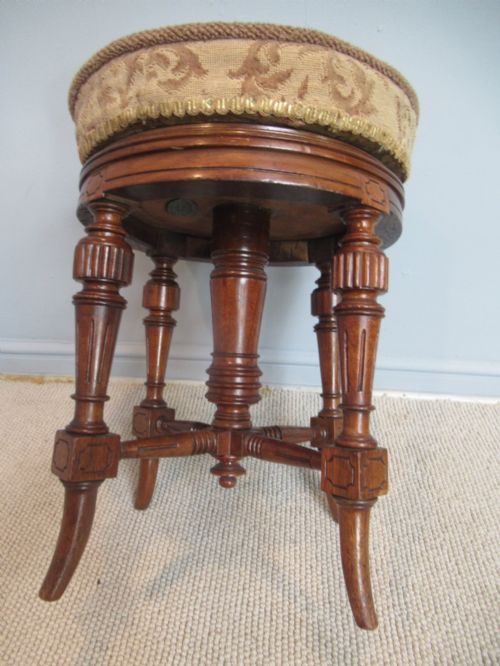
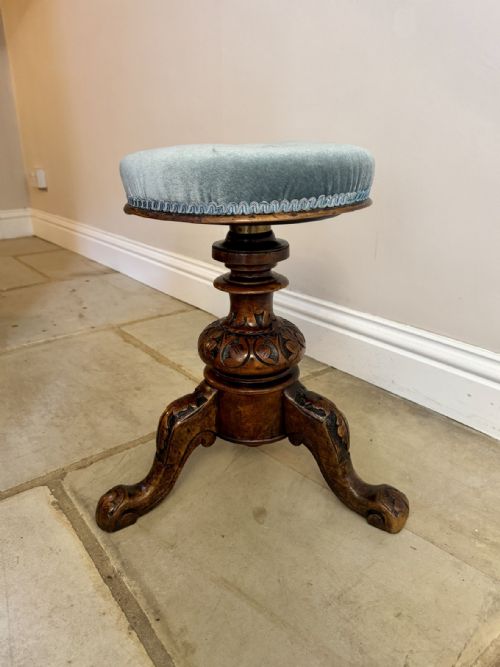
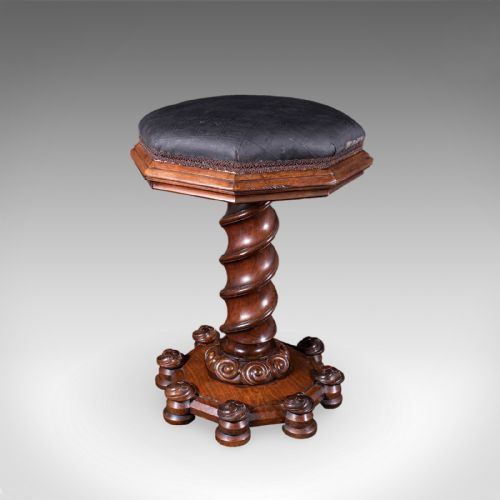


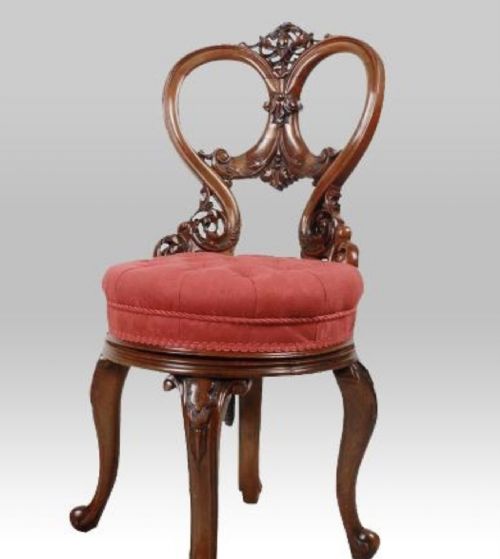


Walnut Music Stool
A walnut music stool provides the practical seat and height adjustment required for the piano or harp, combining solid timber with upholstered comfort.
Walnut Music Stool
When you search for a walnut music stool, you encounter seating designed specifically for musicians and pianists from the nineteenth century and early twentieth century. The selection ranges from revolving pedestal stools to rise and fall designs, music chairs with backs, and pieces incorporating storage compartments or canterbury sections.
Victorian examples dominate the selection, spanning decades from eighteen fifty to nineteen hundred, alongside occasional Regency, William IV, and Art Deco pieces. Forms vary from simple tripod and four-legged revolving seats to elaborate carved grotto designs, organist stools, and duet window ottomans.
Origin points encompass English workshops, Scottish makers, French pieces in the Louis XVI style, and Italian creations. Buyers select these items for domestic music rooms, studies, or dressing tables where historical timber and adjustable mechanics are utilised daily.
How they were made
Craftsmen utilised figured and solid walnut for the frames, often incorporating marquetry inlay, detailed carving, and polished finishes. Turning and joinery shaped the pedestals, tripod legs, and X-frames that support the upper seats.
Adjustable mechanisms rely on brass and iron screws, winding threads, and rise and fall risers concealed within the wooden columns. Seats are upholstered over stuffing with velvet, leather, or decorative fabric, while specialised forms integrate fall-front cabinets, lockers, and canterbury sections.
Musicians relied on grotto stools carved with sea shells to maintain proper posture during nineteenth-century harp recitals.
What varies in quality
The standard of carving and timber selection dictates the distinction between standard production and exceptional workshop output. Deeply carved foliage, figured walnut grains, and specialised forms such as grotto chairs or stamped maker pieces mark the upper tier.
Mechanical integrity defines practical value, particularly the smooth operation of the rotating screw mechanism or rise and fall height adjustment. Original upholstery materials, intact brass fittings, and structural rigidity in the tripod or pedestal base complete the assessment of a well-preserved example.
Brooks·Charles Wadman·Gillows
The Walnut Music Stool Glossary
- Revolving stool
- A seat mounted on a threaded metal spindle that turns to alter the height of the user. This mechanism allows quick adjustments for piano and harp players.
- Grotto stool
- A heavily carved piece featuring shell and scroll motifs associated with nineteenth-century Italian design. These decorative seats often incorporate revolving mechanisms.
- Rise and fall
- An internal screw action operated by turning the seat top to raise or lower the sitting height. This system provides stable positioning without visible levers.
Walnut Music Stool: Frequently Asked Questions
How do I adjust the height?
Many examples use a central screw mechanism operated by rotating the upholstered seat clockwise or anticlockwise until the desired level is reached.
Other variants employ a rise and fall riser or side screw handles that lock the wooden column at specific heights.
What is a music chair?
A music chair incorporates a low backrest attached to a revolving or stationary wooden base, providing additional support for harpists or recitalists.
These pieces share the compact proportions and adjustable heights typical of piano seating.
How do I date a piece?
Dating relies on stylistic clues such as Victorian carved walnut, Regency proportions, or Edwardian cabinet work recorded in the evidence.
Turned pedestals, tripod bases, and specific upholstery styles further help narrow the period of manufacture.
Can I use them as dressing stools?
Yes, many period examples served dual purposes in bedrooms and dressing rooms alongside their primary function at the piano.
Storage compartments, lockers, and fall-front sections found in these items accommodate modern domestic accessories.