


Leaded Glass China Cabinet
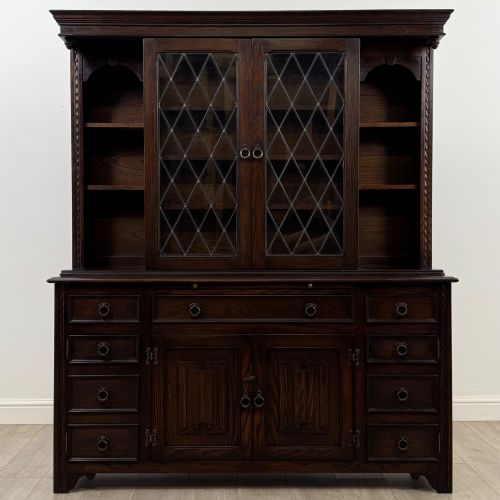
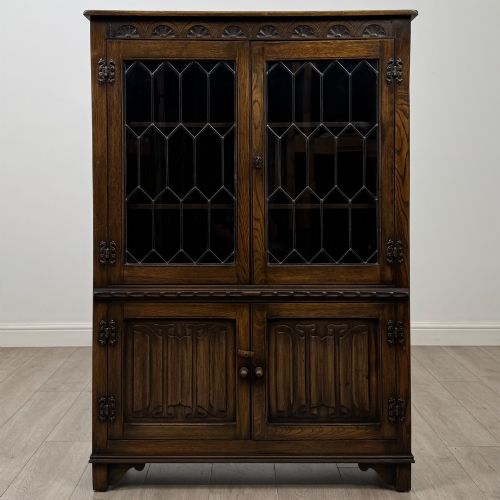
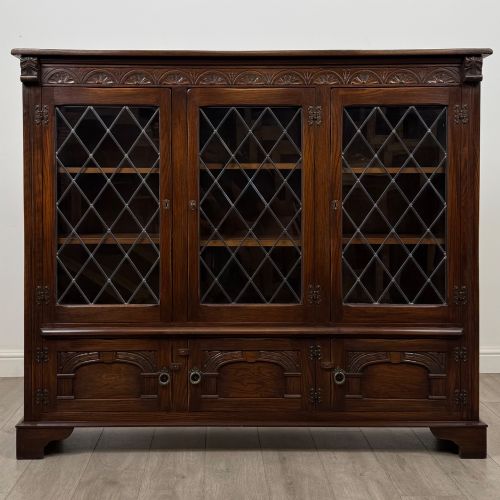
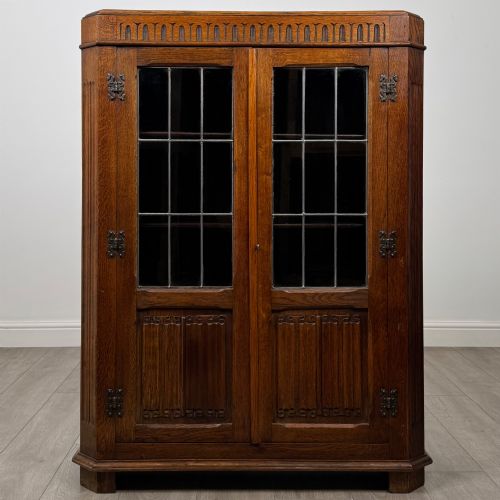
These leaded glass china cabinet pieces combine timber and soldered cames to hold porcelain safely while framing it for display.
Leaded Glass China Cabinet
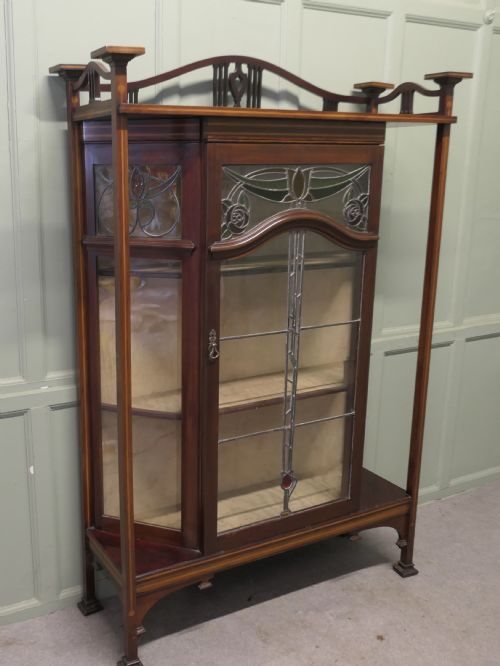
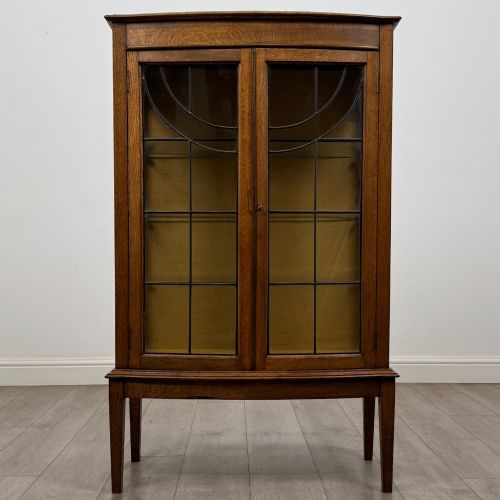
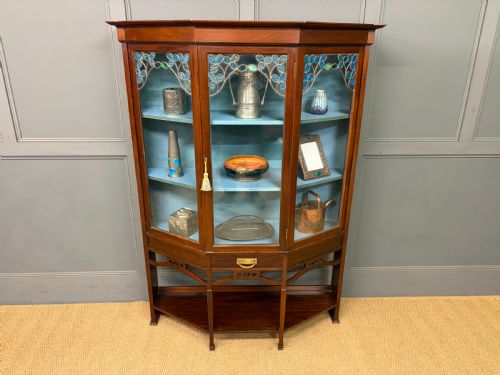
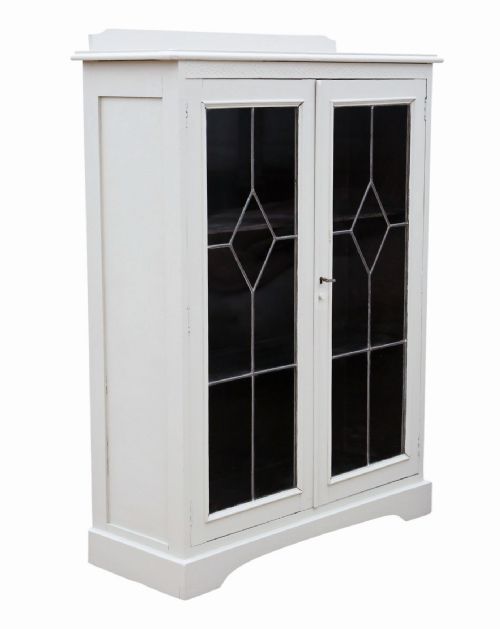
A leaded glass china cabinet serves to store and exhibit ceramic wares through glazed doors held together by metal cames. The selection spans the Edwardian era, the nineteenth century, and the nineteen-twenties and thirties, drawing on styles such as Art Nouveau, Jacobean Revival, Tudor Revival, and Art Deco.
Most examples found in this range are constructed from oak or mahogany, occasionally employing walnut, and take the form of display cabinets, bookcases, or combined display cabinets and dressers. These items function primarily to keep dust from delicate pottery while maintaining visibility from across a room.
Makers and designers from the period produced these storage units in various scales, from large carved oak cupboards to inlaid mahogany pieces. Buyers meet diverse forms that reflect the aesthetic preferences of their respective decades, ranging from early twentieth-century Arts and Crafts simplicity to later geometric lines.
How they were made
Makers built these cabinets using hardwoods like oak and mahogany, often incorporating intricate marquetry or painted surfaces to enhance the timber grain. Glass panes were secured within individual lead cames, soldered at the joints to create geometric or flowing decorative patterns.
Additional detailing involved brass hardware for hinges and handles, iron structural components, and occasionally fabric linings behind the shelving. Carved motifs, linenfold panels, and inlaid wood veneers added ornamental depth to the primary structure of the cabinet.
Materials documented across the collection span oak, mahogany, walnut, glass, lead, brass, iron, and fabric.
What varies in quality
The standard of craftsmanship depends largely on the selection of timber, the precision of the joinery, and the complexity of the leadwork within the glass doors. Finer specimens display detailed hand-carved elements, sophisticated inlay work, and robust structural integrity across the frame.
Differences also arise in the design ambition of the piece, distinguishing standard utility furniture from works attributed to specific workshops or progressive artistic movements. The integration of materials such as brass fittings and well-chosen veneers further separates simpler cabinets from superior examples.
Shapland and Petter
The Leaded Glass China Cabinet Glossary
- Came
- A narrow grooved strip of lead used to hold together pieces of glass in a window or cabinet door. These strips form the structural grid of leaded glazing.
- Marquetry
- The art and craft of applying decorative veneer pieces to a structure to form ornamental designs. This technique frequently appears on mahogany and walnut cabinet surfaces.
- Linenfold
- A style of wood carving representing folded linen fabric, often seen on panels of older furniture. It gives a flat wooden surface a textured, textile-like appearance.
- Jacobean Revival
- A style of architecture and furniture design reviving the heavy, ornate forms of the early seventeenth century. Cabinets in this style often feature dark oak and robust turnings.
- Arts and Crafts
- A design movement advocating traditional craftsmanship and simple forms over mass production. Pieces from this tradition emphasise the natural qualities of oak and mahogany.
Leaded Glass China Cabinet: Frequently Asked Questions
What is a leaded glass china cabinet used for?
These cabinets were designed to store and display porcelain china while protecting items from dust and accidental damage.
The glass panels allow owners to view their collections without opening the doors, serving both a practical and decorative purpose in domestic interiors.
How do I identify an Edwardian cabinet?
Edwardian cabinets typically date from the period around nineteen hundred and often feature light mahogany timbers paired with delicate inlay work.
They frequently display influences from the Arts and Crafts movement or early twentieth-century revival styles rather than the heavier dark oak of the Victorian era.
What woods were used in these cabinets?
Cabinet makers predominantly utilised oak and mahogany, with occasional examples constructed from walnut.
These timbers were selected for their structural strength and capacity to take decorative carvings, veneers, and inlay.
How do Art Nouveau cabinets differ?
Art Nouveau examples incorporate flowing, organic lines inspired by natural forms, differing from the strict symmetry of earlier periods.
They often feature marquetry depicting plant motifs alongside specialised leaded glass window designs.