














Lead Crystal Glassware
Lead crystal glassware brings weight and optical clarity to the table, spanning functional vessels from the eighteenth century to the twentieth.
Lead Crystal Glassware
Lead crystal glassware encompasses drinking vessels, decanters, vases and small table pieces produced across multiple eras. The listings present significant numbers of Georgian pieces alongside Victorian, Edwardian and later twentieth-century examples.
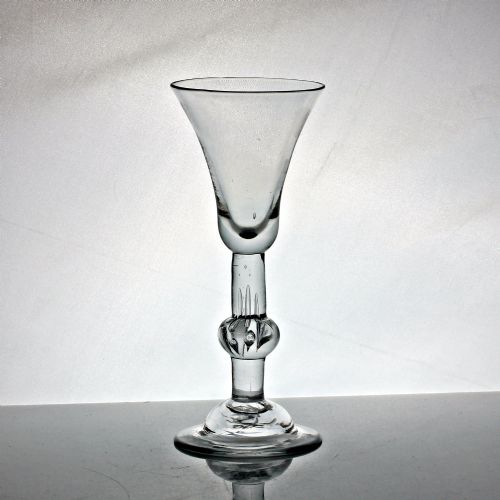
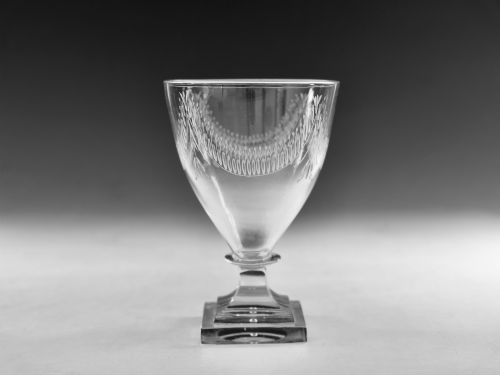
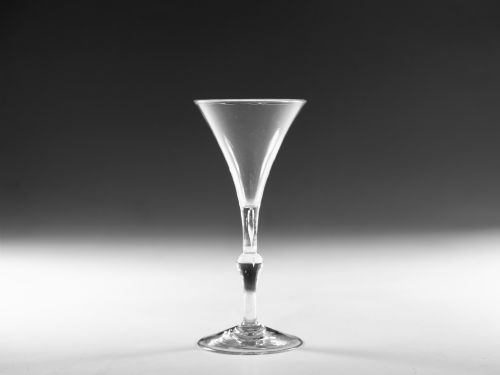
Drinking glasses dominate the selection, ranging from early eighteenth-century dram glasses and air twist wine glasses to nineteenth-century rummers and champagne coupes. Decanters, vases and jelly glasses appear alongside sets of whiskey tumblers and champagne bowls.
English production is heavily represented, accompanied by Belgian twentieth-century items such as green over crystal vases. The forms shift from plain and baluster stems of the early periods to the heavy cut designs of the Victorian and later eras.
How they were made
The objects utilise lead glass, flint glass and crystal glass, providing the dense material required for deep cutting and engraving. Skilled hands formed the vessels through blowing and moulding before applying decorative techniques.
Decoration includes wheel-engraving, acid-etching and hobnail cutting, alongside internal optical effects such as multi-spiral air twists and opaque twists formed within the stems. Over-crystal methods added layers of coloured glass to a clear crystal body, seen in twentieth-century Belgian vases.
Lead Crystal Glassware Retail Price Guide 2026
Typical asking prices for lead crystal glassware among the pieces listed under this phrase on Sellingantiques today, from the lower quarter to the upper quarter. They describe what is for sale here now, not the wider market.
Early glass blowers occasionally incorporated hidden air bubbles into stems, turning an accidental pocket into a delicate spiral.
What varies in quality
Quality rests upon the clarity of the metal and the crispness of the wheel-cut or engraved details. Heavy metal with high optical refraction distinguishes finer vessels from simpler utilitarian forms.
Proportion and balance define the better examples, particularly in eighteenth-century stemmed glasses where the relationship between foot, stem and bowl dictates the visual success of the piece. The precision of air twists and faceted stems marks the skill of the original glasshouse.
Charles Graffart for VSL
The Lead Crystal Glassware Glossary
- Air twist
- A decorative spiral of tiny air bubbles enclosed within the glass stem, formed by drawing out twisted air-filled cavities in the hot metal.
- Rummer
- A large, heavy drinking glass popular in the eighteenth and nineteenth centuries, typically used for ale, wine or punch.
- Flint glass
- An early British term for heavy, high-refractive glass containing lead oxide, developed to imitate the qualities of rock crystal.
- Ogee bowl
- A curved drinking vessel profile featuring an 'S' shape that flares out towards the rim, common on eighteenth-century wine glasses.
- Hobnail cut
- A raised, diamond-shaped geometric pattern produced by cutting intersecting grooves across the surface of the glass.
Lead Crystal Glassware: Frequently Asked Questions
How do I identify eighteenth century wine glasses?
Eighteenth century wine glasses often feature distinctive stem formations such as air twists, opaque twists or heavy baluster nodes, combined with folded feet or domed bases. The metal itself appears softer and greyer than later Victorian crystal.
Examine the pontil mark on the underside of the base, where a rough scar indicates where the glass was snapped off the iron pontil rod during hand finishing.
What is the difference between a rummer and a wine glass?
Rummers are substantially larger, heavier drinking vessels designed for robust everyday beverages like ale, beer or fortified wine rather than delicate vintages. They usually feature short, thick stems and capacious bowls.
Wine glasses from the same periods maintain slender stems and smaller bowls intended for measured quantities of table wine.
How should I care for antique lead crystal?
Wash lead crystal glassware by hand in lukewarm water using a mild detergent, placing a towel at the bottom of the sink to cushion the heavy metal. Avoid sudden temperature changes to prevent thermal shock and cracking.
Dry the pieces immediately with a lint-free cloth to maintain the optical clarity and brilliance of the lead glass.
Are cut glass tumblers always Victorian?
Cut glass tumblers span several centuries, appearing in Georgian settings as well as Edwardian and later twentieth-century contexts. Victorian examples generally display deeper hobnail or prism cutting and heavier walls.
Twentieth-century versions often show lighter facet cutting or combined acid-etched decoration alongside simpler cylindrical forms.