


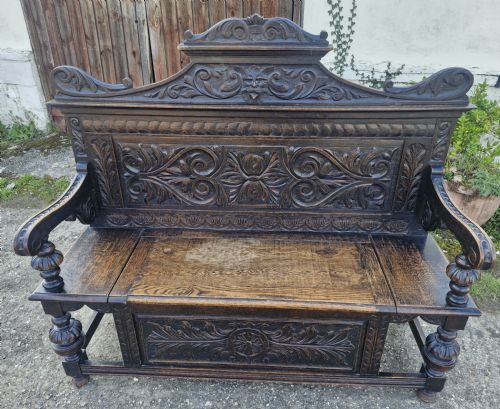


Late Victorian Wooden Box
A late victorian wooden box brings functional craft into daily life, offering storage shaped by nineteenth century utility and decorative flair.
Late Victorian Wooden Box
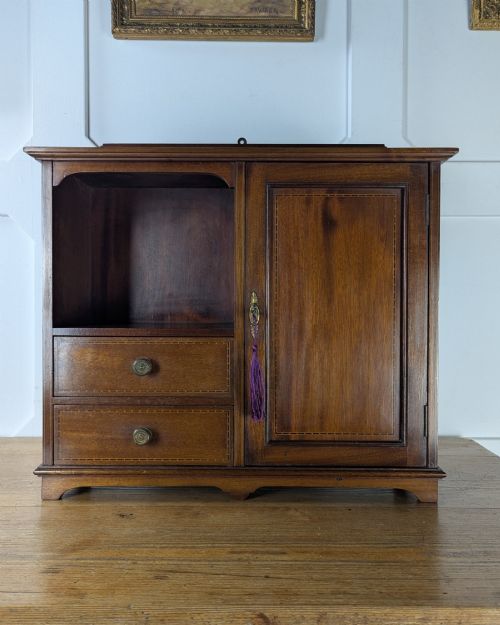
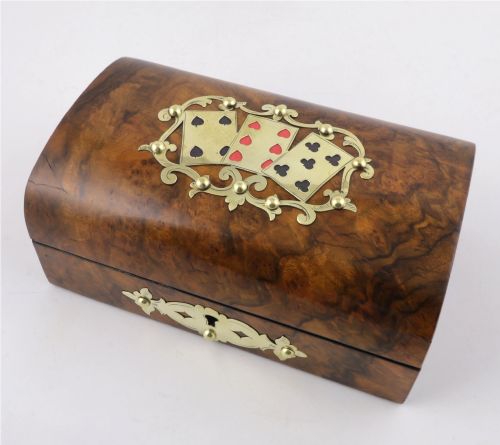
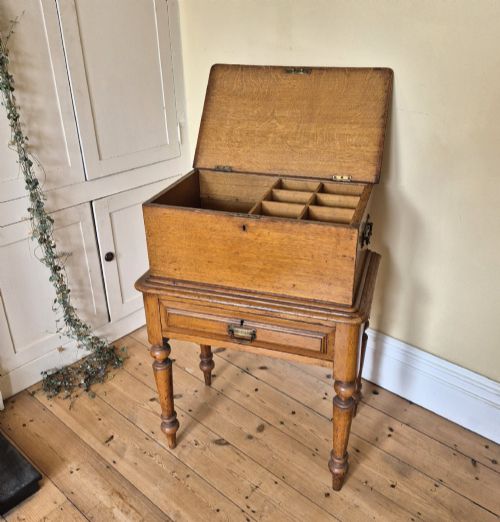
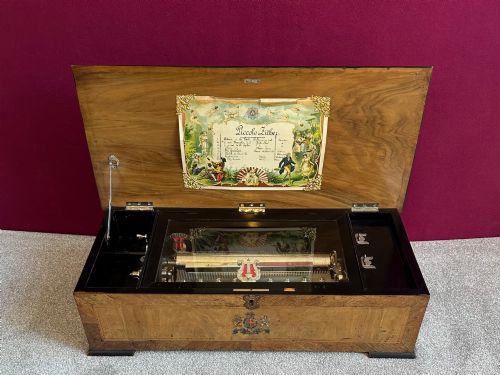
A late victorian wooden box encompasses a diverse array of everyday containers, including music boxes, writing slopes, jewellery boxes, and stationery cabinets spanning the late nineteenth century. These pieces reflect the period's demand for orderly desktop accessories and household storage, drawing on Victorian and Georgian traditions.
Buyers encountering this phrase find items ranging from utilitarian pine travelling trunks and coal boxes to decorative inlaid satinwood and burr walnut caskets. Originating in domestic, travel, and institutional contexts, the selection bridges plain country craftsmanship with refined parlor pieces.
Materials and Technique
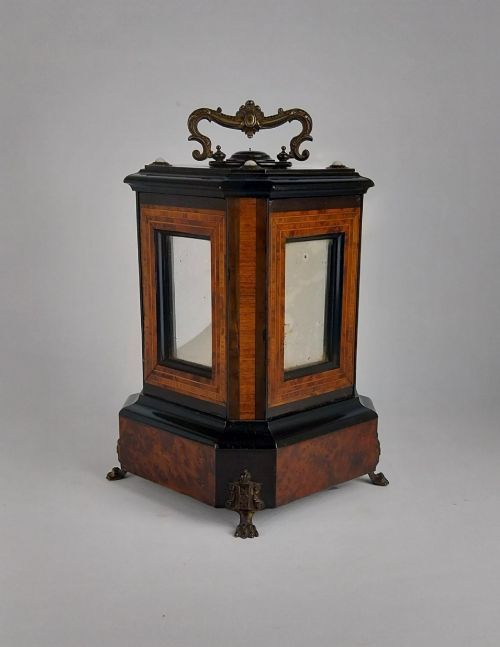
Construction relies heavily on traditional hardwoods and softwoods such as mahogany, oak, pine, and walnut, frequently accented with exotic veneers like satinwood, burr walnut, and coromandel. Cabinetmakers employed solid timber alongside decorative marquetry and inlay to create durable exterior shells.
Metal mounts in brass and iron reinforce corners, secure locking lids, and support handles, while interior compartments often feature velvet linings, secret drawers, or hand-painted details. Hand-woven elements and carved oak surfaces further demonstrate the diverse technical approaches used by makers of the period.
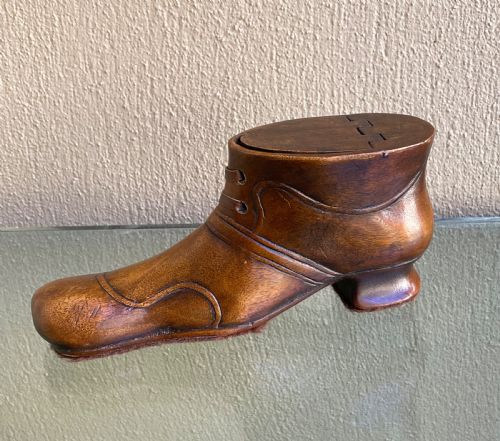
One extraordinary late Victorian offering pairs a wooden box with a snuff shoe carved from treen.
Judging Quality
Quality rests upon the selection of timber, the precision of joinery, and the integrity of decorative inlays or brass mountings. Finer examples display carefully matched grain patterns, tight dovetail joints, and well-fitted internal compartments that operate smoothly.
The degree of hand craftsmanship and originality in hardware, keys, and interior fittings distinguishes standard utilitarian items from exceptional pieces designed for display in principal rooms.
Freemans of Norwich·Liberty·Winsor and Newton·Hukin and Heath·F H Ayres
The Late Victorian Wooden Box Glossary
- Writing slope
- A portable slant-topped desk opening to reveal a velvet-lined writing surface, inkwell compartments, and hidden document drawers. These slope-front boxes were essential for correspondence during the nineteenth century.
- Tantalus
- A locking wooden frame holding glass decounters securely in view while preventing unauthorized access to the contents. The mechanism typically requires unlocking the top bar to release the bottles.
- Tramp art
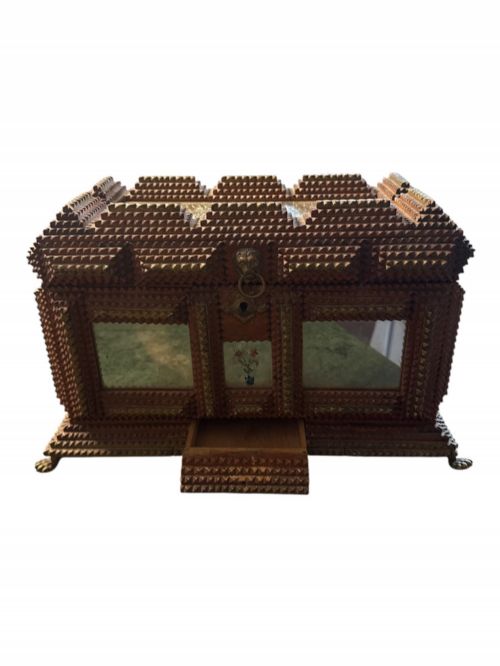
- Folk sculpture created by carving notched geometric patterns into scrap wood, box lids, and discarded packaging. Pieces display repetitive chip-carving techniques executed with simple pocket knives.
- Treen
- Small handmade wooden household objects and utilitarian items produced before the advent of modern plastics. The category encompasses snuff boxes, turned vessels, and desk accessories valued for their patinated surfaces.
Late Victorian Wooden Box: Frequently Asked Questions
What were these wooden boxes used for?
These boxes served specific organizational and domestic duties, from storing correspondence in writing slopes to securing cards, jewellery, or tobacco. Many items were tailored to desk work, travel, or parlor entertainment.
Others fulfilled utilitarian household roles, such as containing coal by the fireplace or dispensing tickets in railway offices, reflecting the structured habits of the period.
How do I care for antique wood?
Maintain wooden surfaces by keeping them away from direct sunlight and sudden temperature fluctuations that cause timber to warp or split. Dust regularly with a dry cloth and apply occasional high-quality beeswax to nourish the grain.
Avoid liquid polishes containing silicones, which can damage aged finishes and accumulate in carved details or intricate brass inlays over time.
Are music boxes still functional?
Many surviving music boxes retain working internal pinned cylinders and comb mechanisms, though some require professional restoration to play correctly. The condition of the comb teeth and spring assembly dictates whether a piece produces clear melodies.
Examine movement descriptions closely and test the winding mechanism gently to ensure the delicate acoustic components remain intact and operational.