
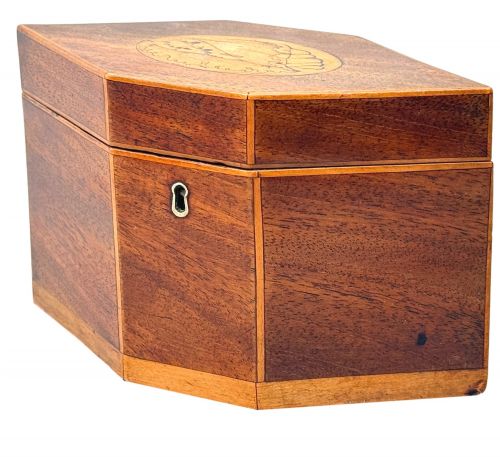


Shell Inlay Wooden Box
These shell inlay wooden box examples combine timber and shell in functional containers made for tea, trinkets and letters.
Shell Inlay Wooden Box
A shell inlay wooden box is a container formed from timber and decorated with shell elements, found in various utilitarian and decorative forms. The pieces available include tea caddies, candle boxes, trinket boxes, decanter boxes and stationery cabinets.
The examples originate from several historical periods including the Georgian era, the eighteenth century, the Victorian era, the Regency period and the Edwardian era. Styles span Georgian, George III, Sheraton Revival, French Napoleon III, Chinese Export and Middle Eastern designs.
Buyers frequently encounter tea caddies among these items, alongside decorative boxes and storage cases. Their primary purpose historically was the safe storage of valuable commodities like tea leaves, documents or personal keepsakes.
Materials and construction
The construction relies on hardwoods such as mahogany, rosewood, satinwood, calamander and boxwood as the primary structural bodies. Cabinet makers shaped these timbers into hexagonal, bow-fronted and rectangular forms.
Makers integrated shell elements, bone, brass and tortoiseshell into the timber surfaces using intricate inlay techniques. These natural materials provide contrast against the grain and colour of the underlying wood.
The selection includes items made from satinwood, mahogany, rosewood, tortoiseshell, bone and brass across Georgian, Victorian and Regency periods.
What distinguishes finer examples
Finer pieces demonstrate greater precision in the fitting of the shell and timber elements, with smooth junctions between disparate materials. The complexity of the inlay design, such as butterfly motifs or geometric borders, also indicates higher craftsmanship.
The choice of primary timber affects the character of the object, with figured satinwood or rich rosewood commanding attention alongside well-executed shell work. Structural integrity and the preservation of original fitted interiors separate superior items from altered or heavily restored ones.
The Shell Inlay Wooden Box Glossary
- Tea caddy
- A box designed specifically for storing loose tea leaves, often featuring internal compartments or mixing bowls. These containers were kept locked in formal rooms during periods when tea was an expensive commodity.
- Inlay
- A decorative technique where pieces of a contrasting material are embedded into depressions flush with the surface of the base timber. Shell, bone and brass were frequently utilised for this purpose.
- Satinwood
- A durable hardwood with a natural golden sheen and smooth grain, highly favoured by cabinet makers during the Georgian and Sheraton periods. It provided a pale backdrop that contrasted sharply with darker inlay materials.
- Tortoiseshell
- The mottled brown and amber keratin shell of certain turtle species, applied as thin veneers to wooden box foundations. It appears on select Georgian and Regency pieces.
- Calamander
- An exotic hardwood featuring dark brown stripes over a lighter fawn-coloured background. This dense timber was selected for luxury boxes and decorative items.
Shell Inlay Wooden Box: Frequently Asked Questions
What were these boxes used for originally?
These containers served practical domestic functions such as holding dry tea leaves, keeping candles, storing documents or protecting personal trinkets and snuff.
Because tea and spices were costly commodities, containers designed to hold them were frequently fitted with locks and internal compartments to restrict access.
How do I identify a Georgian box?
Georgian pieces typically display characteristic timber choices like mahogany, rosewood or satinwood combined with restrained classical proportions and fine stringing or shell inlay.
Examining the construction methods, such as hand-cut dovetails and older fixings, helps distinguish these eighteenth and early nineteenth-century items from later reproductions.
What is satinwood?
Satinwood is a dense, yellow-toned hardwood known for its chatoyant grain that catches the light like satin fabric.
It became popular in high-end cabinet making during the late eighteenth century, particularly within Sheraton and Georgian designs.
Are these boxes fragile?
While constructed from durable hardwoods, the thin shell inlays and veneers require stable environmental conditions to prevent lifting or cracking.
Keeping them away from direct heat sources and excessive moisture protects the delicate natural materials used in their decoration.
How should I care for a wooden box with shell inlay?
Maintenance involves dusting with a soft, dry cloth and avoiding modern liquid polishes that can seep under loose veneers or shell pieces.
Maintaining stable room humidity prevents the timber from expanding and contracting, which protects the integrity of the inlay work.