
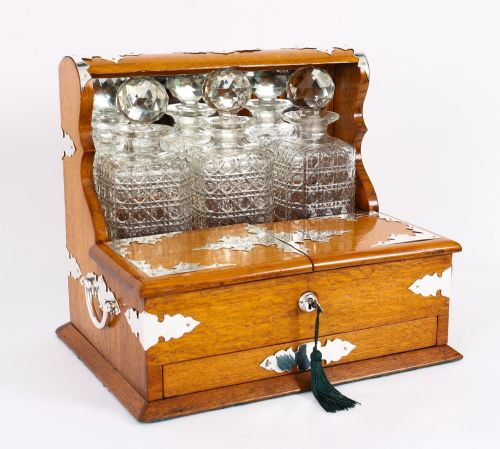
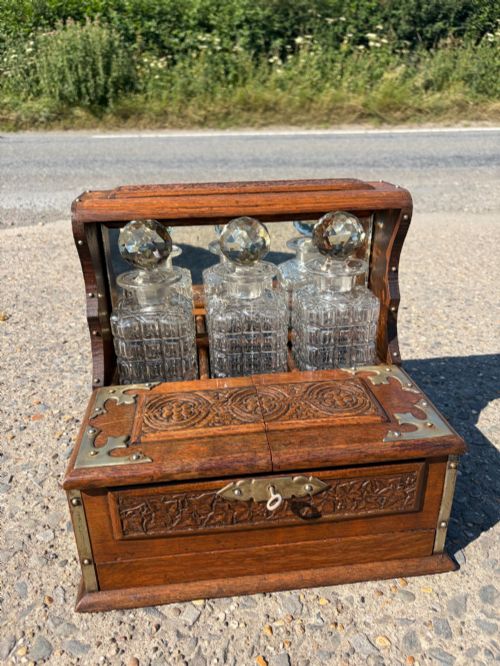
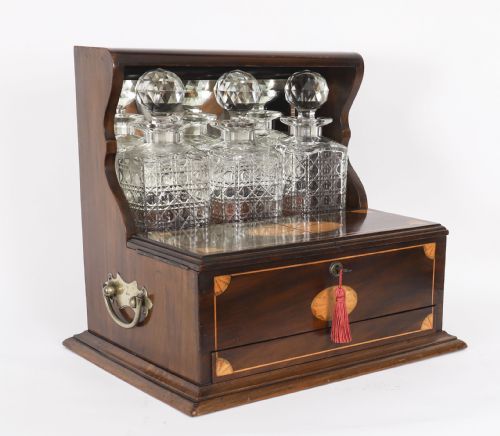
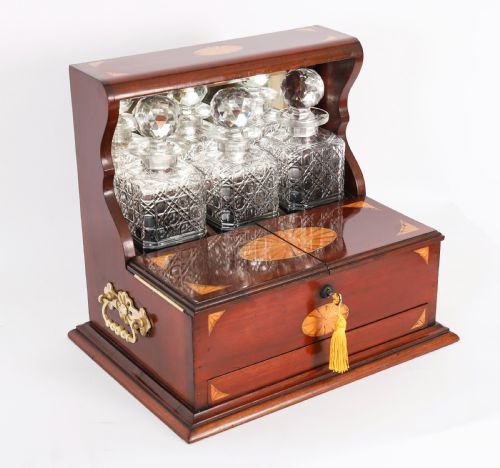


Victorian Decanter Chest
These Victorian decanter chest pieces house fine crystal bottles securely in fitted timber housings designed for formal hospitality.
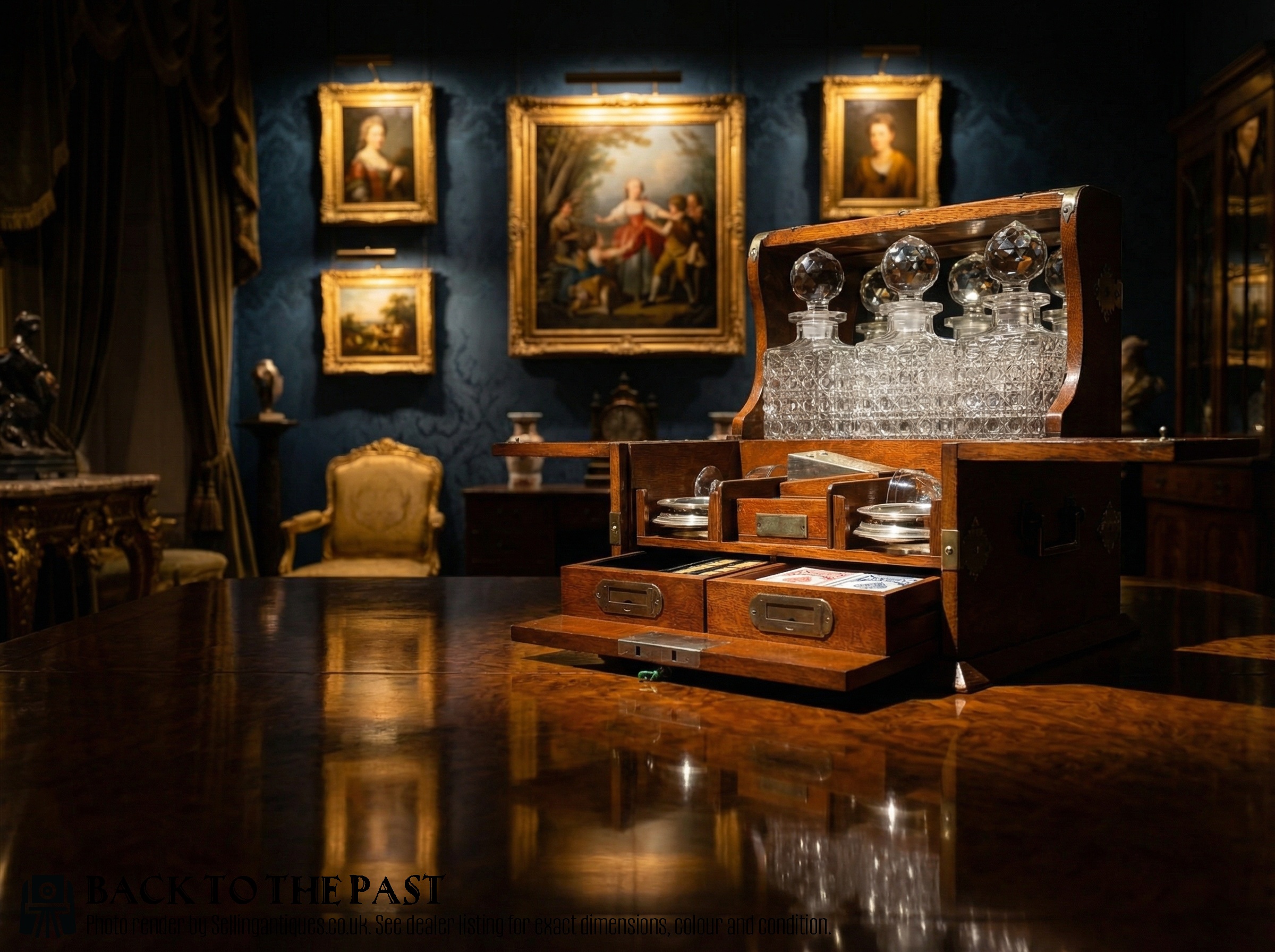
Victorian Decanter Chest
A victorian decanter chest combines secure storage for glass bottles with integrated compartments for games and drinking accessories.
The versions most commonly found here span the late nineteenth century and employ robust timbers to protect internal glassware.
Compositions range from single-bottle oak cases to elaborate three-decanter tantalus boxes fitted with brass mounts and locking mechanisms.
Materials and construction methods
Cabinetmakers utilised dense hardwoods such as oak, mahogany, walnut, coromandel, and satinwood to build rigid outer shells.
Internal partitions and bottle holders were shaped specifically to cradle cut crystal and glass decanters without movement.
Brass mountings, locks, stringing, and marquetry added structural reinforcement and decorative contrast to the timber surfaces.
Certain tantalus sets include ingenious secret drawers that spring open only when hidden wooden latches are pressed simultaneously.
Factors that separate examples
The calibre of cabinetmaking is visible in the precision of internal joinery and the complexity of integrated games compendiums.
The choice of timber veneers, delicate marquetry work, and substantial brass hardware distinguishes standard boxes from exhibition pieces.
The completeness and original condition of the cut crystal decanters and matching glassware dictate the overall integrity of the piece.
The Victorian Decanter Chest Glossary
- Tantalus
- A locking drink cabinet that displays decanters while preventing access until the mechanism is unlocked with a key. This device secured expensive spirits from unauthorised household staff.
- Decanter box
- A fitted wooden case designed to hold spirit bottles and sometimes glassware within lined compartments. These boxes often feature brass carrying handles.
- Games compendium
- A multi-use box incorporating spaces for card playing, boards, and counters alongside drinking vessels. Such items provided entertainment in nineteenth century drawing rooms.
- Marquetry
- Decorative woodwork where different coloured veneers are fitted into a design to form intricate patterns on the exterior. This technique highlights the skill of the cabinetmaker.
Victorian Decanter Chest: Frequently Asked Questions
What is a decanter chest?
A decanter chest is a secure wooden box designed to hold spirit bottles, often featuring fitted compartments for glasses and games.
These pieces were kept in reception rooms for entertaining guests in a formal domestic setting.
How do tantalus mechanisms work?
A tantalus holds decanter stoppers firmly in place beneath a metal bar when locked, preventing the bottles from being removed.
Only when a key is turned can the locking bar lift to release the crystal bottles.
What woods were used?
Cabinetmakers employed durable native and exotic timbers including oak, mahogany, walnut, and coromandel.
Inlays of satinwood and brass stringing frequently decorated the exterior surfaces.
Were games included?
Many nineteenth century drinks cabinets doubled as games compendiums containing playing cards, boards, and gaming pieces.
This dual function maximised the utility of the furniture piece during evening gatherings.
How do I date these chests?
Dating relies on stylistic clues, lock types, wood choices, and construction methods associated with the Victorian and Edwardian periods.
Details such as brass mountings and marquetry styles help narrow down the decade of manufacture.