





Decorative Wooden Trinket Box
A decorative wooden trinket box holds small keepsakes, combining practical storage with craftsmanship across centuries of domestic design.
Decorative Wooden Trinket Box
A decorative wooden trinket box encompasses various small receptacles designed to house personal items, letters, or jewellery. These pieces emerge from periods spanning the seventeenth century through the Edwardian era.
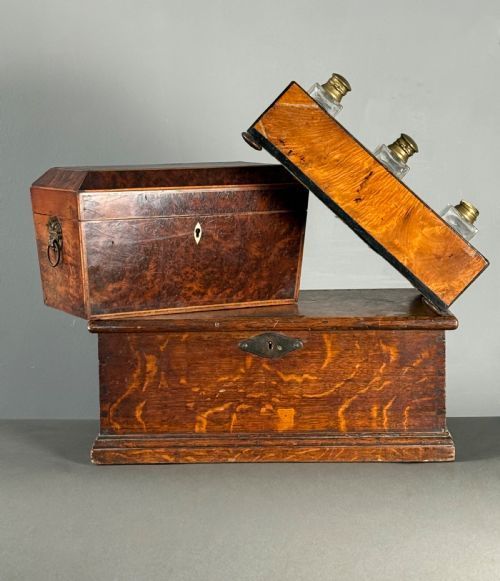
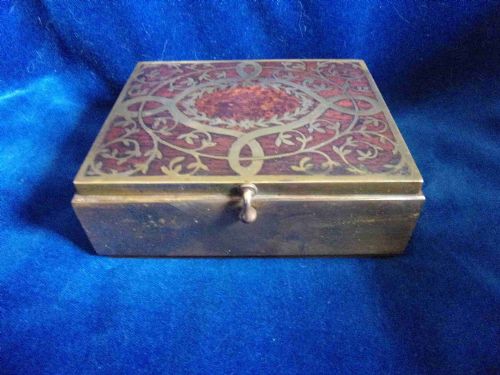
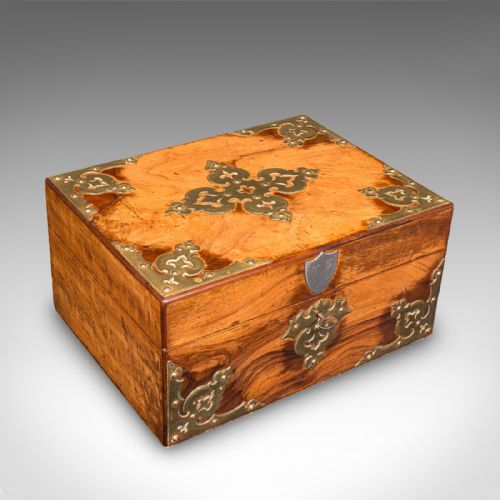
The selection frequently includes tea caddies, work boxes, and specialised caskets fashioned in walnut, rosewood, and burr timbers. Examples range from simple nineteenth-century tunbridge ware to elaborate regency rosewood boxes featuring brass inlay.
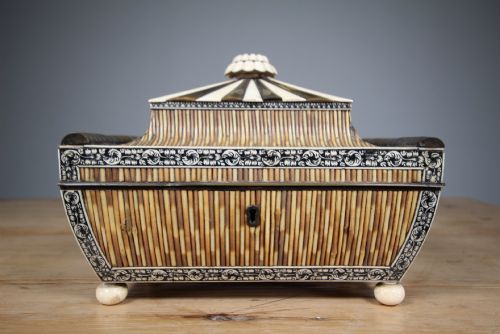
Buyers encounter distinct regional styles, including Anglo-Indian ebony pieces, French hand-painted table boxes, and Black Forest carved items. Each variant demonstrates the prevailing tastes of its respective decade, from Georgian chinoiserie to arts and crafts simplicity.
Materials and construction
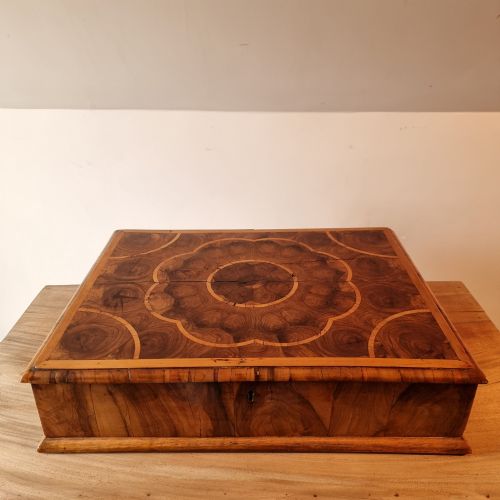
Cabinetmakers utilised dense hardwoods such as walnut, rosewood, mahogany, and coromandel as the primary structure for these vessels. Many surfaces feature burr veneers, laburnum oyster pieces, or parquetry patterns arranged to highlight natural grain variations.
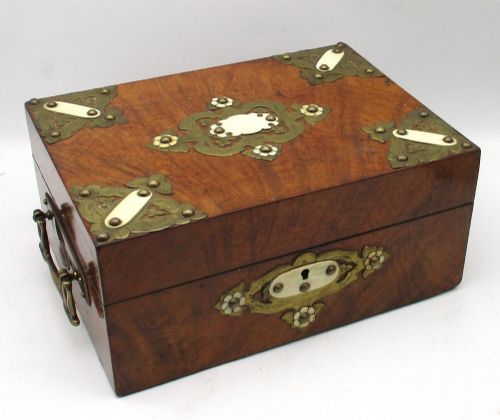
Decorative embellishments often incorporate contrasting materials including brass stringing, mother of pearl inlay, boxwood, and tortoiseshell. Specialised techniques such as penwork, lacquer, and intricate micro-mosaic tunbridge ware define the surface ornamentation.
Decorative Wooden Trinket Box Retail Price Guide 2026
Typical asking prices for decorative wooden trinket box among the pieces listed under this phrase on Sellingantiques today, from the lower quarter to the upper quarter. They describe what is for sale here now, not the wider market.
Some nineteenth-century makers cleverly disguised tea storage as literature by fashioning wooden boxes to resemble stacked leather-bound books.
Craftsmanship and preservation
Superior examples distinguish themselves through precision in joinery, symmetry of veneer alignment, and the crispness of hand-carved or inlaid details. The integration of original interior compartments, working locks, and undamaged decorative motifs elevates the standing of a piece.
The depth of colour in aged woods and the intact preservation of delicate elements, such as mother of pearl or bone accents, reflect the initial skill of the maker and subsequent care by owners.
Erhard and Sohne
The Decorative Wooden Trinket Box Glossary
- Tunbridge ware
- A form of woodwork characterised by tiny mosaic tiles made from different coloured woods to create pictorial designs. It originates from the Kent town of Tunbridge Wells during the nineteenth century.
- Tea caddy
- A container originally built to store loose tea leaves securely when tea was a costly commodity. These often feature internal lidded compartments and fine veneer work.
- Penwork
- A decorative technique using ink to draw intricate designs directly onto a wood surface before sealing it with a clear finish. Brighton chain pier boxes frequently display this detailed monochrome style.
- Parquetry
- A geometric mosaic of wood pieces used for decorative veneer on floors and furniture surfaces. Artisans arrange contrasting timber tones to form three-dimensional visual effects.
Decorative Wooden Trinket Box: Frequently Asked Questions
What were decorative wooden trinket boxes used for?
These boxes served as secure storage for personal valuables, correspondence, sewing implements, and tea leaves. Their interiors often included partitions and small trays to organise delicate items.
Over generations, they functioned as prominent tabletop accessories in drawing rooms and boudoirs, displaying the owner's taste and refinement to visitors.
How do I identify the age of a wooden box?
Dating relies on examining the timber species, construction methods, hardware types, and decorative styles. Georgian and Regency pieces frequently exhibit different veneer thickness and brass inlay patterns compared to later Victorian or Edwardian examples.
Interior linings, paper finishes, and lock mechanisms also provide chronological clues that help narrow down the period of manufacture.
Are these boxes suitable for daily use?
Many antique boxes remain robust enough to hold modern jewellery, small keepsakes, or desk accessories on a daily basis. Their internal compartments are well-suited for organising rings, cufflinks, and mementos.
Care should be taken to place them away from direct sunlight and extreme humidity fluctuations to protect historical wood finishes and delicate inlay work.
What is parquetry on a box?
Parquetry involves arranging small geometric blocks of coloured wood to create repeating patterns across the exterior surfaces. Cabinetmakers used this method to add visual texture and artistic merit without relying solely on carving.
This technique is frequently observed on nineteenth-century keepsake boxes and tea caddies, where precision cutting creates sharp angles and contrasts.