




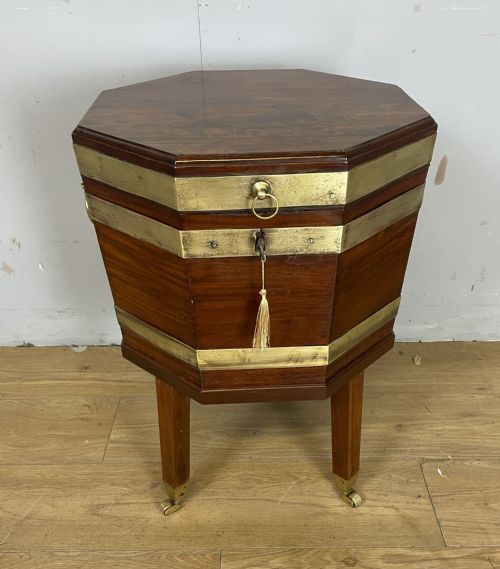
Mahogany Spirits Box
A mahogany spirits box protects and serves fine bottles, uniting timber and brass to hold decanters securely.
Mahogany Spirits Box
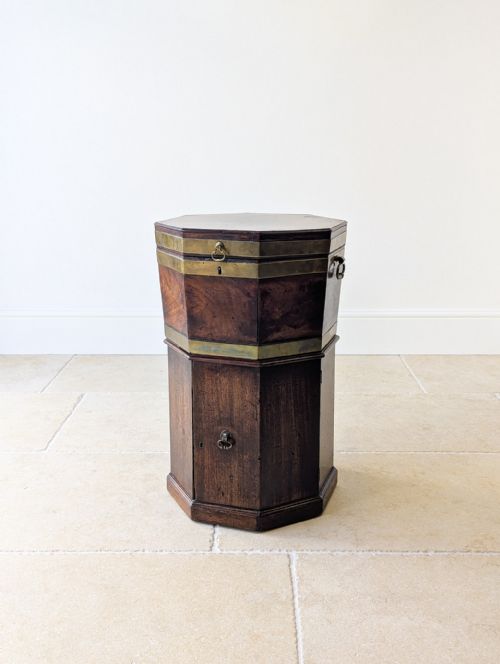
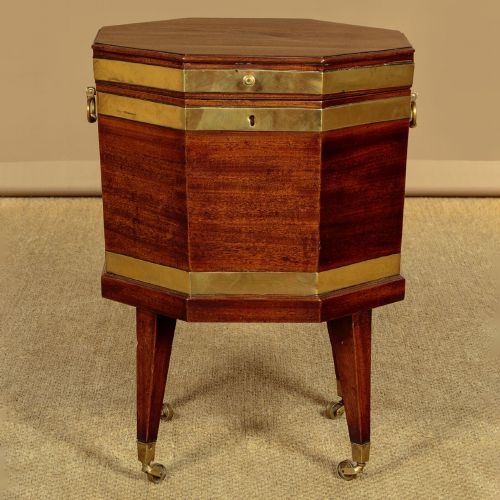
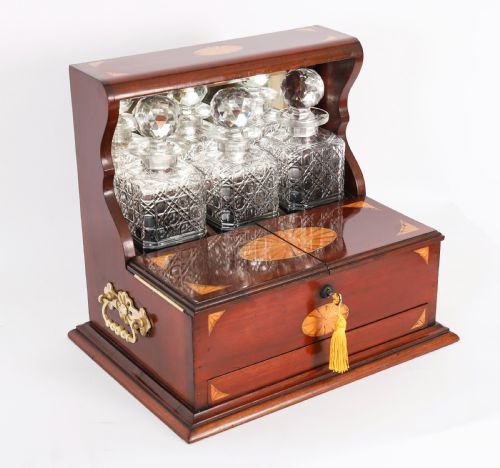
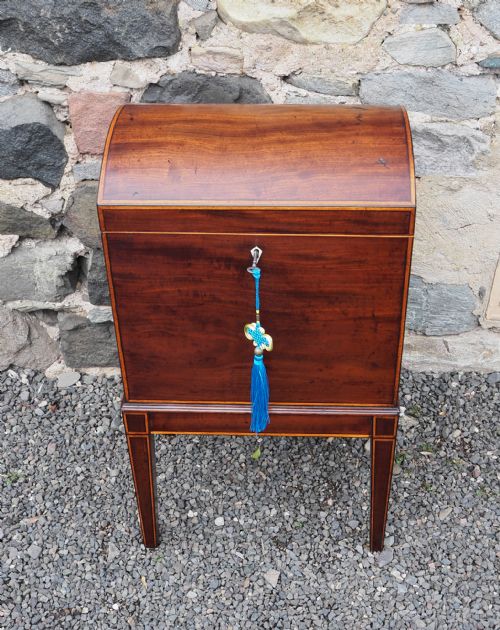
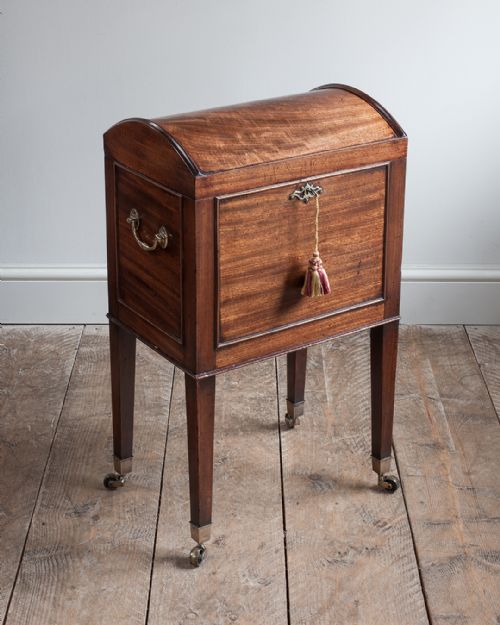
A mahogany spirits box encompasses cellarettes, tantaluses, wine coolers, and presentation cases designed for secure bottle storage. These containers appear across Georgian, Regency, Victorian, and Edwardian periods, taking forms from octagonal brass-bound boxes to games compendiums.
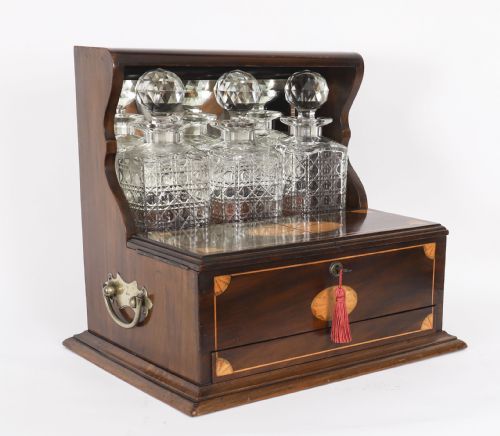
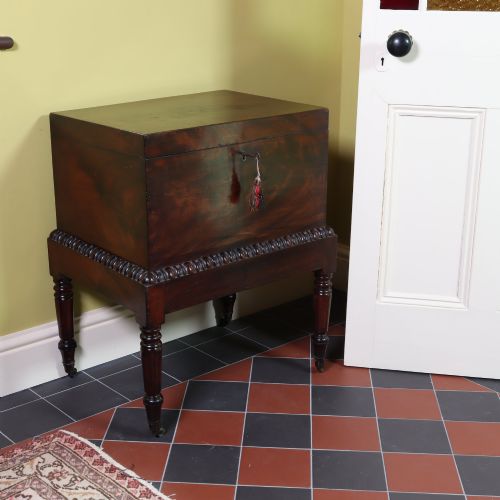
The versions most commonly met on this page date from the eighteenth and nineteenth centuries, often featuring flame mahogany veneers or boxwood inlay. Some examples combine bottle storage with games boards, while others house cut crystal decanters or scientific instruments.
Materials and construction
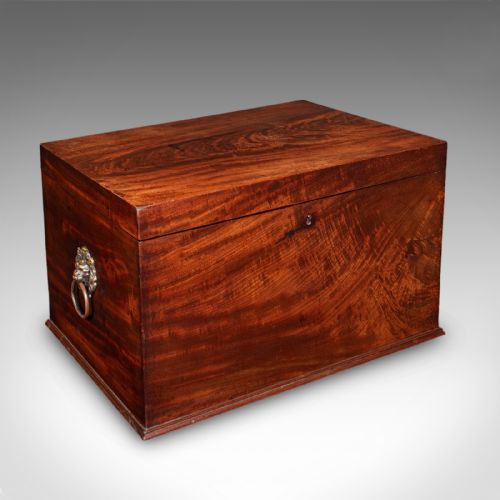
Cabinet makers constructed these vessels primarily in solid or veneered mahogany, frequently selecting flame grain patterns for visual depth. Satinwood and boxwood inlay provide contrasting borders and geometric detailing across lid surfaces and panel fronts.
Brass fittings such as carrying handles, corner brackets, and binding straps reinforce the timber structure for travel or sideboard use. Fitted interiors often incorporate lead crystal or cut crystal decanters, sometimes accompanied by mirror glass panels.
Listings feature mahogany spirits boxes spanning the Georgian, Regency, Victorian, and Edwardian eras, utilising brass, glass, and satinwood inlay.
Distinctions in quality
Quality depends upon the selection of timber and the precision of the joinery, particularly in the alignment of brass bindings and inlay work. Superior examples display carefully matched grain patterns across all visible surfaces and retain their original interior dividers or glassware.
The sophistication of the locking mechanism and the weight of the cast brass hardware separate standard utility boxes from high-status presentation pieces. Finer iterations integrate complex combination locks or multi-functional compartments for games and glassware.
L Casella and Co·Cooke Troughton and Simms·Gillingtons
The Mahogany Spirits Box Glossary
- Cellarette
- A lockable container designed to hold wine bottles or decanters near the dining table. These pieces often feature lead linings or fitted interior partitions.
- Tantalus
- A locking drink cabinet that displays decanters while preventing unauthorized access to the contents. The metal security bar locks the stoppers in place until a key is turned.
- Flame mahogany
- A veneer cut from the fork of the mahogany tree where the branch meets the trunk. This produces a distinctive flickering flame pattern highly prized in cabinet making.
- Boxwood inlay
- Narrow strips of pale boxwood inserted into grooves within the darker mahogany surface. This technique creates geometric borders and contrasting decorative motifs.
- Cut crystal
- Glassware decorated with deep geometric facets cut by hand on a rotating wheel. These pieces catch the light and add considerable weight to the fitted interior.
Mahogany Spirits Box: Frequently Asked Questions
What is a mahogany spirits box?
A mahogany spirits box is a secure wooden container built to store wine bottles, decanters, and glassware safely. These vessels range from simple tabletop presentation cases to heavy brass-bound cellarettes.
Cabinet makers constructed them to protect valuable spirits while keeping them accessible for entertaining guests in domestic or dining settings.
How were these boxes used?
Owners kept fine wines, liqueurs, and spirits inside to guard them against domestic staff or uninvited guests. Many designs sat beneath dining tables or on sideboards ready for the evening meal.
Some examples combined bottle storage with games compartments, serving multiple social functions during the Georgian and Victorian eras.
How do I identify a Georgian box?
Georgian pieces typically display solid mahogany or rich flame veneers, often complemented by heavy cast brass carrying handles and corner brackets. Their proportions remain classical and understated, focusing on timber grain rather than heavy decoration.
Later Victorian and Edwardian variations introduced more elaborate satinwood inlay, mirror glass, and complex locking tantalus mechanisms.
Can I use a tantalus for modern bottles?
Many antique tantaluses accommodate standard spirit bottles, though shoulder heights and base widths vary considerably across different periods. Decanters supplied with the box fit the internal partitions precisely.
Checking the interior dimensions ensures that contemporary square or rounded bottles will slide smoothly into the fitted base frames.