



Late Victorian Porcelain Dish
These late victorian porcelain dish examples offer hand-painted surfaces and gilt detailing, bringing period ceramic design directly to the table.
Late Victorian Porcelain Dish
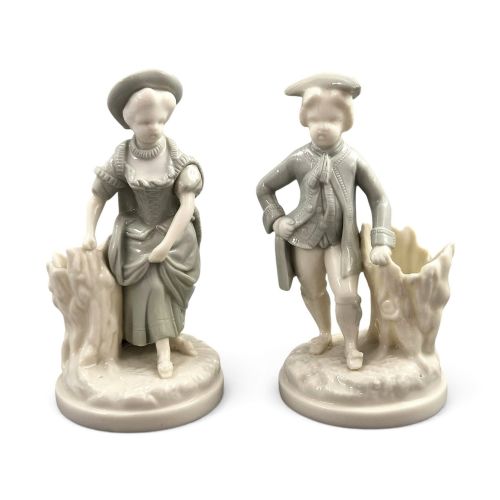
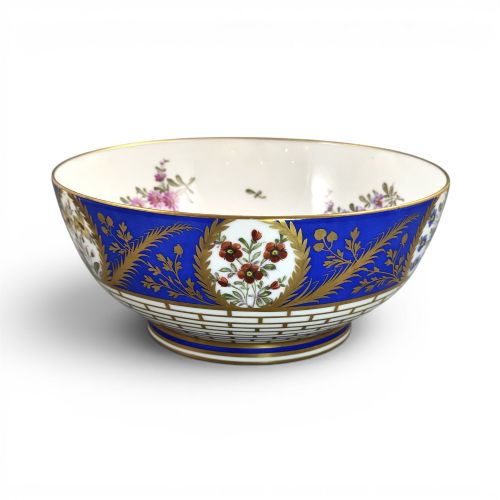
When you search for a late victorian porcelain dish, you are looking at ceramic vessels created during the final decades of the nineteenth century and around nineteen hundred. The pieces appearing here span serving trays, cabinet plates, decorative bowls, and salt cellars.
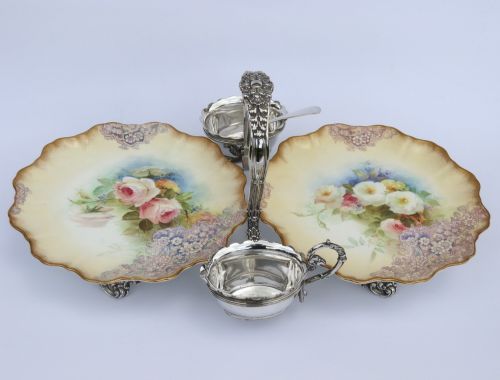
The version most commonly met on this page is the decorative bowl or hand-painted cabinet plate, often bearing floral motifs, landscape views, or exotic bird decoration in the manner of established European factories.
Makers and origins in this group cross English manufactories like Royal Worcester, Coalport, Doulton Burslem, Carlton Ware, and Aynsley, alongside continental workshops and Japanese Imari export pieces.
Materials and construction
Ceramic bodies form the foundation of these objects, finished with glaze and often enriched with hand-painted enamel colours. Artisans applied gilt and gold leaf to highlight rims, handles, and raised relief moulding.
Certain serving sets incorporate silver plate mounts alongside glazed ceramic plates, combining metalwork and fired clay within a single service.
Object forms span cabinet plates, decorative bowls, salt cellars, dessert sets, serving trays, and comports.
Distinctions in execution
The standard of hand-painted brushwork defines the upper tier of these pieces, particularly where detailed landscapes, birds, or intricate Japanese Imari patterns are executed with precision. Simpler floral prints or standard transfer-printed grounds occupy a different tier.
The application of gilding and the crispness of reticulated or pierced ceramic work also separate standard production wares from the finer cabinet pieces.
Royal Worcester·Walker and Hall·Doulton Burslem·Meissen·Coalport·Carlton Ware·Aynsley
The Late Victorian Porcelain Dish Glossary
- Gilt
- A thin layer of gold applied to the ceramic surface to decorate edges and borders.
- Reticulated
- Openwork or pierced patterns cut into the wet clay before firing to create a lace-like border.
- Imari
- A style of Japanese export porcelain featuring deep blue, iron red, and gold, widely adopted by European makers.
- Comport
- A raised dish or bowl used for serving fruit or sweetmeats on a dining table.
- Enamel
- Opaque glass-like material fused to the ceramic body through firing to add coloured decoration.
Late Victorian Porcelain Dish: Frequently Asked Questions
How were salt cellars used?
Figural salts sat on the dining table to hold small portions of loose salt for individual diners.
Servants placed them near each place setting during formal meals.
What is a cabinet plate?
Cabinet plates were decorative items meant for display in glass-fronted furniture rather than for daily dining.
Their hand-painted scenes and gilt borders were preserved away from the dining table.
How do I identify Imari pieces?
Imari ceramics typically display a distinct palette of cobalt blue and iron red, frequently highlighted with gold leaf.
Japanese examples share aesthetic traits with later European revival interpretations.
Where were these ceramics made?
The pieces originate from English potteries, continental European kilns, and Japanese export workshops.
Factories in Staffordshire and Worcester produced many of the domestic serving forms.