



Ormolu Mounted Tazza
An ormolu mounted tazza brings French nineteenth-century grandeur to a table through cast gilt metal paired with porcelain, glass, or stone.
Ormolu Mounted Tazza
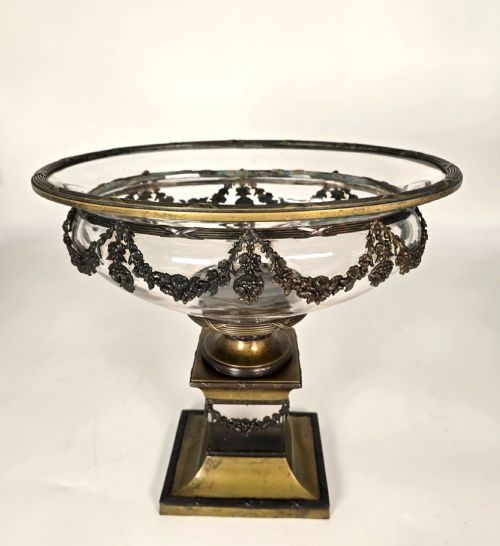
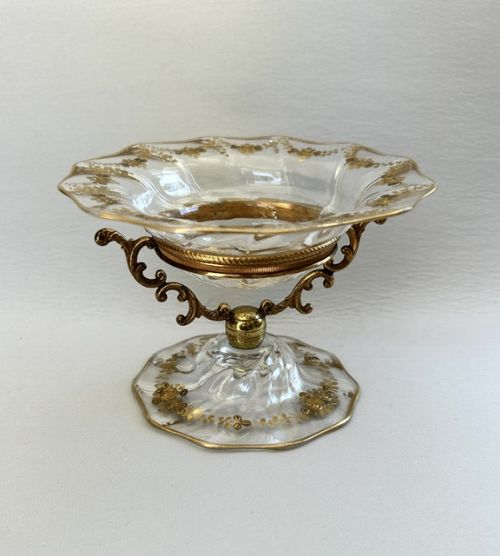
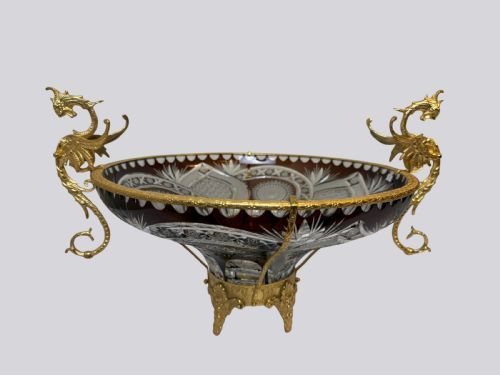
When you search for an ormolu mounted tazza, you are looking at elevated decorative dishes and centrepieces designed for display during the nineteenth century. These ornamental vessels combine a central bowl, dish, or comport in porcelain, glass, green onyx, or marble with cast and gilded metal mounts.
The versions you are most likely to meet on this page hail from nineteenth-century France, spanning the Rococo Revival, Second Empire, Belle Epoque, and Empire styles. They appear as comports, centrepiece bowls, and decorative dishes supported by elaborate metal pedestals and bases.
Makers and manufacturers adopted historical French idioms, producing Sevres style porcelain dishes alongside coloured glass and bronze pedestals. Such pieces served as dramatic focal points for dining tables and cabinets, functioning purely as decorative objects rather than utility ware.
How they were made
The construction of these pieces relies on the union of heavy cast metals with fragile central vessels of glass, porcelain, or stone. Gilt bronze and ormolu form the structural mounts, handles, and bases, often finished with champlevé enamel detailing.
Potters and glassmakers shaped the central bowls and dishes, frequently in the Sevres style, which were then fitted precisely into metal mountings secured by screws or pins. Artisans chased the cast bronze surfaces by hand to sharpen the leaf scrolls and floral motifs before applying the final gilding.
Grand Tour travellers returned with these heavy bronze and marble tazzas, likely regretting the luggage weight by the second coaching stop.
What varies in quality
The distinction between ordinary and exceptional pieces lies in the crispness of the metal chasing and the quality of the materials used in the bowl. Finer examples display deeply carved and meticulously finished bronze mounts where every leaf and scroll remains sharp, rather than soft casts that blur the detail.
The integration of the mount to the porcelain, glass, or stone dictates the overall success of the object. Superior items feature mounts that follow the exact contours of the vessel without gaps, using high-grade porcelain painted with careful hand-brushwork or rich, heavy glass and genuine green onyx.
Louis Pierre Malpass
The Ormolu Mounted Tazza Glossary
- Ormolu
- A technique of applying finely ground high-carat gold to an object of bronze through mercury amalgamation or electroplating. This finish gives the metal mounts their characteristic warm, golden gleam.
- Tazza
- A shallow bowl or dish mounted on a stem and foot, used primarily for display or serving fruit. The form descends from classical antiquity and was revived during the nineteenth century.
- Champlevé
- An enamelling technique where troughs or cells are hollowed out in the surface of a metal object and filled with vitreous enamel powder before firing. It provides vibrant colour alongside the gilt bronze.
- Comport
- A standing dish or bowl used on a table for fruit or sweetmeats. In nineteenth-century French pieces, it frequently incorporates porcelain bowls with elaborate metal bases.
- Japonisme
- A nineteenth-century artistic style reflecting the strong influence of Japanese art on European design. Pieces in this idiom adopt asymmetrical compositions and Eastern motifs.
Ormolu Mounted Tazza: Frequently Asked Questions
What is an ormolu mounted tazza?
An ormolu mounted tazza is a decorative raised dish or bowl featuring cast gilt-metal mounts created in nineteenth-century France. These pieces combine porcelain, glass, or stone vessels with ornate bronze pedestals.
They were designed as centrepieces and decorative ornaments for grand interiors, showcasing elaborate revival styles from Rococo to Empire.
How were these tazzas used?
These decorative objects served primarily as visual centrepieces on dining tables, sideboards, or mantelpieces during the nineteenth century. They were ornamental display pieces rather than everyday tableware.
Their elevated stature and rich materials helped them catch the light and anchor the decorative scheme of a formal room.
How do I style a tazza at home?
Place a tazza in the centre of a large dining table, a sideboard, or atop a sturdy cabinet where its height and decorative mounts can be appreciated. Because the materials include delicate glass and porcelain, position them away from heavy traffic areas.
They function well on their own as sculptural objects or can hold seasonal decorative items like glass fruit.
How do I tell the periods apart?
Nineteenth-century pieces often declare their design lineage through distinct stylistic revivals such as Rococo curves, Second Empire symmetry, or classical Empire lines. Earlier nineteenth-century examples tend toward classical bronze and marble, while later decades introduce colourful champlevé enamel and Japonisme influences.
Examining the casting style and the nature of the porcelain or glass bodies helps place the object within the broader 1850 to 1920 timeframe.