

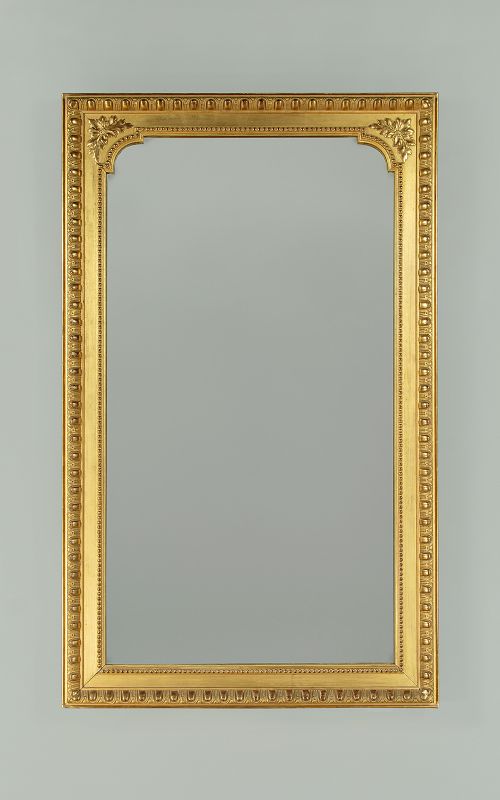


Late Victorian Overmantel
A late victorian overmantel anchors a room with its broad glass and carved frame, bringing height and light above a fireplace.
Late Victorian Overmantel
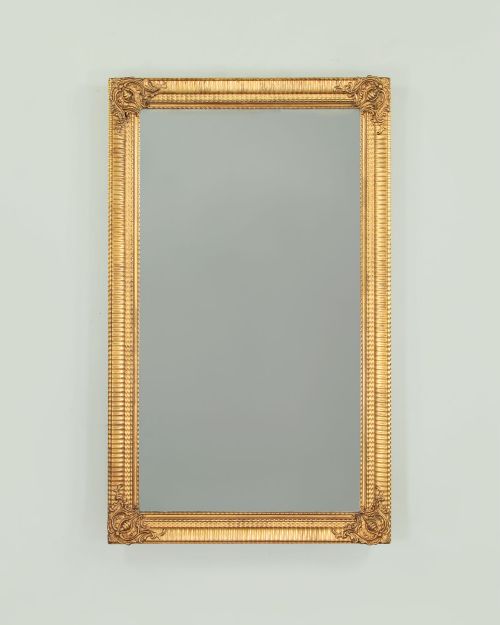
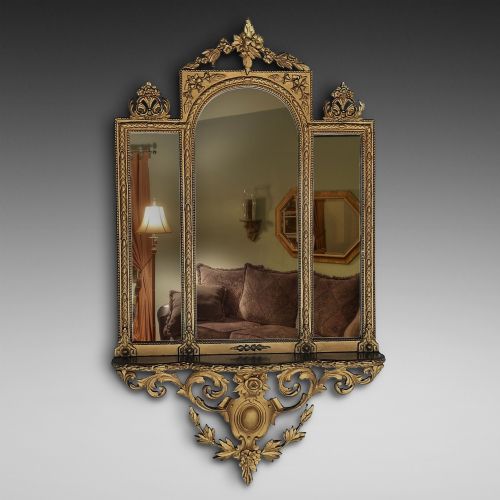
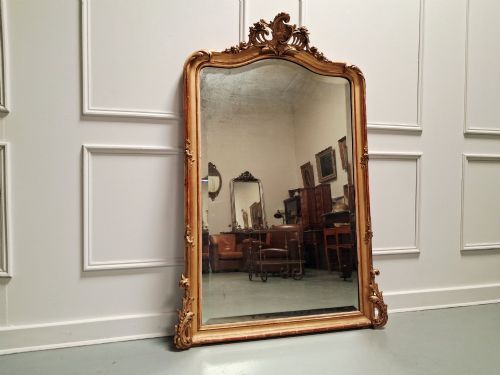
A late victorian overmantel is a large mirror designed to sit directly above a mantelpiece, drawing the eye upwards and reflecting daylight across the room. These pieces date from the late nineteenth century, spanning decades such as eighteen eighty and eighteen ninety, and appear in forms ranging from simple arched frames to elaborate tripartite designs with multiple glass plates.
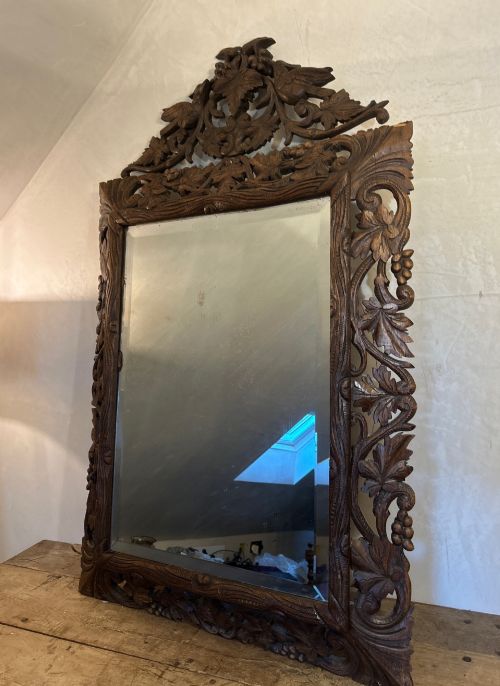
The versions most common here combine substantial timber structures with reflective surfaces, often styled in the French taste or the clean lines of the Aesthetic Movement. Alongside traditional giltwood, some examples utilise burr yew-wood, oak, mahogany, or ebonised timber highlighted with gold leaf or silver gilt.
Beyond standard wall mirrors and pier mirrors, these items sometimes incorporate display cabinets or console sections within their overall architectural build. Their proportions are typically broad and tall, suited to the generous ceiling heights of country houses and period properties.
How they were made
Makers built the heavy wooden frames of a late victorian overmantel using timbers such as oak, mahogany, walnut, and ebonised mahogany. Carved decoration and architectural mouldings were applied directly to the wood or modelled using composition ornaments.
Gilt finishes relied on layers of gesso applied over the timber base, which were then smoothed and covered in gold leaf or silver gilt. Many pieces featured mirror glass held within the frame by internal rebates, sometimes showing original silvered plates with foxing or later plate replacements.
Listings feature periods from eighteen seventy to nineteen ten, alongside materials including giltwood, gesso, burr yew-wood, and ebonised mahogany.
What varies in quality
The distinction between standard and superior pieces rests on the depth and crispness of the hand-carved detail within the frame. Fine examples exhibit sharply defined motifs, such as shell ornaments or botanical relief work, rather than soft or repetitive composition mouldings.
Materials and finish also dictate the tier of a piece, with genuine gold leaf and solid giltwood holding greater distinction than simple painted or gilded surfaces. Furthermore, the integrity of the original mirror plate and the weight of the underlying timber structure separate workshop standards.
The Late Victorian Overmantel Glossary
- Overmantel mirror
- A large mirror specifically proportioned to hang above a mantelpiece or fireplace. These pieces often feature wide frames designed to sit securely on a wooden shelf.
- Gesso
- A plaster-like mixture applied to wooden frames as a smooth base for gilding. It allows craftsmen to press or carve intricate decorative relief work before applying gold leaf.
- Giltwood
- Timber that has been coated in gold leaf or gold paint to give a bright metallic finish. It forms the primary visual surface on many nineteenth-century frames.
- Pier glass
- A tall, narrow mirror designed to hang on the wall between two windows. They share construction methods with overmantels but take narrower proportions.
- Ebonised
- Wood that has been chemically treated or stained dark black to imitate expensive ebony. It was particularly popular during the Aesthetic Movement.
- Composition
- A mixture of whiting, resin, glue and oil pressed into moulds to create cheap decorative ornaments. It was widely used alongside hand carving on Victorian frames.
Late Victorian Overmantel: Frequently Asked Questions
How do I hang a heavy overmantel?
These frames carry significant weight from their thick timber construction and large glass plates. They require secure fixings anchored directly into structural wall studs or masonry rather than standard plasterboard hooks.
Professional installation is recommended to ensure the weight distributes evenly across the lower mantel shelf and upper wall brackets.
Are the mirror plates original?
Many pieces retain their original silvered glass, which often exhibits minor age spots, foxing, or slight darkening at the edges. Other examples have received replacement plates during their history to restore a clearer reflection.
Examining the silvering from an angle reveals whether the glass shows the characteristic softening of nineteenth-century manufacture.
What defines the Aesthetic Movement style?
Aesthetic Movement pieces depart from heavy Victorian ornamentation in favour of cleaner lines, dark ebonised surfaces, and gilt highlights. They reflect a late nineteenth-century philosophy focused on artistic refinement and simplicity.
These designs often pair straightforward rectangular or arched frames with subtle detailing like incised geometric patterns.