
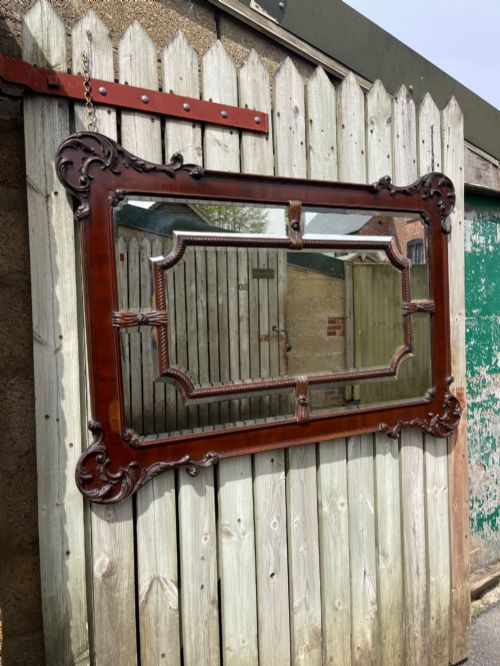


Victorian Landscape Wall Mirror
A victorian landscape wall mirror brings breadth and reflected light to a room, framing nineteenth-century interiors with giltwood and mahogany.
Victorian Landscape Wall Mirror
A victorian landscape wall mirror typically takes the form of a broad overmantle mirror designed to sit above a fireplace. These pieces stretch horizontally across a wall, expanding the visual space of a nineteenth-century room through expansive glass plates.
The selection on this page centres primarily on nineteenth-century English examples, spanning the Victorian era alongside revivals of Regency and Rococo styles. Overmantel mirrors and pier mirrors dominate the forms, reflecting the domestic architecture of country houses and period townhouses.
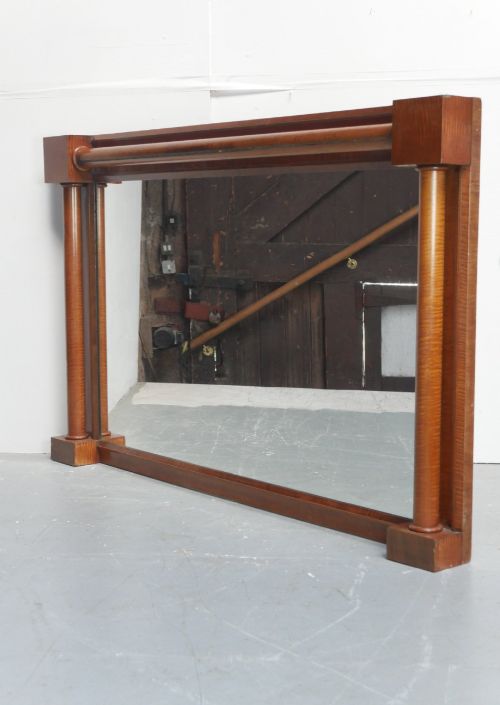
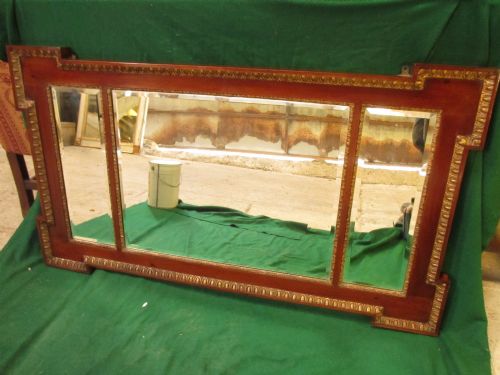
Makers and craftsmen of the period utilised timber frames of mahogany, walnut, burr walnut, birds eye maple, and pine, often finished with applied gesso and gold leaf. The glass itself ranges from single rectangular plates to triple plate configurations divided by slender mullions.
How they were made
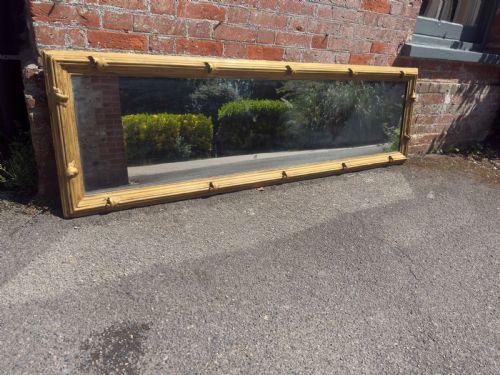
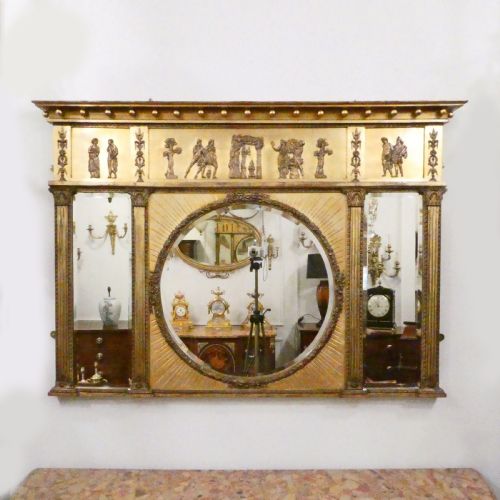
Carved wood and gesso gilt frames form the foundation of these mirrors, where intricate ornamentation is built up in plaster over a wooden base before receiving gold leaf. Timber frames in solid mahogany, walnut, and birds eye maple showcase the natural grain beneath polished surfaces.
Mirror glass of the period is set into sectional or multi-plate layouts, held securely within heavy wooden carcases designed to withstand the structural weight of the frame. Ebonised finishes and gilt highlights create strong tonal contrasts across the moulded surrounds.
Several mirrors include country house provenance, suggesting they spent generations reflecting family portraits and crackling hearths.
What varies in quality
The depth and crispness of the carved wood and gesso ornamentation separate standard joinery from superior workshop output. Sharply defined moulding and precise application of gold leaf indicate skilled handwork rather than mass production.
The choice of timber underpinnings, from plain pine to figured burr walnut and birds eye maple, dictates the inherent richness of the piece. Substantial framing timbers ensure structural stability across wide landscape formats.
The Victorian Landscape Wall Mirror Glossary
- Gesso
- A plaster mixture applied to wooden mirror frames to provide a smooth base for gilding. Craftsmen carved intricate surface details directly into this layered material before applying gold leaf.
- Giltwood
- Timber that has been coated with gold leaf or metallic paint to create a luminous surface. It forms the primary decorative finish for nineteenth-century wall and overmantel mirrors.
- Overmantel mirror
- A large horizontal mirror designed specifically to hang above a mantelpiece or fireplace. These pieces reflect ambient light and visually anchor the hearth within the room.
- Pier mirror
- A tall vertical or landscape mirror intended to hang on the wall space between two windows. They make efficient use of reflected daylight in traditional interiors.
- Triple plate mirror
- A mirror glass configuration divided into three distinct sections within a single frame. This layout distributes the reflection across multiple panels.
- Ebonised
- Wood treated with a dark stain or finish to imitate ebony. This technique provides a sharp contrast against gilt highlights on Victorian frames.
Victorian Landscape Wall Mirror: Frequently Asked Questions
How do I hang a heavy overmantel mirror?
These large frames require secure fixings into structural wall studs or masonry to support their substantial weight safely. Professional mirror fixings distribute the load evenly across the mounting brackets.
Position the frame at a height that complements the mantelpiece below while ensuring the reflected view captures natural light from the windows.
What is the difference between a pier mirror and an overmantel mirror?
Overmantel mirrors are built with broad horizontal proportions to sit above fireplaces, whereas pier mirrors traditionally occupy narrow wall spaces between architectural openings.
Both forms utilise nineteenth-century giltwood and mahogany construction methods to enhance the brightness of period rooms.
How do I clean antique mirror glass?
Wipe the glass gently with a soft microfibre cloth dampened slightly with distilled water or a mild vinegar solution. Avoid spraying liquids directly onto the glass edges where moisture can seep behind the silvering.
Take care around the gesso and gold leaf framing to prevent moisture damage to the historic surface finish.
Can I place these mirrors in a modern interior?
The generous proportions and reflective qualities of nineteenth-century landscape mirrors complement minimalist or contemporary spaces by adding texture and depth. Lean a large overmantel mirror against a living room wall for an informal, grounded display.
The warmth of mahogany and giltwood bridges traditional craftsmanship with modern design aesthetics.