


Late Victorian Lighting
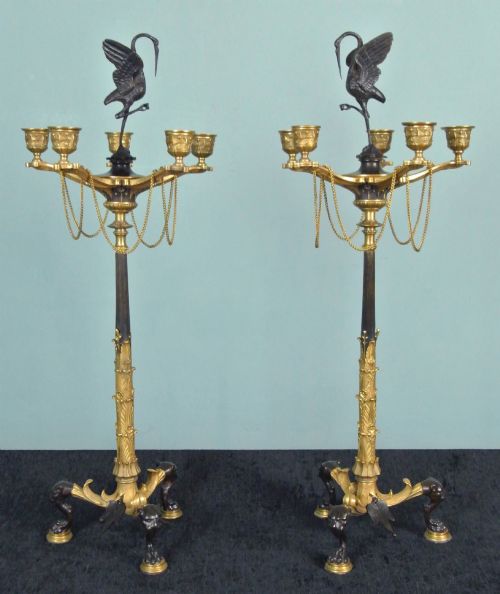
Late victorian lighting brings together brass, bronze, and glass to illuminate interiors through table lamps, oil lamps, and candelabra.
Late Victorian Lighting
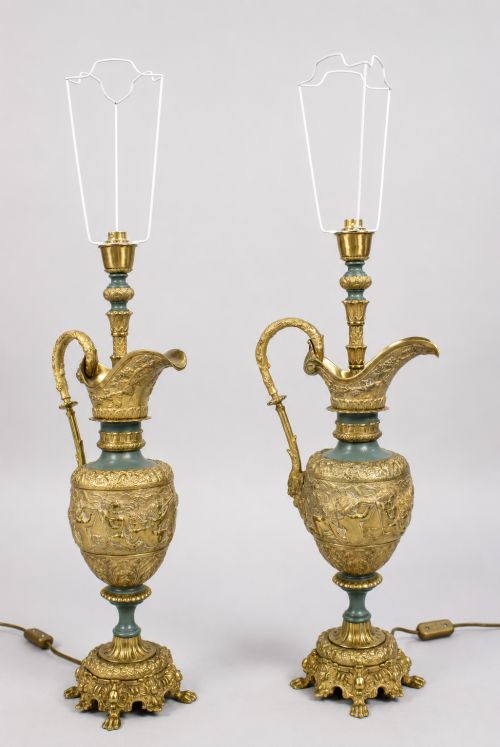
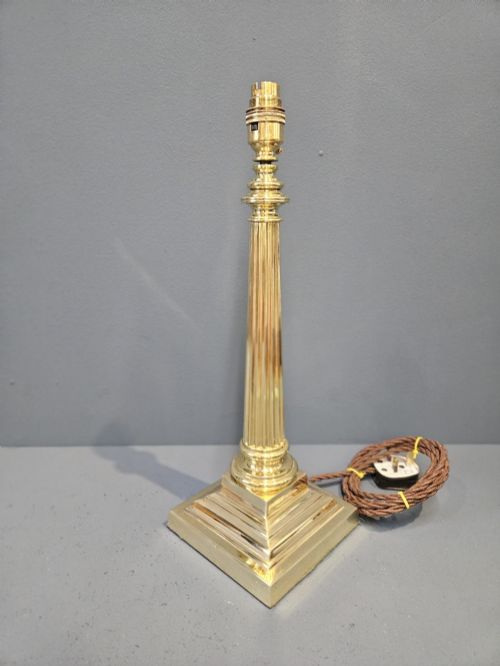
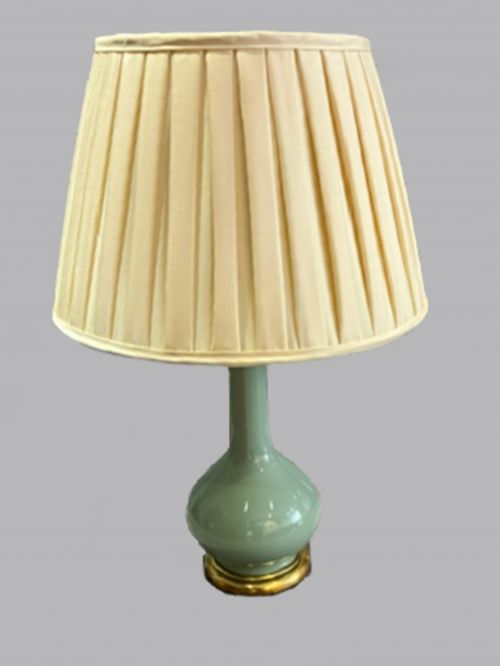
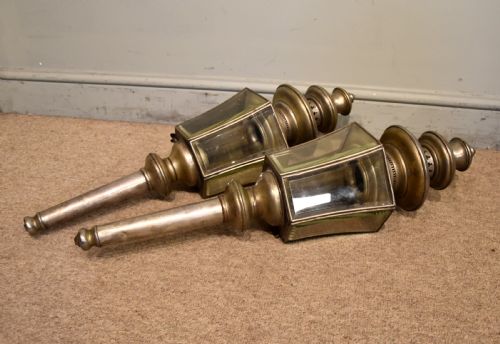
Late victorian lighting spans domestic illuminating equipment produced during the late nineteenth and early twentieth centuries. Pieces found in this selection include table lamps, oil lamps, wall sconces, candelabra, and hanging lanterns designed for candles or early electricity.
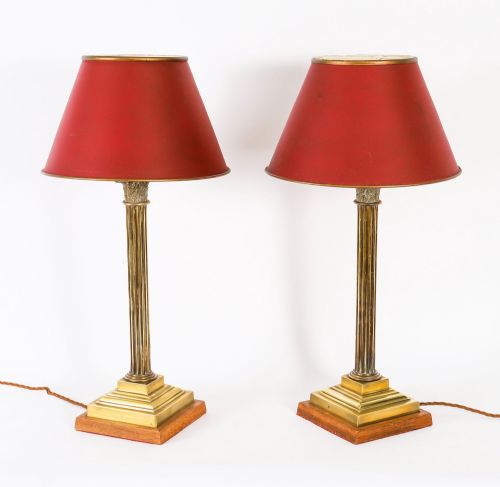
The objects stem from periods including the Victorian era, the 1890s, and Edwardian transitions, drawing upon styles such as Gothic Revival, Arts and Crafts, Art Nouveau, and Neoclassical design. Table lamps and brass candle holders dominate the forms seen on this page.
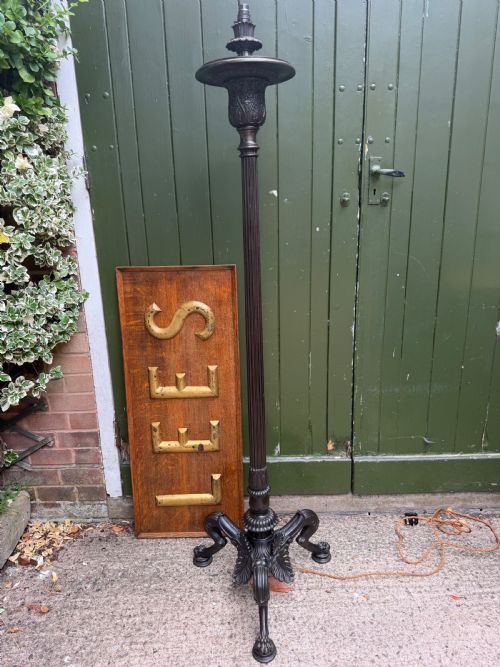
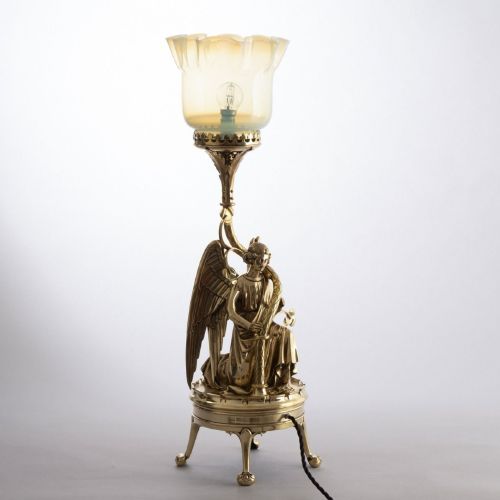
Makers and designers of the era utilised diverse materials to create functional items that doubled as decorative focal points in the home. Buyers encounter everything from heavy cast bronze standard lamps to delicate brass and vaseline glass table lamps.
Materials and construction methods
Metalworking formed the backbone of late nineteenth-century manufacture, employing brass, copper, bronze, and gilt metal shaped into reeded columns, classical figures, and elaborate wall lanterns. Casting, hammering, and patination techniques gave these metals varied surface textures.
Glass production played a vital role, yielding vaseline glass, cranberry glass, and stained components paired with metal bases to diffuse light effectively. Makers also incorporated ceramic, marble, and wood into lamp bases and supporting structures.
Workshops combined structural rigidity with ornate detailing, seen in pieces featuring figural motifs, porcelain elements, and adjustable shades. The transition from oil and candles to electric light influenced the adaptation of many surviving lamp bases.
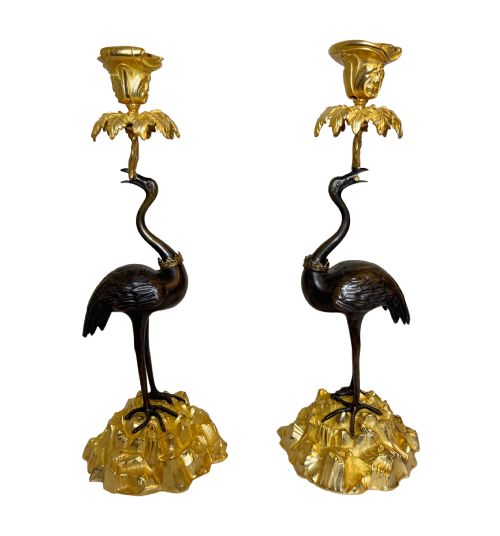
Flamingos occasionally photobomb the nineteenth century via gilt bronze candlesticks.
Quality variations across pieces
Quality rests upon the crispness of casting detail in metal components, distinguishing mass-produced items from finely chased bronze or heavy cast brass. Superior pieces exhibit well-defined motifs, such as floral or classical details, without surface blurring.
The selection of secondary materials dictates overall refinement, where genuine marble bases, hand-blown coloured glass, and solid bronze outrank simpler plated metals and plain wood. Structural integrity in joints, fittings, and adjustable mechanisms also separates standard work from superior examples.
Originality of components, including matching shades, burners, and mounting hardware, defines the desirability of lighting fixtures. Alterations or mismatched parts reduce the integrity of the object.
Barbedienne·WMF·Frederick J Smith & Co·AFC
The Late Victorian Lighting Glossary
- Vaseline glass
- A type of glass coloured with uranium dioxide that exhibits a distinctive yellow-green fluorescence under ultraviolet light. It frequently appears in late nineteenth-century lamp shades and decorative vessels.
- Candelabra
- A branched candlestick designed to hold multiple candles simultaneously. These items often feature heavy metal construction and decorative arms.
- Ormolu
- Gilded bronze produced by applying a finely ground high-carat gold-mercury amalgam to a bronze object. The technique creates a rich golden finish on decorative mounts and lamp bases.
- Pricket
- A sharp metal spike on a candlestick or altar candle holder designed to secure the base of a candle. This form appears on heavier ecclesiastical and domestic candle holders.
- Chamberstick
- A short candlestick fitted with a wide pan and a loop handle, originally carried to light a person's way through a house at night.
Late Victorian Lighting: Frequently Asked Questions
What fuels did late victorian lamps use?
Late victorian lamps operated on multiple fuel sources depending on the room and the date of manufacture. Many relied on burning oil within specialised reservoirs, while others held traditional wax candles.
As the period progressed towards the turn of the century, an increasing number of fittings were adapted for early electric lighting or manufactured specifically for wired bulbs.
How do I identify a neoclassical lamp?
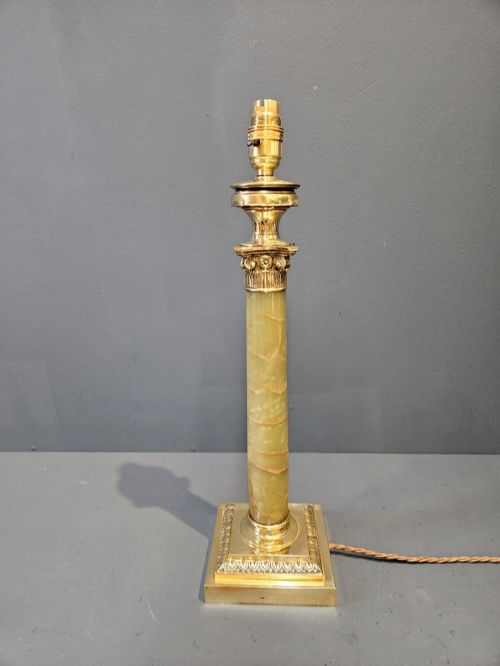
Neoclassical lighting pieces display design motifs borrowed from ancient Greek and Roman architecture. Look for columns, reeded stems, urn shapes, and symmetrical geometric patterns.
Materials like bronze, gilt metal, and brass were heavily utilised to emphasise these classical proportions.
Are these lamps wired for modern use?
Many surviving lamp bases have undergone rewiring at various points in their history to remain functional. Buyers should inspect the electrical components of any lamp intended for active use.
Original oil and candle fittings often survive intact on pieces that escaped conversion.