


Yellow Glass Shade Lamp
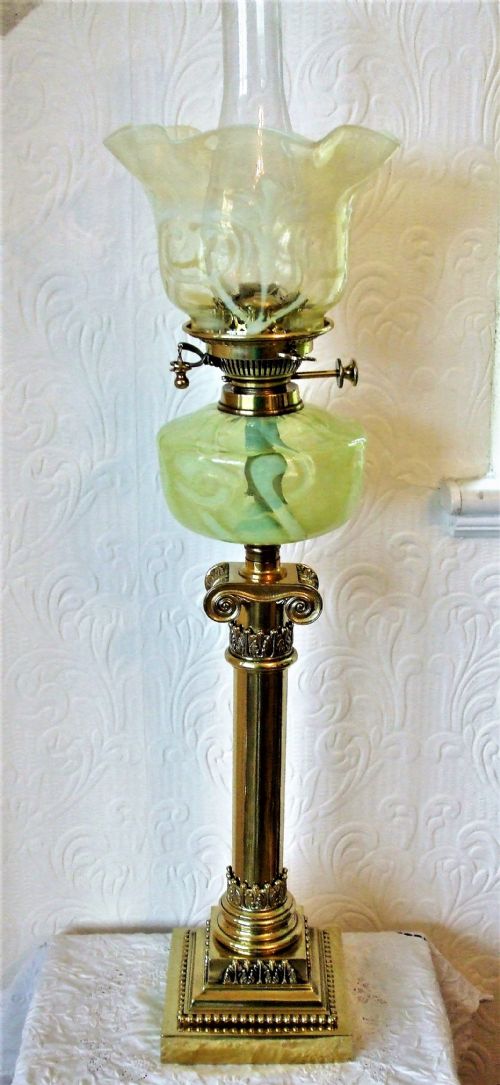
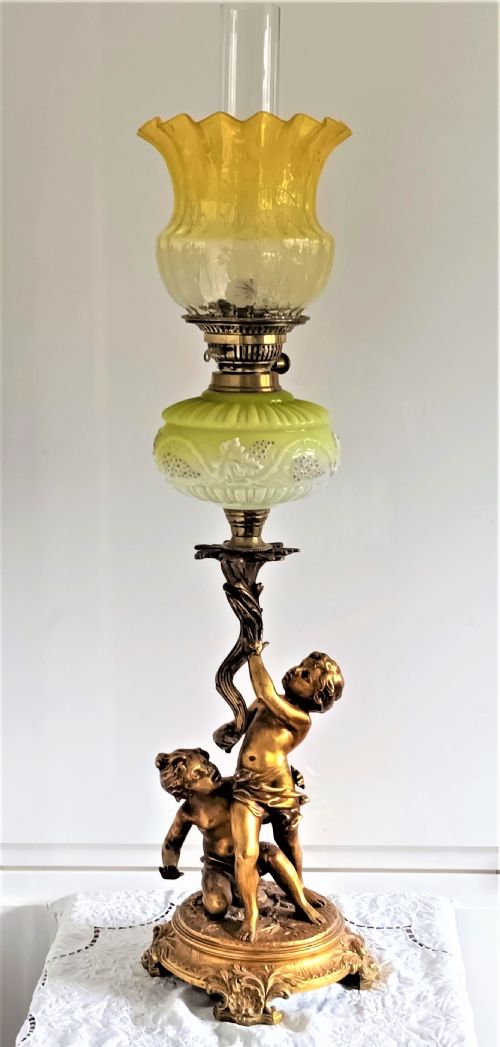
Yellow glass shade lamp pieces combine vibrant coloured glass with brass, ormolu, and wrought iron to illuminate period interiors.
Yellow Glass Shade Lamp
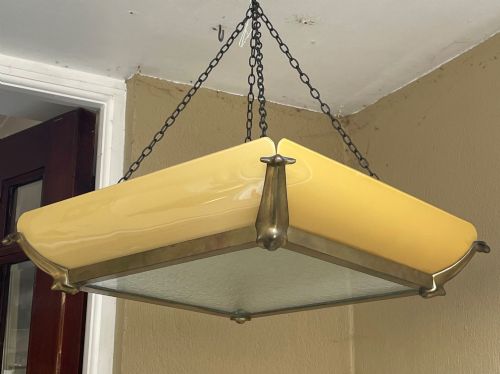
When you search for a yellow glass shade lamp, you encounter oil lamps, table lamps, and ceiling lights spanning the nineteenth century through the Art Deco era. The Victorian period and the 1930s dominate these offerings, bringing together brass, vaseline glass, and amber glass.
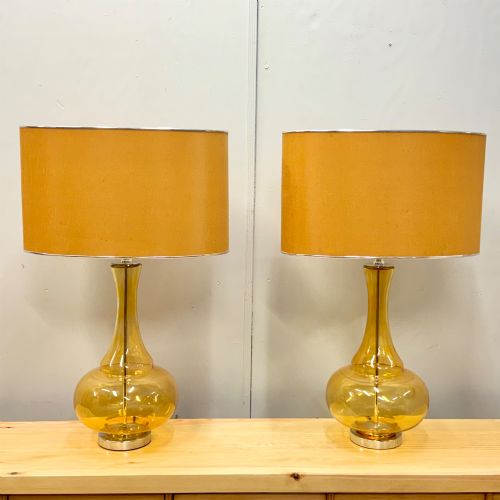
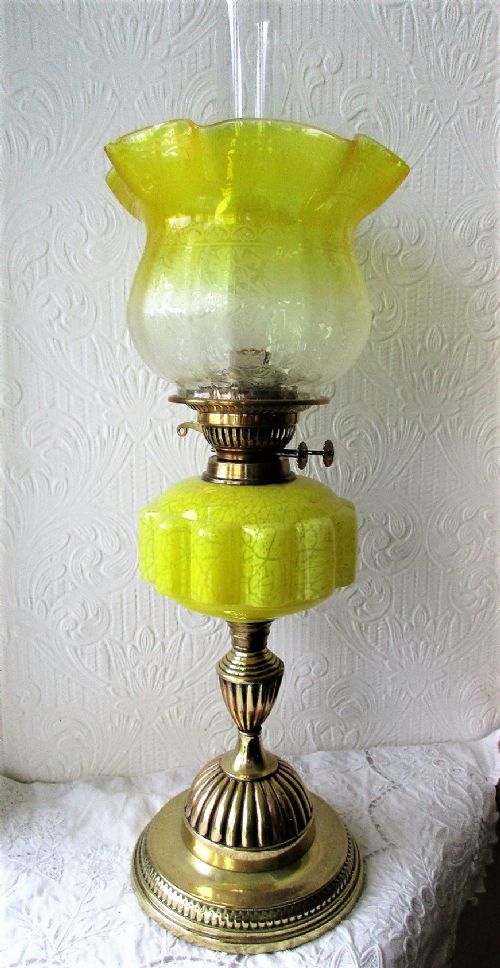
Oil lamps form a significant portion of these listings, often featuring brass or gilded columns with contrasting glass reservoirs and shades. You also find hanging ceiling lights and matching pairs of table lamps designed to anchor a room.
The aesthetic shifts from ornate Victorian Gothic Revival and Rococo Revival details towards cleaner Art Deco and mid-century modern lines. These pieces serve as both functional lighting and striking decorative focal points in a traditional or eclectic interior.
How they were made
The construction relies on heavy cast metals like brass, ormolu, and gilt metal paired with blown or moulded glass. Makers shaped the glass into vibrant hues including vaseline and amber, creating translucent shades and reservoirs that caught the light.
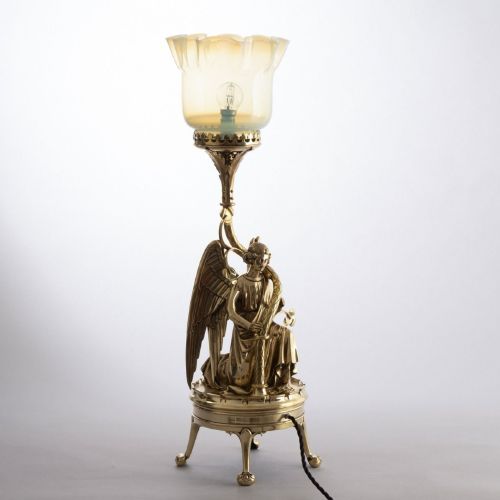
Metal components involved casting, chasing, and gilding, evident in the detailed columns and mounts of Victorian and Art Deco examples. Silk shades occasionally complement the glass elements, while wrought iron provides structural support in later French designs.
Some Victorian lamps sneak cherubs and angels right into the brasswork.
What varies in quality
Quality reveals itself in the weight and crispness of the metal castings, from simple turned brass to elaborate ormolu and silver-plated mounts. Superior pieces display finely detailed figures, crisp fluting on columns, and robust construction throughout the base and burner assemblies.
Glass selection also dictates standing, with depth of colour, uniformity in thickness, and intricate moulding separating standard production from exceptional examples. The integration between the glass shade and its metal mount demonstrates the maker's original ambition.
Hinks·Degue·Meissen
The Yellow Glass Shade Lamp Glossary
- Vaseline glass
- A transparent yellowish-green glass containing uranium dioxide that glows under ultraviolet light. It appears frequently in nineteenth-century lighting components.
- Ormolu
- Gilded bronze or brass applied to decorative mounts and bases. This technique gives metalwork a rich gold appearance.
- Peg oil lamp
- A small oil lamp fitted with a metal peg or adapter designed to sit inside a separate candlestick or base. These pieces often feature satin or coloured glass reservoirs.
- Gothic Revival
- An architectural and decorative style drawing on medieval forms. It manifests in pointed arches, heavy brass work, and ecclesiastical motifs on Victorian lighting.
Yellow Glass Shade Lamp: Frequently Asked Questions
How do I use an old oil lamp?
Most antique oil lamps are now converted for electrical use to safely illuminate modern spaces. If retained as oil burners, they require appropriate fuel and careful wick management.
Place them on stable surfaces away from drafts, treating them primarily as decorative objects with historical utility.
What rooms suit a yellow glass shade lamp?
These lamps suit living rooms, studies, and hallways where warm ambient lighting complements period furniture. Their colourful glass shades introduce a strong decorative accent during daylight hours.
Matching pairs work well on sideboards or mantelpieces, while hanging ceiling lights define dining areas.
How do I identify Victorian lighting?
Victorian pieces often display heavy brass columns, intricate metal castings, and stylistic influences from Gothic or Rococo revivals. Look for structural elements like burner mechanisms stamped with period maker names.
The use of vaseline glass and hand-finished ormolu mounts also points firmly to nineteenth-century production.
Are Art Deco lamps different?
Art Deco lighting moves away from Victorian ornament towards geometric forms, streamlined silhouettes, and wrought iron frameworks. They frequently utilise amber glass and bold contrasting materials.
These pieces reflect the design priorities of the 1920s and 1930s, prioritising sleek vertical lines and functional elegance.