


Victorian Cherub Lamp
A victorian cherub lamp brings sculptural figurative charm to a room, combining cast metal or porcelain figures with functional lighting.
Victorian Cherub Lamp
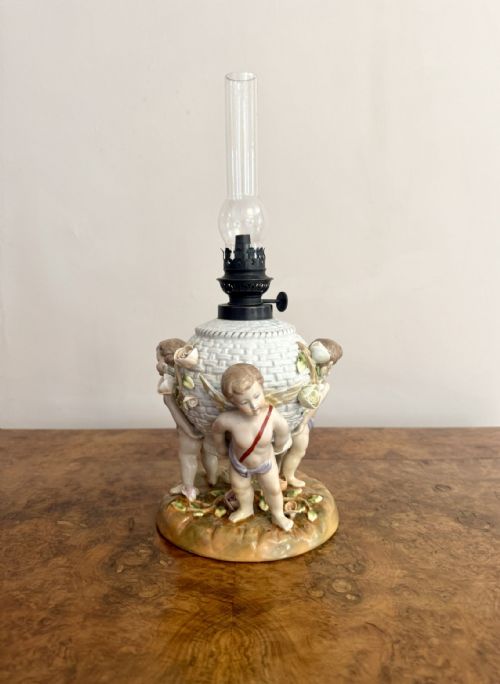
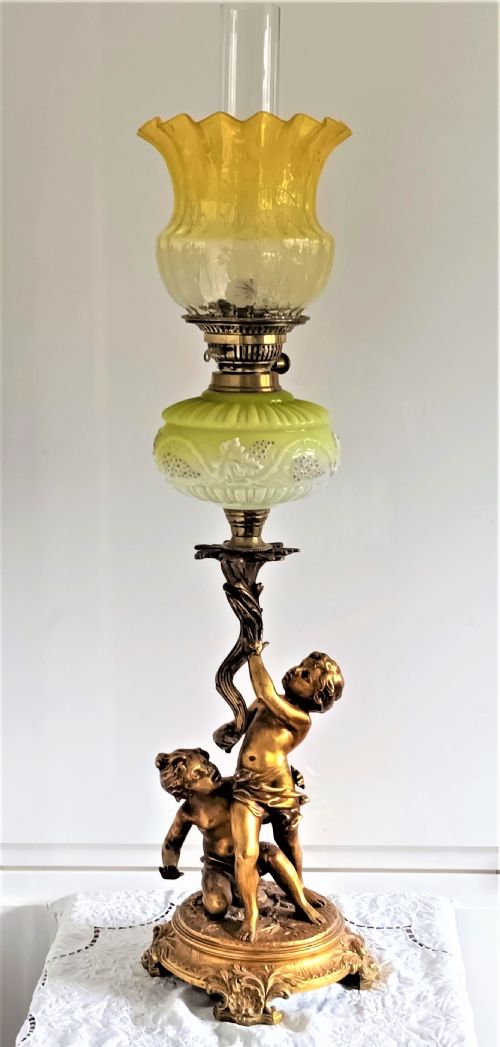
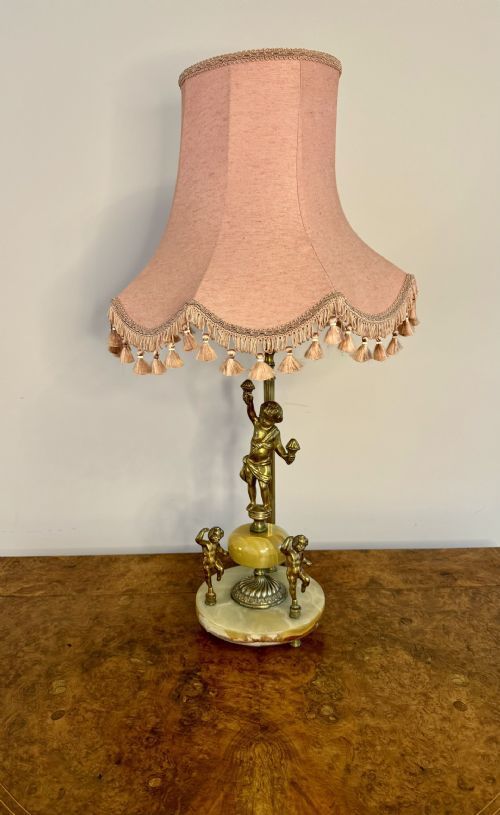
A victorian cherub lamp combines decorative figural sculpture with interior illumination, taking the form of table lamps, oil lamps, chandeliers, and ceiling lights. These pieces originate primarily from the nineteenth century, with Victorian, Edwardian, and early twentieth-century examples appearing across the inventory.
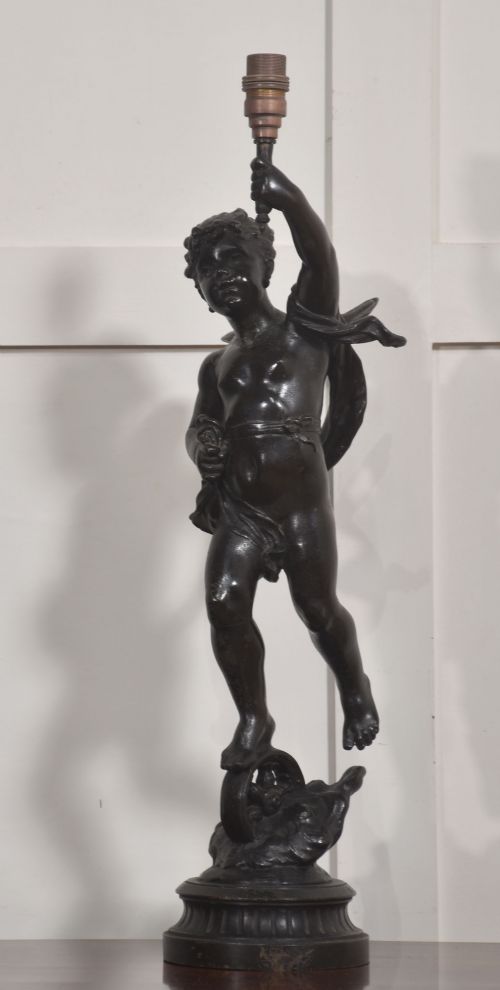
The most common iterations on this page feature porcelain figures from European factories like Sitzendorf and Meissen, alongside cast metal versions in brass, bronze, gilt bronze, and spelter. Forms range from single table lamps and converted statuettes to pairs and multi-armed ceiling fixtures.
Makers and manufacturers span English, French, and German traditions, frequently incorporating materials such as marble, onyx, glass, and fabric shades. The category encompasses both dedicated electrical adaptations and older oil-burning formats subsequently rewired for modern use.
How they were made
Makers utilised metalcasting techniques to produce the structural components, working in brass, bronze, gilt bronze, ormolu, and spelter to form the cherub figures and mounts. These metal elements were often chased, patinated, or gilded to achieve rich surface textures and warm metallic tones.
Porcelain figures and font bodies were hand-modelled and glazed by factories such as Sitzendorf, Meissen, and Sevres, sometimes paired with cranberry glass or decorated with cobalt blue glazes like bleu celeste. Assembly involved securing porcelain and metal components together with threaded rods, screws, or bronze mounts.
Lighting mechanisms evolved from early candle fittings and burning oils through to later electrical conversions, integrating glass chimneys, fabric shades, and internal wiring.
The site listings feature nineteenth-century periods alongside Edwardian and 1930s examples, utilising bronze, porcelain, brass, and marble.
What varies in quality
Quality in a victorian cherub lamp rests upon the crispness of the casting and the artistic execution of the figural modeling. Finer examples display delicately rendered facial expressions and anatomical detail on the cherubs or putti, whereas simpler versions rely on heavier, less refined metalwork.
The choice of materials significantly shifts the standing of a piece, with fine porcelain bodies from established potteries or substantial fire-gilded ormolu mounts marking out the upper tier of production. Patination, original mercury gilding, and undamaged decorative glass components also separate standard utilitarian fittings from collector-grade items.
Sitzendorf·Meissen·Sevres·Aug Moreau
The Victorian Cherub Lamp Glossary
- Ormolu
- Gilt bronze produced by applying a finely ground high-carat gold-mercury amalgam to a bronze object before heating. This historical French technique creates a distinctive, deep golden lustre.
- Spelter
- An alloy of zinc and lead or copper used as an economical alternative to bronze. It was frequently painted or electroplated to imitate heavier metals.
- Putto
- A plump, naked male child figure frequently depicted in classical art and decorative objects. In these pieces, they serve as the central sculptural support or decorative motif.
- Bleu Celeste
- A bright turquoise-blue ceramic ground colour associated with Sevres porcelain. It provides a striking backdrop for gilded bronze mounts.
- Font
- The reservoir that holds oil in a traditional lamp before conversion to electricity. It is commonly fashioned from coloured glass or decorated porcelain.
Victorian Cherub Lamp: Frequently Asked Questions
Were these originally electric lamps?
Most of these pieces began life as oil-burning lamps, candle fittings, or decorative bronze statuettes. They were subsequently adapted for electricity as domestic lighting methods modernised over time.
Rewiring and conversion work allows these older bases to function safely in contemporary interiors while retaining their original nineteenth-century bodies.
How do I identify Sitzendorf porcelain?
Sitzendorf pieces often feature finely modelled porcelain figures incorporated directly into the lamp base or oil font. They typically display characteristic nineteenth-century German ceramic styling and hand-painted details.
Matching pairs and marked bases frequently point towards the output of this specific Bavarian pottery.
What is the difference between bronze and spelter?
Bronze is a durable alloy of copper and tin that takes a fine chisel work and rich patination. Spelter is a softer, zinc-based substitute that feels lighter and was commonly painted to resemble bronze.
Examining the underside and the sharpness of the casting details usually reveals which metal was utilised.
How should I clean a gilded lamp?
Gilded surfaces require gentle dusting with a soft, dry cloth to prevent abrasion of the delicate gold leaf or ormolu. Moisture and chemical cleaning agents can strip historical finishes from brass and bronze.
Professional guidance is recommended if deeper cleaning of the metalwork or porcelain becomes necessary.